
hi in the remote desolate borderlands of
Nepal and Nevada there is this ancient
kingdom far beyond the reaches of the
modern world it feels like it has this
great expansive spiritualness to it
this is Mustafa my love affair with the
Himalaya came from climbing and I
started going to the Himalaya only about
three years ago now and since then with
Pete and with Mark I’ve been 12 times
and most of it was climbing but
naturally when you go to these places
you start to be immersed and have this
affair with the things that you’re
seeing and the people that you’re
meeting and the cultures that you’re
really becoming a part of and it gets
under your skin and initially when I
went it was all about adventure and then
it became more about what I was seeing
in the cultures I was experiencing and I
was actually in Nepal working in this
village this is a guy named Carmen
searing and it’s a village named Forte
and Pete and I were teaching a group of
Sherpas climbing techniques safe
climbing techniques so they can work on
Everest and Pete asked me if I would be
interested in being a part of this
project and moose Tom and it’s Pete
Athens he’s like one of my heroes and
I’m like yeah that sounds great wait
where’s moose time what are we doing
again
not really sure what’s going on but
you’re Pete so it’s fine I’m I trust you
and he started telling me about this
place that we were going and sort of the
words he was using you know I feel like
I come up after these two guys and I’m
like are you guys ready for the
inarticulate part of the presentation
cuz that’s you know that all of the
words the adjectives and everything I’m
just like it’s rad you know this place
is amazeballs you know and people are
like wow you are really not very smart
but he the words he was using were so I
mean they were they just conjured these
images that I of a place that I couldn’t
really imagine and quite honestly when I
got there it was even bigger and and
more grand than anything I ever could
have imagined talking about something
that reminds us of the Grand Canyon that
reminds us of the desert Southwest but
then has this incredible history to it
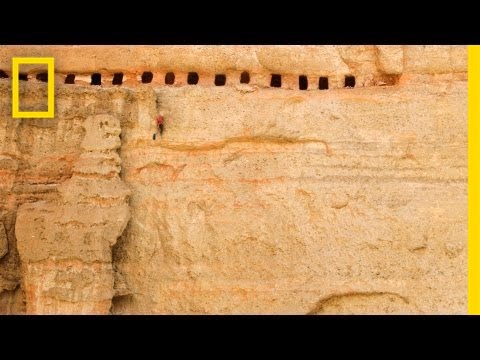
you see the caves
you know carved into the rock and now
they’re completely inaccessible and
getting assigned this article was it was
it was huge but I kind of didn’t
actually realize what my job was at
first but I got the job and I was like
okay well we’re going on this incredible
adventure and we’re gonna go you know
into this incredible region and
naturally landscapes and things like
that okay I get that but but what am i
what am i tying together what are the
elements of storytelling that I need to
address here and naturally the first
thing I gravitated to was culture
because it’s in your face it’s
everywhere it’s so rich and and the
texture of this culture is so deep and
so varied and so full and so immediately
you hit the ground running and I started
just immersing in that part of the story
how do I tell the story the backstory of
the culture that surrounds us and I and
I focused on some things that I thought
were really unique that’s actually a
human skull that’s been cut right here
and used as a skull Cup and this is an
abundance am oniy in a village called
lubra and what they do is they they use
the local alcohol Chong and they fill it
fill
the skull Cup and they decorate it with
yak butter and then they melt yak butter
into it and it’s a divination process
where they’re basically telling the
future for the next year and to witness
this was sort of mind-numbing you know I
mean I had been climbing and I thought
it was all about mountains and then I
start to get this you know these
backwoods stories of the culture that’s
existed there for I mean as Mark pointed
out and who knows how old one is we
talked about eighteen thousand years we
don’t know how old this animistic
cultures existed but here it is in
living form alive and well so I really
really started to focus on that and I
thought to myself well how do I like
what
you know I’m shooting for National
Geographic now I have to kind of step it
up how do I tell the story of what I’m
smelling how do I tell the story of what
I’m hearing how do I tell the story of
what light looks like coming through an
ancient monastery window and hitting
little pieces of dust what a like how do
I do that and I remember feeling very
very overwhelmed not only because of
sort of the scope of what I had to tell
but because of the experiences going on
right in front of me and watching mark
and Pete sort of operate in this
environment very seasoned very
respectful moving seamlessly throughout
it I felt like this you know Bowl in a
china shop where I’m like just knocking
stuff over and like often people’s face
with my camera and and and it was a
really steep steep learning curve it
took a while for me to figure out how to
gel into it and be like okay I get it I
don’t maybe I shouldn’t put my camera
right next to the llamas face but I can
I can figure it out I can you know and
and then we started getting deeper into
it and when I say deeper I actually mean
geographically deeper we we went up more
towards the Tibetan border and I started
seeing sort of the magic of what we were
what we were approaching because now I
was seeing the culture in practice
basically a 12th century village
underneath the caves that they used to
live in caves that are now Forgotten
caves that are maybe used for grain
storage for for hay for whatever the
crop is they’re just sort of they don’t
even think about it and we ask the
questions like Pete said how do
people used to get into those and they
say well you know the llamas fly you’re
like cool I wish I wish I could do that
because this is scary
I don’t like climbing this it’s like
dumpster diving of climbing it’s just
like groveling up vertical mud but we
got to these places and I and I I
started realizing okay I’ve got it’s not
just culture now it’s it’s starting to
take on the scope of archeology and now
I started to really engage with mark a
little bit more okay what is it more
like what’s the most important thing or
maybe what’s the best thing that could
happen here and he he basically expanded
on what he was talking about a little
bit earlier that what we were looking
for was not necessarily habitation cave
some of the people in most on still live
in caves seasonally we weren’t
necessarily looking for that Pete and
Mark had done a ton of exploration
previously exploring those caves and
what we were really looking for and in
the exploration I mean was real
exploration you’re climbing up into
these things it’s dangerous it’s loose
rock it is scary on every level I
haven’t done actually any Himalayan
climbing that was really nearly as scary
as climbing in moose Don because
everything’s loose everything around you
feels like it’s crumbling everything
feels like it’s very as P pointed out it
mirrors sort of the sentiment of the
culture a large of impermanence and you
feel like when you’re climbing
everything’s going to collapse and and
that was part of the story all of a
sudden okay so now I’ve got culture I’ve
got you know sort of the archaeology
aspect of it I’ve got adventure and I
started to get the idea of what I was
actually doing there this is you know
halfway through it and then we started
getting into the science of it finding
the things that the artifacts that we
needed to be finding that helped piece
things together that help tell the story
of trade through the region and I
started really really getting excited at
that point and I was taking these
photographs and I’m showing them to mark
and he’s like that’s great you know
that’s cool
and you know these these kind of
artifacts really help us piece this
together but what we really need to find
what what I want to find to really
qualify to quantify ever
the science that we’re doing here is
human remains I was like well that’s
pretty rad I think all right not sure
and we walked up into Samsung and I
remember looking up onto the the wall
above us and seeing that and it was a
really interesting moment for me because
it’s like okay I mean that we’re on we
are going to make a significant
discovery here this isn’t sort of a shot
in the dark anymore
yes there’s amazing ancient architecture
here yes they’re artifacts and caves yes
it’s adventure but now now there’s
science and then it all started to
really make sense to me the kind of
archaeology that I was doing for mark
under his direction is basically rescue
archaeology we’re going into these caves
that are falling apart underneath us and
we’re trying to be as ginger as possible
and recover as much as we can without
disturbing too much dirt and I can’t
really explain what it feels like to be
in a cave that hasn’t been visited for
1,500 years that smells of decay that
smells of death that also smells of
rodent droppings and bird poop and all
sorts of other great things that I
shouldn’t be breathing and to slowly
dust off something in the dirt dust it
back a little bit more dust aback a
little bit more and then you realize
that it’s an eye socket that to me was a
moment where everything sort of it was
illuminated this is what this is about
this is what National Geographic is
about this is the bridge between science
culture and adventure that makes us care
about this world that we keep exploring
that that we have this idea this this
need to go see to go continue to look at
and find out about and the final piece
for me in storytelling was trying to
figure out how do I give people a visual
like how do i how do i light up their
imagination to make them think about
what it might have looked like thousands
of years ago when caravans were rolling
through here people were still living in
the cliffs people were burying their
dead and burying their dead in the caves
and that was my final challenge how do I
why give people that that imagination
and one of the ways we did that was by
lighting up the caves going into him at
night spending the night in caves and
using using lights to light them up and
strobes and everything and trying to
give people the feeling that this is a
very ancient place this is a place that
has so many stories to tell us so much
more than we can ever really imagine in
our lifetime but it’s all very very
important one of the things that I think
we forget when we’re talking about
adventure and adventure and science and
exploration is that it gets dangerous at
times one of the reasons it’s so
exciting is because there’s actually
consequences and big consequences this
is a cave system outside of town called
say lay and on my first trip there I was
trying to climb in up over here and a
foothold broke and I fell about I don’t
know 15 feet 15 20 feet and I landed on
my on my butt and I broke my back and it
was it was it was an eye-opener because
it’s like okay this hold on this is
really exciting this is really engaging
and I want to tell this big story but I
just broke my back
I brought maybe this isn’t as important
as I thought and that was sort of the
first thing that came to mind and then
Pete gave me prescription pain their
prescription strength painkillers and I
forgot everything and then the next year
we came back and we decided to let’s try
again let’s try again
and I took this shot and my friend
Lincoln else was filming right next to
me and he decided okay I’ve got that
shot I’m gonna I’m gonna go and I’m
gonna go up the line and I’m gonna get
sort of the discovery sequence when they
actually start going in the caves and so
I started packing up my cameras and
Lincoln was ahead of me and the next
thing I heard was Liesl
Pete’s wife scream and and she said oh
my god oh my god and I ran over and
Lincoln was laying on the ground
blood excuse me for getting a little
graphic here but blood pouring out of
his head and convulsing and a rock had
come from above and hit him and giving
him a 21 centimeter skull fracture
and it completely depressed his skull
and again it was it was a point of
realization that what we’re doing yes
it’s very important but it also is very
dangerous and when you talk about
adventure there are sides to it that are
unpleasant Lincoln made a full recovery
Lincoln I thought for certain I think we
all thought when that happened that
Lincoln was going to die but essentially
at the end of the trip at the end of the
experience coming home working with the
magazine working with Mark working with
Pete what was illuminated to me is that
the marriage of science and exploration
and culture is the ultimate in how we
bring the world to everybody in this
room we have to make it exciting we have
to make it digestible but we also have
to give people the knowledge of what’s
out there and there is so much more in
the ground out there and for me I think
the most special part of all of this is
is the people that you end up engaging
with the people that you end up meeting
along the way the people that you can’t
communicate with except with hand
gestures the people that you hug at the
end of the day when you’re covered in
dirt and they don’t know why you’re
hugging them it’s awkward the friends
you make Pete and Mark everybody here
because really I think it is about
everybody in this room that’s that’s
what makes the Geographic tick it’s it’s
the curiosity it’s the drive to go back
to continue to explore and it’s the it’s
the need to tell those stories to
understand to want to know what the dirt
smells like to want to see through a
photograph what it sounds like in a
monastery to feel by turning a page what
it feels like to pull a skull out of the
dirt and I just want to say thank you to
all of you for being here tonight for
coming for having that curiosity and for
giving that to us and allowing us to do
the things that we’re doing because
without you we wouldn’t be here so thank
you guys so much for being here
you
Please follow and like us: