
when you get when you mix together data
from a raw chicken an elephant and a 67
million year old dinosaur fossil the
ability to understand for the first time
what dinosaur skin could have actually
looked like since the first dinosaur
fossils were discovered in the early
19th century we’ve been able to study
and record hundreds of thousands of
samples of fossilized bones but have
found relatively little information
about dinosaur skin to understand why we
need a rock chicken in this rudimentary
kitchen scientists flambe de hand with a
four meter long flamethrower to simulate
the heat found deep underground where
fossilized animals spend millions of
years in Earth’s pressure cooker smells
quite good
next a massive meat tenderizer Mallett
demonstrates the intense force of
pressure that a fossil would experience
buried under rock
that is disgusting not surprisingly
after this experiment the chicken and
its skin are pretty much
indistinguishable but even roadkill like
this provides better clues than what
exists in the fossil record that is
until one brilliant discovery in 2004
nestled deep within Iraq formation in
North Dakota one of the world’s most
intact dinosaur mummies was found there
a four-time almost perfectly preserved
hadrosaur aptly named Dakota was
entombed in a once-in-a-lifetime
environment of soft sandy mud and
covered in a blanket of plants and most
importantly it provided for the very
first time an actual three-dimensional
model of a dinosaur skin structure the
findings revealed intact scales and
markings that suggest in a camouflage
pattern as opposed to a solid color it
represented decades of research and
provided concrete clues to dinosaur skin
composition now to complete the picture
of what Dino skin could have actually
looked and felt like we add the final
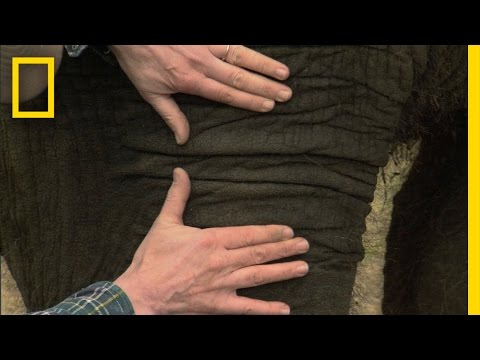
ingredient an elephant Shiba the portly
pachyderm weighs about the same as
Dakota and probably dealt with the same
issues how to stop all of her thick skin
from sagging to the ground in order to
understand the structure of how the skin
stretched and bundled together with
movement scientists focused on her elbow
joints where the skin joins muscle
ligaments and bone they found that the
skin folded into clumps and was actually
thinner around the joints just like
samples found on Dakota now it’s time to
whip all the ingredients together enter
the data into a super high-tech computer
and voila a flawless representation of
what Dakota the hadrosaur could have
actually looked like
you
from a raw chicken an elephant and a 67
million year old dinosaur fossil the
ability to understand for the first time
what dinosaur skin could have actually
looked like since the first dinosaur
fossils were discovered in the early
19th century we’ve been able to study
and record hundreds of thousands of
samples of fossilized bones but have
found relatively little information
about dinosaur skin to understand why we
need a rock chicken in this rudimentary
kitchen scientists flambe de hand with a
four meter long flamethrower to simulate
the heat found deep underground where
fossilized animals spend millions of
years in Earth’s pressure cooker smells
quite good
next a massive meat tenderizer Mallett
demonstrates the intense force of
pressure that a fossil would experience
buried under rock
that is disgusting not surprisingly
after this experiment the chicken and
its skin are pretty much
indistinguishable but even roadkill like
this provides better clues than what
exists in the fossil record that is
until one brilliant discovery in 2004
nestled deep within Iraq formation in
North Dakota one of the world’s most
intact dinosaur mummies was found there
a four-time almost perfectly preserved
hadrosaur aptly named Dakota was
entombed in a once-in-a-lifetime
environment of soft sandy mud and
covered in a blanket of plants and most
importantly it provided for the very
first time an actual three-dimensional
model of a dinosaur skin structure the
findings revealed intact scales and
markings that suggest in a camouflage
pattern as opposed to a solid color it
represented decades of research and
provided concrete clues to dinosaur skin
composition now to complete the picture
of what Dino skin could have actually
looked and felt like we add the final
ingredient an elephant Shiba the portly
pachyderm weighs about the same as
Dakota and probably dealt with the same
issues how to stop all of her thick skin
from sagging to the ground in order to
understand the structure of how the skin
stretched and bundled together with
movement scientists focused on her elbow
joints where the skin joins muscle
ligaments and bone they found that the
skin folded into clumps and was actually
thinner around the joints just like
samples found on Dakota now it’s time to
whip all the ingredients together enter
the data into a super high-tech computer
and voila a flawless representation of
what Dakota the hadrosaur could have
actually looked like
you
Please follow and like us: