
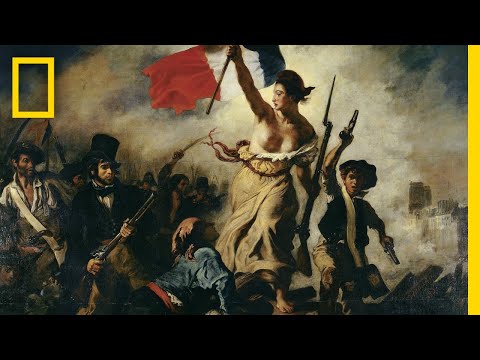
human creation a truth most evident in
revolutions around the world a
[Music]
revolution in a political sense is a
sudden and seismic shift from one form
of government to another while
revolutions come in many forms they
often share four characteristics in
varying degrees dissident elites mass
frustration shared motivations and state
crises altogether these factors have
ignited some of the most radical changes
throughout history revolutions are often
facilitated by a dissident elite this
particular group is comprised of people
with wealth power or an education who
are willing to challenge the existing
administration elites played a critical
role in the American Revolution one of
the earliest revolutions in modern
history American colonists under the
rule of Great Britain won a war for
their independence in 1783 colonial
elites like Thomas Jefferson who would
later become a United States President
fueled the revolt by contributing their
resources toward reform frustration
among the masses also plays a critical
role in social upheavals when a large
percentage of a population feels grave
discontent with their political economic
and social institutions they may revolt
only a few years after the American
Revolution the people of France
initiated their own revolt several
factors including economic difficulties
and an antiquated feudal system that
fuelled social inequalities all
contributed to the descent ultimately
French society permanently out stood
their monarchy and replaced it with a
another characteristic found in
revolutions is a shared motivation
shared motivations are what unify a
large enough number of people
specifically from multiple classes and
groups to effectively rebel these
motivations help the revolutions of
Latin America in the early 19th century
ruled by Spain and Portugal at the time
colonists from multiple Latin American
classes and ethnicities were inspired by
the Enlightenment the intellectual
movement challenged tradition including
traditional forms of governance and
ended up playing a role in the fight for
severe state crises also motivate
revolutions in particular in
administration’s failure to meet the
needs of its people make it vulnerable
to insurgency the revolutions of early
20th century Russia occurred because of
the government’s exceptional frailty its
political military and economic systems
had been virtually decimated by the
state’s defeats in World War one the
nation’s power vacuum then led to
revolts that replaced Russia’s Imperial
state and created the world’s first
communist regime virtually all
revolutions experienced severe state
crises shared motivations mass
frustrations and a dissident elite to
some degree
while revolutions may involve different
players governments and cultures the
characteristics they share help them
transcend their differences and
demonstrate the dynamism of human nature and politics