
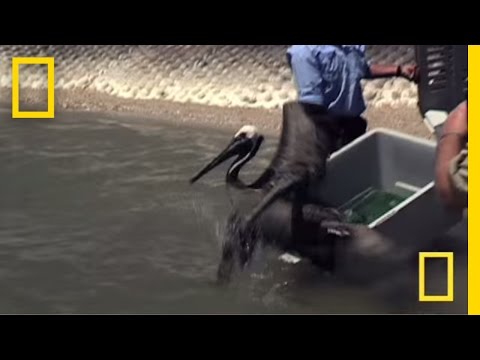
some Louisiana pelicans have been given
a new chance on the Texas coast they
were rescued from coastal areas
contaminated with oil from the Deepwater
Horizon spill they were cleaned and
transported to the Aransas National
Wildlife Refuge state of Texas it
provides enough habitat that’s suitable
for the release of these particular
species the 115,000 acre refuge provides
vital habitat for Coast wildlife
including the largest block of
endangered whooping cranes living in the
wild the rescued pelicans from this late
june release appeared to be adapting one
of the things you look for for animals
or for wildlife is do they go out there
and did they start preening you know
whenever a pelican start screening it’s
indicative of they can that they can
focus on on preening as opposed to just
surviving and so the fact that these
birds hit the water and immediately
started preening it was like a bathtub
out there you could see them they were
flopping around and preening and really
seemed to you know seem to be enjoying
themselves so I think that’s an
indication that these birds they were
happy to be out on that water wildlife
specialist will be monitoring the birds
every bird that’s released falling
rehabilitation it receives a stainless
steel leg band it’s a standard US Fish
and Wildlife Service bird ID band has a
unique number so if any of these birds
are ever recaptured anywhere we can tell
where they came from and what their
experience was here in the spill at
least on their first day in Texas the
pelicans were making themselves right at
home got together as a group have been
preening cleaning their feathers and now
are starting to distribute itself around
you
a new chance on the Texas coast they
were rescued from coastal areas
contaminated with oil from the Deepwater
Horizon spill they were cleaned and
transported to the Aransas National
Wildlife Refuge state of Texas it
provides enough habitat that’s suitable
for the release of these particular
species the 115,000 acre refuge provides
vital habitat for Coast wildlife
including the largest block of
endangered whooping cranes living in the
wild the rescued pelicans from this late
june release appeared to be adapting one
of the things you look for for animals
or for wildlife is do they go out there
and did they start preening you know
whenever a pelican start screening it’s
indicative of they can that they can
focus on on preening as opposed to just
surviving and so the fact that these
birds hit the water and immediately
started preening it was like a bathtub
out there you could see them they were
flopping around and preening and really
seemed to you know seem to be enjoying
themselves so I think that’s an
indication that these birds they were
happy to be out on that water wildlife
specialist will be monitoring the birds
every bird that’s released falling
rehabilitation it receives a stainless
steel leg band it’s a standard US Fish
and Wildlife Service bird ID band has a
unique number so if any of these birds
are ever recaptured anywhere we can tell
where they came from and what their
experience was here in the spill at
least on their first day in Texas the
pelicans were making themselves right at
home got together as a group have been
preening cleaning their feathers and now
are starting to distribute itself around
you
Please follow and like us: