
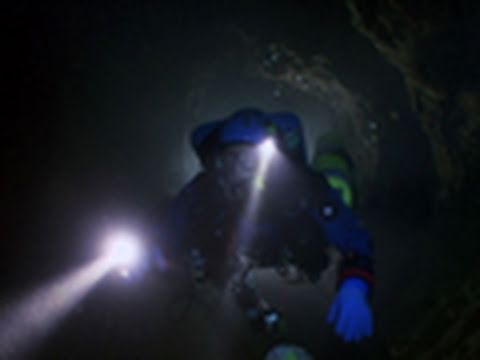
divers cautiously descend an a dangerous
and uncharted underground river
searching for its mysterious source on
their way they’ll look for new
life-forms living deep within the cave
nowhere else in the world are sport
divers going so deep in such cold waters
in a remote part of New Zealand’s South
Island the Pierce River emerges out of a
mountain beneath a cliff and after years
of exploration and research its exact
origin is still unknown the river
emerges from a deep underground cave
which might be the deepest Coldwater
cave in the world the cave does not go
straight down from the surface entrance
but meanders a bit before taking a
mostly sideways path into the mountain
it’s a challenging environment the depth
found in the cave make diving
problematic and the cave itself is very
dark the current in the river is strong
and the water is just above freezing
because of the extreme conditions divers
have been unable to reach the cave
source one diver lost his life
attempting to explore the main shaft in
1995 the most recent expedition funded
in part by National Geographic consists
of a team of six Australian cave divers
led by diving physician Richard Harris
earlier this year a member of that team
accomplished what no previous Explorer
had he reached 194 metres in depth or
about 636 feet the resurgence is in a
remote location and getting five tonnes
of equipment there requires helicopter
delivery this trip required a nearly
three-week long encampment but it takes
special diving skills to go so deep and
for so long
the Glacial waters are about 43 degrees
Fahrenheit and divers must swim against
the flow
they must also swim at a measured pace
because overexertion
can lead to carbon dioxide poisoning
which can lead to death because of the
great depths at which they are diving
they must slowly over a period of hours
return to the surface failure to do so
could result in decompression sickness
also known as the bends which can be
fatal to overcome these obstacles the
team constructed and placed habitats at
four depths in the cave here divers can
escape the cold water and sit in a trap
bubble of air they can eat here and
drink while they wait many hours for
dissolved gases to be safely released
from their bodies even with these safety
measures in place this kind of diving is
still dangerous during his
record-breaking dive experience diver
Craig challenge realized his breathing
had become erratic
and as I’ve got Gavin and I’ve just
started breathing really heavily Hannity
and that just struck and it’s just like
self-perpetuating thing you know you
trying to relax chill you just come it’s
likely he had just enough time to reach
a safer depth before the carbon dioxide
levels could have led to unconsciousness
there’s definitely 200 thing to dive
there for someone that wants that chalen
and the team know a record-breaking
attempt is not for the faint of heart
the mystery is part of the reason
explorers keep coming back dye tracing
so far has been inconclusive in finding
a source of this River freshwater
animals found in the cold aquifer like
this possible new species of amphipod
also offer scientists a unique look into
a little understood and little-studied
habitat the team hopes to return to the
Pierce resurgence for another
exploration dive in 2012
and uncharted underground river
searching for its mysterious source on
their way they’ll look for new
life-forms living deep within the cave
nowhere else in the world are sport
divers going so deep in such cold waters
in a remote part of New Zealand’s South
Island the Pierce River emerges out of a
mountain beneath a cliff and after years
of exploration and research its exact
origin is still unknown the river
emerges from a deep underground cave
which might be the deepest Coldwater
cave in the world the cave does not go
straight down from the surface entrance
but meanders a bit before taking a
mostly sideways path into the mountain
it’s a challenging environment the depth
found in the cave make diving
problematic and the cave itself is very
dark the current in the river is strong
and the water is just above freezing
because of the extreme conditions divers
have been unable to reach the cave
source one diver lost his life
attempting to explore the main shaft in
1995 the most recent expedition funded
in part by National Geographic consists
of a team of six Australian cave divers
led by diving physician Richard Harris
earlier this year a member of that team
accomplished what no previous Explorer
had he reached 194 metres in depth or
about 636 feet the resurgence is in a
remote location and getting five tonnes
of equipment there requires helicopter
delivery this trip required a nearly
three-week long encampment but it takes
special diving skills to go so deep and
for so long
the Glacial waters are about 43 degrees
Fahrenheit and divers must swim against
the flow
they must also swim at a measured pace
because overexertion
can lead to carbon dioxide poisoning
which can lead to death because of the
great depths at which they are diving
they must slowly over a period of hours
return to the surface failure to do so
could result in decompression sickness
also known as the bends which can be
fatal to overcome these obstacles the
team constructed and placed habitats at
four depths in the cave here divers can
escape the cold water and sit in a trap
bubble of air they can eat here and
drink while they wait many hours for
dissolved gases to be safely released
from their bodies even with these safety
measures in place this kind of diving is
still dangerous during his
record-breaking dive experience diver
Craig challenge realized his breathing
had become erratic
and as I’ve got Gavin and I’ve just
started breathing really heavily Hannity
and that just struck and it’s just like
self-perpetuating thing you know you
trying to relax chill you just come it’s
likely he had just enough time to reach
a safer depth before the carbon dioxide
levels could have led to unconsciousness
there’s definitely 200 thing to dive
there for someone that wants that chalen
and the team know a record-breaking
attempt is not for the faint of heart
the mystery is part of the reason
explorers keep coming back dye tracing
so far has been inconclusive in finding
a source of this River freshwater
animals found in the cold aquifer like
this possible new species of amphipod
also offer scientists a unique look into
a little understood and little-studied
habitat the team hopes to return to the
Pierce resurgence for another
exploration dive in 2012
Please follow and like us: