
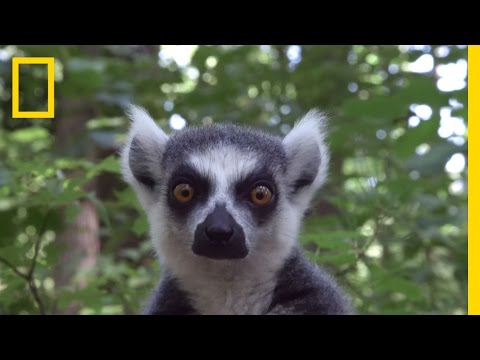
lemurs are magnetic lemurs look at us
with the same sort of brain intelligence
and evolutionary history that we have so
when you meet a lemur you’re meeting a
relative and when you look into a lemurs
eyes you can tell that they’re looking
back and the same things that you’re
thinking about them they could be
thinking about you each species that we
house here has its own species survival
plans or SSPs so we keep track of
everybody’s family history and then we
use that information to decide who the
most genetically distinct breeding pairs
would be when we breed four lemurs we
want to make sure that we preserve
genetic diversity in the captive
population that could mean that we’re
going to receive a lemur from another
facility or we may be shipping a lemur
to a facility elsewhere in the United
States many times because we have so
many lemurs the breeding recommendations
are in-house
I think all of the lemur keepers and the
other staff here at the lemur center
live for lemur babies they’re so
precious and valuable to us because in
many cases they could be some of the
only representatives for their species
in captivity and each new lemur baby
could be the saving grace for their
population in the wild the newest
arrivals at the lemur center are some of
our gray mouse lemurs one female had a
set of triplets which is really exciting
and then another female had a set of
twins for the larger daytime active
lemurs we’ve got about 9 or 10 infants
right now we want to make sure that
every day when we weigh them their
weight is going up even if it’s just a
gram or two that means that they’re
nursing and that they’re healthy for the
first week of the infant’s life it’s
pretty vulnerable one of the ways that
we know that they’re healthy is that
they’re clinging very tightly to mom and
most of that first 30 days is spent
nursing and sleeping
after the first 30 days the babies seem
to become really strong at that point
and they’ll start testing their lemur
legs so they’ll climb off of mom sit on
the branch next to her and then when a
twig snaps they turn around they jump
right back on or back or onto her belly
lemurs today are actually considered the
world’s most endangered group of mammals
some species of lemur there’s only a few
hundred individuals left and could be
extinct within a decade or two the most
compelling reason for me to study lemurs
breed them in captivity and go to
Madagascar and work with local people to
try to protect them is that these
animals are our relatives and we have
the biggest impact on their extinction
in the future and we have biggest chance
to protect them to make sure that lemurs
do not become the first primates to
become extinct in over 100 years
you
Please follow and like us: