
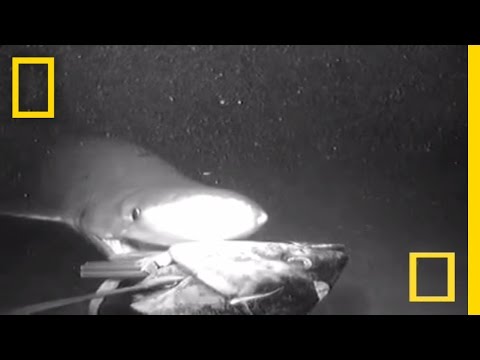
scientists using a deep-sea camera trap
captured some remarkable video of a
shark biting down on what it thinks is
pray this sixgill shark in the waters of
the Osprey reef near Australia’s
northeast coast senses what it thinks is
a meal but scientists from the
Queensland Brain Institute have set out
a fish head as bait with a remote
control camera the shark tries it’s best
to dislodge the bait and struggles but
is unable to break it away from its
anchor some 4,600 feet below the surface
of the Coral Sea this video capture was
part of the deep Australia project an
effort to discover the evolutionary
origins of human sight the sixgill is
often referred to as prehistoric because
of its resemblance to sharks that lived
hundreds of millions of years ago it’s
interesting to researchers because of
its night vision and ability to overcome
both crushing depths and freezing and
deep dark waters the six gills reach up
to 13 feet in length and this is just
one of several deep-sea species never
before filmed at these depths this false
cat shark another deep sea dweller
passes by but chooses not to attempt any
biting of the bait
this eel on the other hand thinks it too
has found dinner and is persistent in
its attempts to bite off some food
researchers also photographed the
Nautilus a relative of squid or octopus
that still lives in a shell as they have
for millions of years project leader
Justin Marshall says peering into their
eyes that have no iris could help us
understand more about the human brain
deep-sea creatures are a logical
specimen to study for human brain
understanding as Marshall says most of
our knowledge on how nerve cells
function and communicate was first
pioneered through work on giant squid
nerve cells the project’s next trip in
September takes them to the Peruvian
Trench off South America where they hope
to encounter those giant squids
you
captured some remarkable video of a
shark biting down on what it thinks is
pray this sixgill shark in the waters of
the Osprey reef near Australia’s
northeast coast senses what it thinks is
a meal but scientists from the
Queensland Brain Institute have set out
a fish head as bait with a remote
control camera the shark tries it’s best
to dislodge the bait and struggles but
is unable to break it away from its
anchor some 4,600 feet below the surface
of the Coral Sea this video capture was
part of the deep Australia project an
effort to discover the evolutionary
origins of human sight the sixgill is
often referred to as prehistoric because
of its resemblance to sharks that lived
hundreds of millions of years ago it’s
interesting to researchers because of
its night vision and ability to overcome
both crushing depths and freezing and
deep dark waters the six gills reach up
to 13 feet in length and this is just
one of several deep-sea species never
before filmed at these depths this false
cat shark another deep sea dweller
passes by but chooses not to attempt any
biting of the bait
this eel on the other hand thinks it too
has found dinner and is persistent in
its attempts to bite off some food
researchers also photographed the
Nautilus a relative of squid or octopus
that still lives in a shell as they have
for millions of years project leader
Justin Marshall says peering into their
eyes that have no iris could help us
understand more about the human brain
deep-sea creatures are a logical
specimen to study for human brain
understanding as Marshall says most of
our knowledge on how nerve cells
function and communicate was first
pioneered through work on giant squid
nerve cells the project’s next trip in
September takes them to the Peruvian
Trench off South America where they hope
to encounter those giant squids
you
Please follow and like us: