
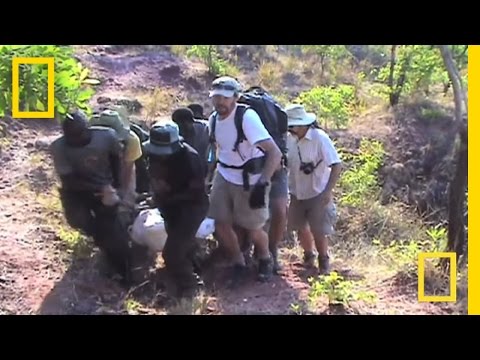
our group our research team has been
working in southern Tanzania for a few
years now and we’ve found a very
exciting new type of crocodile this
animal is very small compared to what
you think of for typical crocodiles the
skull was about three and a half inches
in length it would easily fit in the
palm of your hand and the the rocks in
which this animal were found that are
dated at about a hundred and five
million years so it’s actually quite old
it’s during the time of the dinosaurs
during the Cretaceous period and what’s
so special about this new crocodile its
what the teeth look like in this and if
you were to find just the tooth from
this animal there’s no way that you
would ever think it was a crocodile of
any kind a couple of other interesting
things about this new crocodile that
once again make it stand out is that the
nose openings the nose holes if you will
actually were directed forward instead
of up and that’s very suggestive of an
animal that in fact does not live in
water at all but was actually an animal
it was up and living in what we call the
terrestrial or environment or land
living animal and one other interesting
bit of anatomy about this new animal is
its limbs its foreign hind limbs this
animal had relatively long and slender
limbs we might think about it moving
around quite and quite an agile way
amongst the vegetation the best
comparison of animals that are alive
today would be something like a standard
house cat or you know maybe opossum you
know so we’re talking an animal of about
that body size
one of the things that stands out about
this crocodile is the nature of the
teeth and it’s very different in a
couple of ways first off it has distinct
types of teeth instead of having a
district basic conical tooth like you
would see in most crocodiles here we see
a distinct canine like – followed by a
series of small conical teeth and
towards the back of the jaw – large
molar like teeth and having teeth that
are distinctive like that along the
tooth row is is something that we
typically think of as a mammalian
feature and if we consider how these
teeth may have functioned you might
consider that those large canine like
teeth at the front of the jaw would have
been used for acquiring the food the
middle teeth are moving the the food
product further back into the mouth and
then those molar that’s where the
business is being done in that those
teeth are working together to process
food so to place this Tanzanian
crocodile into a comparative perspective
I’ve been doing Museum work in different
parts of the world different parts of
the United States spent time in the
Kenyan National Museum in Nairobi Kenya
and in doing so looking at other
crocodiles that have been discovered
from in this case East Africa so that’s
kind of our first point of comparison
when we find something in Tanzania it
might make sense well what did the other
crocodiles that were alive at that time
and living close by what did they look
like are they similar are they different
taken together we see a number of
features in this group of small bodied
terrestrial crocodiles that is land
living crocodiles that is suggestive
that they may be exploiting a niche that
would otherwise belong to the mammals
and we know that the mammals occupied
that niche in the northern hemisphere
small body size a diversity of different
skull shapes and tooth shapes so mammals
were doing that in the northern
hemisphere in the southern hemisphere
the Noto Suki and Crockett
I seem to be diversifying in such a way
that they were likely exploiting a niche
that otherwise would be considered a
place where familes would be very
successful
working in southern Tanzania for a few
years now and we’ve found a very
exciting new type of crocodile this
animal is very small compared to what
you think of for typical crocodiles the
skull was about three and a half inches
in length it would easily fit in the
palm of your hand and the the rocks in
which this animal were found that are
dated at about a hundred and five
million years so it’s actually quite old
it’s during the time of the dinosaurs
during the Cretaceous period and what’s
so special about this new crocodile its
what the teeth look like in this and if
you were to find just the tooth from
this animal there’s no way that you
would ever think it was a crocodile of
any kind a couple of other interesting
things about this new crocodile that
once again make it stand out is that the
nose openings the nose holes if you will
actually were directed forward instead
of up and that’s very suggestive of an
animal that in fact does not live in
water at all but was actually an animal
it was up and living in what we call the
terrestrial or environment or land
living animal and one other interesting
bit of anatomy about this new animal is
its limbs its foreign hind limbs this
animal had relatively long and slender
limbs we might think about it moving
around quite and quite an agile way
amongst the vegetation the best
comparison of animals that are alive
today would be something like a standard
house cat or you know maybe opossum you
know so we’re talking an animal of about
that body size
one of the things that stands out about
this crocodile is the nature of the
teeth and it’s very different in a
couple of ways first off it has distinct
types of teeth instead of having a
district basic conical tooth like you
would see in most crocodiles here we see
a distinct canine like – followed by a
series of small conical teeth and
towards the back of the jaw – large
molar like teeth and having teeth that
are distinctive like that along the
tooth row is is something that we
typically think of as a mammalian
feature and if we consider how these
teeth may have functioned you might
consider that those large canine like
teeth at the front of the jaw would have
been used for acquiring the food the
middle teeth are moving the the food
product further back into the mouth and
then those molar that’s where the
business is being done in that those
teeth are working together to process
food so to place this Tanzanian
crocodile into a comparative perspective
I’ve been doing Museum work in different
parts of the world different parts of
the United States spent time in the
Kenyan National Museum in Nairobi Kenya
and in doing so looking at other
crocodiles that have been discovered
from in this case East Africa so that’s
kind of our first point of comparison
when we find something in Tanzania it
might make sense well what did the other
crocodiles that were alive at that time
and living close by what did they look
like are they similar are they different
taken together we see a number of
features in this group of small bodied
terrestrial crocodiles that is land
living crocodiles that is suggestive
that they may be exploiting a niche that
would otherwise belong to the mammals
and we know that the mammals occupied
that niche in the northern hemisphere
small body size a diversity of different
skull shapes and tooth shapes so mammals
were doing that in the northern
hemisphere in the southern hemisphere
the Noto Suki and Crockett
I seem to be diversifying in such a way
that they were likely exploiting a niche
that otherwise would be considered a
place where familes would be very
successful
Please follow and like us: