
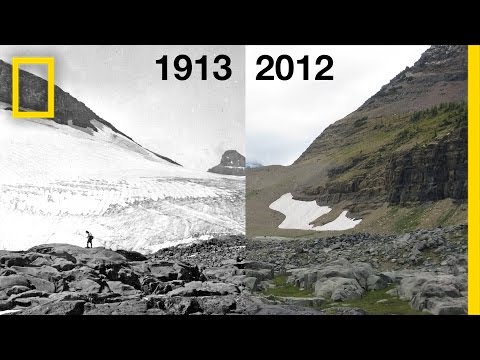
all the glaciers are shrinking in the
1800’s they were estimated to be about
150 glaciers here however today we only
have 25 glaciers
the glaciers are measured by a number of
different ways one of the most obvious
ones is using repeat photography where
we go and occupy a site from which a
photographer took a picture in say
nineteen ten and then weari photograph
that from exactly the same spot
once you go every several years to five
years or ten years that’s when you see
the really big changes when we first
started this project we thought every
other year was was going to be too much
but recently we’ve seen so much glacier
change that now we are increasing our
frequency repeating photographs or
visiting glaciers you can see that it’s
all melted away the lake has gotten
bigger all this Isis contributed to the
to the water and is retreated back up
towards the head while the mountain I
also do things that are a little bit
more modern such as taking precision
global positioning systems and going
along the margins of the ice so that we
can look at changes in the area of the
ice through time
Glacier National Park is an excellent
natural laboratory to examine the
effects of climate change this area is
actually warming at two to three times
the rate of the global average rise in
air temperatures so these increased air
temperatures are decreasing the snowpack
and the glaciers in the high country and
increasing disturbance events like
wildfires that we’re experiencing
some of the species that we’re studying
these aquatic insects might be the first
species actually to go extinct and due
to the effects of global climate change
we’ve already seen a contraction in the
distribution of some of these species in
comparison to collections that were done
back in the 1960s
even though glaciers may seem
disconnected and far away to people they
actually affect a lot of things
downstream and that’s even evident and
other things such as the way that the
snowpack affects the huckleberry crop
and this is of course a vital food
source for grizzly bears animals that
live in these upper elevations are
adapted to the colder temperatures there
and because we’re predicting warmer
temperatures they may be particularly
vulnerable to these changes they also
have very specific food needs and the
food changes for them could also
influence their ability to thrive in
spite of the fact that will be different
in the future it’s still going to be a
valuable asset to Americans both as a as
a research outdoor laboratory and and
maybe as a kind of iconic lesson as to
what climate change can do to natural
landscapes
Please follow and like us: