
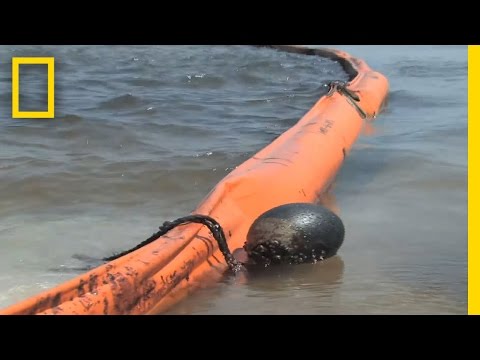
over 87 days the ruptured BP well spewed
more than 200 million gallons of oil
into the Gulf of Mexico
that’s according to government estimates
but the true extent may never be known
throughout the disaster most resources
went to plugging the leak and cleaning
up oil and from the start
scientists have been gathering data on
the spills effects on animals that live
in the Gulf every day biologists spread
out along Mississippi’s Coast and haul
in special crab traps this is the front
line and finding out what the oil is
doing to blue crabs to try and find
larval crabs particularly blue crabs
they come in from offshore and when
they’re ready to molt they’ll be looking
for a substrate where they can hide and
molt so that they’ll be safe when
they’re soft and not be eaten
researchers have been doing these
surveys for several decades and daily
for 11 years so they can compare this
year’s populations with previous years
the teams bring dozens of the traps back
to the Gulf Coast research lab they are
rinsed to wash out organisms sheltering
in the fibers of the trap then it’s to
the lab for sorting the day’s catch and
taking what amounts to a crab census
blue crabs are a keystone species which
means they’re important predators and
they’re important prey we may see a
diminished population levels for maybe a
year or so but we don’t see fishery
failure while Perry says it appears blue
crab numbers are down this year they
can’t be sure until they take their last
sample in October Perry says the crabs
life cycle presents serious risks the
animal spawns near shore and then the
tiny larvae head out to sea and pass
through several stages before returning
to settle along the coast
they were in waters that were heavily
impacted by the oil spill and the spring
spawn was on the larvae grounds and so
we’re interested in seeing how they may
have been affected it appears that they
did pick up dispersed oil droplets
beneath their shell when they were
offshore the lab runs a crab hatchery
and is closely comparing development of
crab
that have and haven’t been exposed to
oil we’re running a little experiment
now where we’re taking some of the mega
lo P that have the droplets and we’re
holding them in small dishes and and
watching them go through their molds and
and they are molting and and my guess is
that they would lose those droplets back
to the environment when they molt to
that first crab stage this study is
coordinated through the University of
Southern Mississippi and funded by the
National Science Foundation Perry says
scientists likely won’t know the extent
of the environmental damage for years
since some impacts can be slow and
subtle and the oil exposure may not end
for a long time I don’t think this is
something that’s going to be easily
discernible and those chronic effects
may not show up for for several years
though government officials say Gulf
seafood is safe for human consumption
it’s still unclear how safe the Gulf is
for its animals
more than 200 million gallons of oil
into the Gulf of Mexico
that’s according to government estimates
but the true extent may never be known
throughout the disaster most resources
went to plugging the leak and cleaning
up oil and from the start
scientists have been gathering data on
the spills effects on animals that live
in the Gulf every day biologists spread
out along Mississippi’s Coast and haul
in special crab traps this is the front
line and finding out what the oil is
doing to blue crabs to try and find
larval crabs particularly blue crabs
they come in from offshore and when
they’re ready to molt they’ll be looking
for a substrate where they can hide and
molt so that they’ll be safe when
they’re soft and not be eaten
researchers have been doing these
surveys for several decades and daily
for 11 years so they can compare this
year’s populations with previous years
the teams bring dozens of the traps back
to the Gulf Coast research lab they are
rinsed to wash out organisms sheltering
in the fibers of the trap then it’s to
the lab for sorting the day’s catch and
taking what amounts to a crab census
blue crabs are a keystone species which
means they’re important predators and
they’re important prey we may see a
diminished population levels for maybe a
year or so but we don’t see fishery
failure while Perry says it appears blue
crab numbers are down this year they
can’t be sure until they take their last
sample in October Perry says the crabs
life cycle presents serious risks the
animal spawns near shore and then the
tiny larvae head out to sea and pass
through several stages before returning
to settle along the coast
they were in waters that were heavily
impacted by the oil spill and the spring
spawn was on the larvae grounds and so
we’re interested in seeing how they may
have been affected it appears that they
did pick up dispersed oil droplets
beneath their shell when they were
offshore the lab runs a crab hatchery
and is closely comparing development of
crab
that have and haven’t been exposed to
oil we’re running a little experiment
now where we’re taking some of the mega
lo P that have the droplets and we’re
holding them in small dishes and and
watching them go through their molds and
and they are molting and and my guess is
that they would lose those droplets back
to the environment when they molt to
that first crab stage this study is
coordinated through the University of
Southern Mississippi and funded by the
National Science Foundation Perry says
scientists likely won’t know the extent
of the environmental damage for years
since some impacts can be slow and
subtle and the oil exposure may not end
for a long time I don’t think this is
something that’s going to be easily
discernible and those chronic effects
may not show up for for several years
though government officials say Gulf
seafood is safe for human consumption
it’s still unclear how safe the Gulf is
for its animals
Please follow and like us: