
you’re not going to see them unless they
want you to see them they just kind of
melt into this landscape like nothing
else my name is Richard Pickens I’m a
field tech here at the field a
Conservation Fund felidae is an
organization that’s dedicated to
protecting wild cats and their habitats
across the world and this particular
project is the Bay Area Puma project is
focused more on mountain lions and their
habitat and conservation here in the Bay
Area right now we’re in the hills east
of San Jose we’re going out there trying
to capture mountain lions and put GPS
collars on them to get a sense of where
they are how many there are what they’re
doing what they’re eating what habitat
they’re using so just kind of getting
those baseline stats on the population
here in the East Bay it’s a really great
area to study for the wildland interface
there’s never really been a project here
done before to see how people in their
encroachment into these wild places are
affecting the large cats out here we
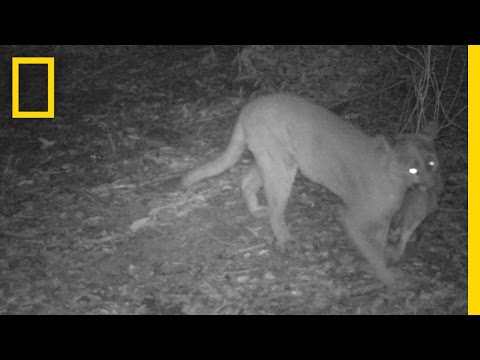
have about 23 cameras in this area alone
each site has a remote camera that is
triggered through movement any time an
animal or anything else passes by it
triggers a photograph and we get an
instant record of the date and time
right now it’s in a setup mode and so
it’s telling me whenever it’s sensing
something so when I’m wandering around
like out here I’m just trying to get it
to put up that red light which says that
the sensor is working
drainages roads and ridgetops tend to be
their most frequented areas and what
makes the site even better is if it’s a
crossroads or there’s some reason for a
cat to go there like water or if it’s a
good connecting spot from one drainage
to the other we take bait in this case
roadkill deer and set a camera up on the
road kill deer and when a cat comes and
feeds on the deer we get an instant
record of that and we can go in and put
on a trap out to try and capture the
animal so right now we have two cats
collared we have several more collars to
put out in the coming year projects just
now kind of coming into its own
basically it shows it putting its front
paws up on the branch here we had the
predator call attached up here and so
basically I was trying to check out what
was making the noise and then it just
hauled it the rest of its body its hind
legs off onto this branch the biggest
threat for mountain lions is habitat
isolation if you can conserve mountain
lion habitat you can then conserve a
large number of species that fall into
that large area she was here for a while
and she has moved up to other clusters
they only stay in a spot for for a while
if they’re usually if they’re getting
kittens or if they’ve killed something
we can figure out when they’ve actually
had a kill and we can go up and see
exactly what they’re eating 200 feet and
as we get farther and farther keep
saying as more and more down there we’ve
already extirpated all sorts of other
predators you know there used to be
wolves here there used to be bears here
they used to be grizzly bears here and
they’re really only our only top
predator left their prints over here
yeah so there’s a cache site over there
where ian is and then there are actual
leg bones and stuff over here
my gold tooth hole if you get a you can
see where they nod their to on a very
fine scale we can see what habitat the
cats are actually utilizing and if you
know what cats need to survive then you
know what you need to conserve if you
want to in turn have these animals
around
Please follow and like us: