
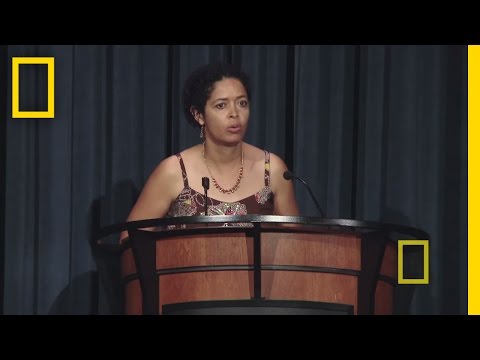
I come from Africa and I’m really proud
to be an African who is saving African
species there are many many
preconceptions that people have about
Africa it is a poor continent it’s a
continent of poverty as a continent of
starving people it’s a continent of
dictators and wars and lots of terrible
diseases like HIV and malaria but I hope
that by the end of this talk you’ll
start to reimagine the potential in
Africa and the opportunities one of the
most infuriating statements I ever heard
came from one of Africa’s worst
dictators president robert mugabe and i
was at a conference in Harare Zimbabwe
and he was opening the Convention on the
International trade in endangered
species site ease and we were having a
fierce debate about whether to reopen
the trade in ivory and President Mugabe
in his opening statement said either you
use it or you lose it this is a really
scary statement that a lot of leaders
across the world in the conservation
world as well have this idea that unless
wildlife biodiversity nature can be
turned into dollars it’s not worth
keeping and that just seems really
ridiculous to me why are we commodifying
nature we don’t do it with historical
monuments we don’t say well actually
that would make a much better parking
lot we could make more money from it you
know we don’t do that with works of art
we don’t with any human creation
actually if you think about it why do we
put nature’s creation you know it’s
either or if it makes more money you
know let’s convert it my introduction to
conservation was at a very young age I
left high school and I was completely
intoxicated by a book I read by dr. Iain
douglas-hamilton it was called living
with elephants I don’t know if any of
you have read it but it’s an
extraordinary book about a man who came
to Africa lived with a herd of elephants
in
and actually got to know them as
individuals what we know about elephants
today you know it’s incredible they are
like people they live in families the
matriarch the mothers take care of them
the children play and they learn from
their mothers the ants and the sisters
take care of all the young that just
like humans it’s easy to fall in love
with elephants but Ian hired me not to
go to manyara and not to do research on
these wonderful living beasts but to
measure Kenya’s ivory stockpile in 1989
can you had 12 tons of ivory sitting in
a stockpile and we measured every single
tusk we measured the length on the outer
edge the inner edge the depth of the
tusks and the circumference and that
information told us about the age of the
elephants that were killed and also
whether they were males or females that
introduction really depressed me was
actually very traumatic because what we
discovered was that over the previous 15
years poachers were killing increasingly
younger elephants every year because
they’d taken off all the old guys they
were killing baby elephants they were
killing elephants that hadn’t even
reached adolescence and as a young
conservationist or somebody who wanted
to go into conservation I just thought
you know there is no hope forget it
these animals are going to be extinct in
just a few years time and then something
extraordinary happened the president of
Kenya who was being urged to sell
Kenya’s ivory on the international
markets to people far away in China who
want to have trinkets made of this
wonderful substance made of elephants
teeth and he said no we’re not going to
put our ivory on the market that is
what’s killing our elephants we’re going
to burn it we’re going to make a
statement to the world in this really
audacious statement where 12 tons of
ivory worth many millions of dollars was
set alight and there was my research it
all went up in smoke
but it was an extraordinary moment for
me to realize that actually if we’re
going to do conservation in Africa we
have to be audacious we’ve got to be
courageous and we’ve got to think big
the statement that Kenya made by burning
that Irie led to a total ban on
international trade in ivory and that
lasted for quite a while but very
recently the trade in ivory has actually
been reopened partially a few countries
in southern Africa have been allowed to
put their ivory back on the
international markets bought by China
and Japan which of course all that has
done is exactly what we predicted
elephants are again in danger because
the illegal trade has started up because
we basically have fed the demand for
ivory in China well there are 1.6
million people in China who would love
to have a piece of ivory you can’t feed
that demand from all the elephants in
Africa and Asia it’s just no way just
two weeks ago I was in a place called
galana just next to the famous Tsavo
National Park where this elephant his
name is Achille was shot by a poacher
there were three elephants together
poachers shot them to get at their ivory
two of them died but I clearly was
injured a bullet went right through his
body from one side and out the other and
when we saw this elephant he was
actually wondering about in extreme pain
it was just pure luck that we were there
I called the head of the Kenya Wildlife
Service who sent an aircraft with a
veterinarian who’s standing there on the
right the veterinarian darted this
wonderful elephant treated his wound and
revived him and akili is fine today but
the cost of that operation is several
thousand dollars getting that aircraft
getting that vet out there it was a
weekend treating him having all the
ranges around to protect the place and
then to patrol and try and protect these
elephants and the cost of conservation
in Africa is something that is really
not appreciated you know Kenya can make
as many statements as it once and it can
have all the goodwill it once but
actually financing conservation is very
difficult especially given the fact that
most of the wildlife in Kenya is not in
protected areas and protected areas is
where tourists go that’s where the
country generates revenue for
conservation but seventy percent of the
wildlife in Kenya doesn’t actually live
inside national parks that means that if
going to save my life not just in Kenya
across Africa Africa the last continent
with megafauna like elephants rhinos
lions and drafts we’re going to have to
work with the landowners not just
government but landowners and people who
live on the landscape with this wildlife
and that’s why it’s so important to find
solutions to living with nature I do my
work through several organizations and I
just want to show you quickly what what
they are Wildlife direct is a blogging
platform it allows conservationists
anywhere in Africa to tell their stories
from the field and very remote in wild
places and it allows us to actually get
a glimpse of what’s happening as it’s
happening from the very people on the
ground who can communicate with an
audience internationally anywhere in the
world and they can help people on the
ground to actually do their work by
making donations I also run the Kenya
land conservation trust and this is a
national organization that is trying to
secure the land that I’ve just talked
about land outside of protected areas
buffer zones wildlife corridors
migration areas dispersal areas and keep
habitats for endangered species and who
doesn’t love lions in this room there
there I dare you to put your hand up no
lions are lions are ya one of the most
extraordinary species i mean i i’ve
worked with elephants I’d adore
elephants lions are very similar the
only cat in the world that lives in
families again I think there’s a human
connection here there attracts me this
photograph was taken just you know
kilometre from my house I live on the
edge of the Nairobi National Park and
this is one of the most extraordinary
places in the world Nairobi National
Park is home to about 50 lions and I
wake up my wake-up call is roaring of
lions it’s just extraordinary I’m very
privileged to live in a place which
still has nature like that right on my
doorstep and that’s why I’m so
passionate about saving it but this
sound the roaring of lions is not
something that’s going to be around with
us very long unless we do something very
dramatic to save the large predators the
large mammals of Africa how many of you
have been to Nairobi fantastic wonderful
well those of you who haven’t and even
those of you who have
you probably are aware that this is one
of the most iconic sights of the city
it’s from the National Park almost
everyone I speak to has been to Nairobi
tells me that the lasting memory they
have of this city is wildlife with a
backdrop of the city it’s still a wild
place this is not a zoo it’s a hundred
and seventeen square kilometres it’s
four kilometres from the city centre and
the northern boundary of the park is
bound by the city but the southern
boundary is open and the wildlife of
this park is migratory this is what the
park looks like it’s just on the
southeast edge of the city this is the
purple line is the city boundary and the
National Park you know just rest right
there all of this here is open there is
no fansub barrier that prevents animals
from moving out of the National Park
well narrow be is the capital city of
Kenya and Kenya is the regional hub of
East Africa this city is right along the
trans African highway that highway takes
goods from the port of Mombasa all
across East Africa and into the Congo
and that means that this city is
actually gearing itself up to be the
major industrial and commercial hub for
Tanzania Uganda Congo Rwanda Burundi
Sudan and Somalia and Ethiopia the
amount of development going on in
Nairobi today is actually quite
frightening it’s a city that is in a
massive state of growth that’s financed
primarily by the Chinese I’m very soon
this boundary is going to come all the
way around here and it’s going to
attempt to come a roll right on the
bottom and my biggest concern right now
is this road here that’s a highway to
take traffic off the Mombasa highway
south of the city I’m back onto the pie
way up there and that will allow trucks
and major commerce to traverse the
country without having to go through the
you know the quagmire of traffic in the
middle of the city well this park is not
just a little part that you can cut off
with a highway like that that highway
would prevent the movement of wildlife
and this these lines here represent the
movements of wildebeest zebra lions
is impalas coax hartebeest thousands of
animals move out of that national park
and into the ecosystem and all these
little blocks down here although the
land is actually quite open physically
on the ground all these little blocks
represent individual title owners land
owners who have a piece of land most of
the people who live here are
pastoralists they live with nature they
have wildlife in their backyard all the
time I’m a graze cattle out on the
plains well what’s happening around
nairobi is this massive growth we’re
seeing factories coming up housing
estates which are coming into that area
which is where the wildlife my grades
and one of the scariest things that’s
happening is the city of nairobi which
is famed for its slums like this one is
Mathare Valley the oldest slummin in the
city of Nairobi where people who have
really good intentions are trying to
deal with the problem of poverty in
these lumps and and the congestion so
they’re started this great project where
they’re taking people out of the slum or
putting them in places that look wild
and open like that area south of the
Nairobi National Park this is a housing
estate for something like 50,000 people
and conservationists tried to fight this
project because it’s right in the middle
of the dispersal area for the wildebeest
and all these other species and so I met
this lady here her name is Jane she
comes from Mathare Valley she was a
battered wife she has four children and
she abandoned her husband because of the
abuse she was receiving and she went to
the city moved into the salaam into a
one-room which is about the size of a
prison cell with her four children and
she ended up becoming a sex worker got
HIV and then she was given an
opportunity to move into this housing
estate only when you hear a story you
can’t feel for her her life is
transformed her children are in a safe
environment but she’s right in the
middle of the wildebeest migration and
so it’s a major problem development in
the city of in city of nairobi is
actually working against conservation
but the rest of the people in this
landscape are pastoralists masai
pastoralists and their lives depend on
the ability to move through open spaces
because they need to track the rainfall
in the grazing
because of all of the congestion and
development in this area they’re
actually losing space they’re degrading
the landscape so what we’re seeing
increasingly as desertification and when
we have droughts the results are just
devastating and this is a result of the
drought the last drought that happened
we lost eighty percent of the cattle in
this area and what happens is that
people become less tolerant of predators
when they lose their animals when their
animal herds have become so small and
lions do attack their livestock and what
happens is people then decide to take
action they spear the Lions and kill
them and increasingly they’re using
pesticides to poison them and this is
just one of those illustrations Kenya
has lost most of her Lions we had 15,000
Lions just 20 years ago today there’s
fewer than 2000 Lions primarily because
of pesticide poisoning so what’s the
future for an area like this how do we
balance nature and conservation with
development what should a child growing
up in this environment expect and what
about the wildlife what can they expect
one of the messages I want to make is
that in order to protect these wild
areas we don’t need to decide this
development or a conservation I really
truly believe that it can be both what I
think is that we really need to think
big we need to be courageous we need to
do things before it’s too late it’s
going to take some really creative
thinking and that’s why I’m hoping but
in this audience there are people who
have some great ideas and resources that
we can tap into we need money lots and
lots of money to actually put together
these plans we’ve got to build
structures like the banff highway in
canada so that animals can cross these
massive highways that the government
wants to put in we’ve got to do proper
planning and we need to make it make
sense to landowners to do conservation
and that’s how we’re going to save while
F in Africa thank
you
you
to be an African who is saving African
species there are many many
preconceptions that people have about
Africa it is a poor continent it’s a
continent of poverty as a continent of
starving people it’s a continent of
dictators and wars and lots of terrible
diseases like HIV and malaria but I hope
that by the end of this talk you’ll
start to reimagine the potential in
Africa and the opportunities one of the
most infuriating statements I ever heard
came from one of Africa’s worst
dictators president robert mugabe and i
was at a conference in Harare Zimbabwe
and he was opening the Convention on the
International trade in endangered
species site ease and we were having a
fierce debate about whether to reopen
the trade in ivory and President Mugabe
in his opening statement said either you
use it or you lose it this is a really
scary statement that a lot of leaders
across the world in the conservation
world as well have this idea that unless
wildlife biodiversity nature can be
turned into dollars it’s not worth
keeping and that just seems really
ridiculous to me why are we commodifying
nature we don’t do it with historical
monuments we don’t say well actually
that would make a much better parking
lot we could make more money from it you
know we don’t do that with works of art
we don’t with any human creation
actually if you think about it why do we
put nature’s creation you know it’s
either or if it makes more money you
know let’s convert it my introduction to
conservation was at a very young age I
left high school and I was completely
intoxicated by a book I read by dr. Iain
douglas-hamilton it was called living
with elephants I don’t know if any of
you have read it but it’s an
extraordinary book about a man who came
to Africa lived with a herd of elephants
in
and actually got to know them as
individuals what we know about elephants
today you know it’s incredible they are
like people they live in families the
matriarch the mothers take care of them
the children play and they learn from
their mothers the ants and the sisters
take care of all the young that just
like humans it’s easy to fall in love
with elephants but Ian hired me not to
go to manyara and not to do research on
these wonderful living beasts but to
measure Kenya’s ivory stockpile in 1989
can you had 12 tons of ivory sitting in
a stockpile and we measured every single
tusk we measured the length on the outer
edge the inner edge the depth of the
tusks and the circumference and that
information told us about the age of the
elephants that were killed and also
whether they were males or females that
introduction really depressed me was
actually very traumatic because what we
discovered was that over the previous 15
years poachers were killing increasingly
younger elephants every year because
they’d taken off all the old guys they
were killing baby elephants they were
killing elephants that hadn’t even
reached adolescence and as a young
conservationist or somebody who wanted
to go into conservation I just thought
you know there is no hope forget it
these animals are going to be extinct in
just a few years time and then something
extraordinary happened the president of
Kenya who was being urged to sell
Kenya’s ivory on the international
markets to people far away in China who
want to have trinkets made of this
wonderful substance made of elephants
teeth and he said no we’re not going to
put our ivory on the market that is
what’s killing our elephants we’re going
to burn it we’re going to make a
statement to the world in this really
audacious statement where 12 tons of
ivory worth many millions of dollars was
set alight and there was my research it
all went up in smoke
but it was an extraordinary moment for
me to realize that actually if we’re
going to do conservation in Africa we
have to be audacious we’ve got to be
courageous and we’ve got to think big
the statement that Kenya made by burning
that Irie led to a total ban on
international trade in ivory and that
lasted for quite a while but very
recently the trade in ivory has actually
been reopened partially a few countries
in southern Africa have been allowed to
put their ivory back on the
international markets bought by China
and Japan which of course all that has
done is exactly what we predicted
elephants are again in danger because
the illegal trade has started up because
we basically have fed the demand for
ivory in China well there are 1.6
million people in China who would love
to have a piece of ivory you can’t feed
that demand from all the elephants in
Africa and Asia it’s just no way just
two weeks ago I was in a place called
galana just next to the famous Tsavo
National Park where this elephant his
name is Achille was shot by a poacher
there were three elephants together
poachers shot them to get at their ivory
two of them died but I clearly was
injured a bullet went right through his
body from one side and out the other and
when we saw this elephant he was
actually wondering about in extreme pain
it was just pure luck that we were there
I called the head of the Kenya Wildlife
Service who sent an aircraft with a
veterinarian who’s standing there on the
right the veterinarian darted this
wonderful elephant treated his wound and
revived him and akili is fine today but
the cost of that operation is several
thousand dollars getting that aircraft
getting that vet out there it was a
weekend treating him having all the
ranges around to protect the place and
then to patrol and try and protect these
elephants and the cost of conservation
in Africa is something that is really
not appreciated you know Kenya can make
as many statements as it once and it can
have all the goodwill it once but
actually financing conservation is very
difficult especially given the fact that
most of the wildlife in Kenya is not in
protected areas and protected areas is
where tourists go that’s where the
country generates revenue for
conservation but seventy percent of the
wildlife in Kenya doesn’t actually live
inside national parks that means that if
going to save my life not just in Kenya
across Africa Africa the last continent
with megafauna like elephants rhinos
lions and drafts we’re going to have to
work with the landowners not just
government but landowners and people who
live on the landscape with this wildlife
and that’s why it’s so important to find
solutions to living with nature I do my
work through several organizations and I
just want to show you quickly what what
they are Wildlife direct is a blogging
platform it allows conservationists
anywhere in Africa to tell their stories
from the field and very remote in wild
places and it allows us to actually get
a glimpse of what’s happening as it’s
happening from the very people on the
ground who can communicate with an
audience internationally anywhere in the
world and they can help people on the
ground to actually do their work by
making donations I also run the Kenya
land conservation trust and this is a
national organization that is trying to
secure the land that I’ve just talked
about land outside of protected areas
buffer zones wildlife corridors
migration areas dispersal areas and keep
habitats for endangered species and who
doesn’t love lions in this room there
there I dare you to put your hand up no
lions are lions are ya one of the most
extraordinary species i mean i i’ve
worked with elephants I’d adore
elephants lions are very similar the
only cat in the world that lives in
families again I think there’s a human
connection here there attracts me this
photograph was taken just you know
kilometre from my house I live on the
edge of the Nairobi National Park and
this is one of the most extraordinary
places in the world Nairobi National
Park is home to about 50 lions and I
wake up my wake-up call is roaring of
lions it’s just extraordinary I’m very
privileged to live in a place which
still has nature like that right on my
doorstep and that’s why I’m so
passionate about saving it but this
sound the roaring of lions is not
something that’s going to be around with
us very long unless we do something very
dramatic to save the large predators the
large mammals of Africa how many of you
have been to Nairobi fantastic wonderful
well those of you who haven’t and even
those of you who have
you probably are aware that this is one
of the most iconic sights of the city
it’s from the National Park almost
everyone I speak to has been to Nairobi
tells me that the lasting memory they
have of this city is wildlife with a
backdrop of the city it’s still a wild
place this is not a zoo it’s a hundred
and seventeen square kilometres it’s
four kilometres from the city centre and
the northern boundary of the park is
bound by the city but the southern
boundary is open and the wildlife of
this park is migratory this is what the
park looks like it’s just on the
southeast edge of the city this is the
purple line is the city boundary and the
National Park you know just rest right
there all of this here is open there is
no fansub barrier that prevents animals
from moving out of the National Park
well narrow be is the capital city of
Kenya and Kenya is the regional hub of
East Africa this city is right along the
trans African highway that highway takes
goods from the port of Mombasa all
across East Africa and into the Congo
and that means that this city is
actually gearing itself up to be the
major industrial and commercial hub for
Tanzania Uganda Congo Rwanda Burundi
Sudan and Somalia and Ethiopia the
amount of development going on in
Nairobi today is actually quite
frightening it’s a city that is in a
massive state of growth that’s financed
primarily by the Chinese I’m very soon
this boundary is going to come all the
way around here and it’s going to
attempt to come a roll right on the
bottom and my biggest concern right now
is this road here that’s a highway to
take traffic off the Mombasa highway
south of the city I’m back onto the pie
way up there and that will allow trucks
and major commerce to traverse the
country without having to go through the
you know the quagmire of traffic in the
middle of the city well this park is not
just a little part that you can cut off
with a highway like that that highway
would prevent the movement of wildlife
and this these lines here represent the
movements of wildebeest zebra lions
is impalas coax hartebeest thousands of
animals move out of that national park
and into the ecosystem and all these
little blocks down here although the
land is actually quite open physically
on the ground all these little blocks
represent individual title owners land
owners who have a piece of land most of
the people who live here are
pastoralists they live with nature they
have wildlife in their backyard all the
time I’m a graze cattle out on the
plains well what’s happening around
nairobi is this massive growth we’re
seeing factories coming up housing
estates which are coming into that area
which is where the wildlife my grades
and one of the scariest things that’s
happening is the city of nairobi which
is famed for its slums like this one is
Mathare Valley the oldest slummin in the
city of Nairobi where people who have
really good intentions are trying to
deal with the problem of poverty in
these lumps and and the congestion so
they’re started this great project where
they’re taking people out of the slum or
putting them in places that look wild
and open like that area south of the
Nairobi National Park this is a housing
estate for something like 50,000 people
and conservationists tried to fight this
project because it’s right in the middle
of the dispersal area for the wildebeest
and all these other species and so I met
this lady here her name is Jane she
comes from Mathare Valley she was a
battered wife she has four children and
she abandoned her husband because of the
abuse she was receiving and she went to
the city moved into the salaam into a
one-room which is about the size of a
prison cell with her four children and
she ended up becoming a sex worker got
HIV and then she was given an
opportunity to move into this housing
estate only when you hear a story you
can’t feel for her her life is
transformed her children are in a safe
environment but she’s right in the
middle of the wildebeest migration and
so it’s a major problem development in
the city of in city of nairobi is
actually working against conservation
but the rest of the people in this
landscape are pastoralists masai
pastoralists and their lives depend on
the ability to move through open spaces
because they need to track the rainfall
in the grazing
because of all of the congestion and
development in this area they’re
actually losing space they’re degrading
the landscape so what we’re seeing
increasingly as desertification and when
we have droughts the results are just
devastating and this is a result of the
drought the last drought that happened
we lost eighty percent of the cattle in
this area and what happens is that
people become less tolerant of predators
when they lose their animals when their
animal herds have become so small and
lions do attack their livestock and what
happens is people then decide to take
action they spear the Lions and kill
them and increasingly they’re using
pesticides to poison them and this is
just one of those illustrations Kenya
has lost most of her Lions we had 15,000
Lions just 20 years ago today there’s
fewer than 2000 Lions primarily because
of pesticide poisoning so what’s the
future for an area like this how do we
balance nature and conservation with
development what should a child growing
up in this environment expect and what
about the wildlife what can they expect
one of the messages I want to make is
that in order to protect these wild
areas we don’t need to decide this
development or a conservation I really
truly believe that it can be both what I
think is that we really need to think
big we need to be courageous we need to
do things before it’s too late it’s
going to take some really creative
thinking and that’s why I’m hoping but
in this audience there are people who
have some great ideas and resources that
we can tap into we need money lots and
lots of money to actually put together
these plans we’ve got to build
structures like the banff highway in
canada so that animals can cross these
massive highways that the government
wants to put in we’ve got to do proper
planning and we need to make it make
sense to landowners to do conservation
and that’s how we’re going to save while
F in Africa thank
you
you
Please follow and like us: