
New York is very rich in the truth
it has over 350 five different species
that migrate through here or live here
or breed here birds from South America
Central America come up the Atlantic and
they travel right through New York and
they’ve been doing it for thousands of
years of course in the last thousand
years we have put up a lot of obstacles
and our tall buildings are the number
one cause of distress for the burbs I’m
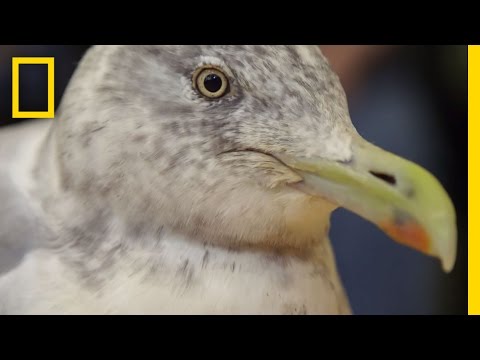
sorry are you gonna be quiet and then I
could put you back be quiet
all right after that it’s our cars our
bicycles our trucks and then our pets
dogs and cats and lastly really it’s our
our trash our poisons our pesticides
we’re treating 12 Birds
right now for lead poisoning where did
they get it they got it in the
environment how did it get there from us
at the wild bird fund Center people come
in from the five boroughs they come in
with a bird in hand and they’ve gone to
a great deal of trouble to find us they
take off half the day to to rescue this
bird they often have to hold it for a
splint to be made because we don’t have
enough people here and they always say
oh thank you thank you thank you we have
to turn and say thank you for caring
enough to pick up that bird and bring it
in when we first opened the center in
2012 we saw 1500 Birds last year 2013 it
was 2,300 and we believe this year it
will be over 3,000 a lot of birds we
need other centers in the city we’re the
only one for New York
you have dealt with 130 different
species of birds on the greatest number
of birds we get our pigeons pigeons
starlings and sparrows and people think
of those as the garbage Birds we’re very
fond of pigeons particularly they’re so
smart and then the whole range you know
great blue heron little hummingbird
little kinglet we’ll have five in a row
and they’re all were born this year
they’re learning it the hard way
if it spikes just now and she’s feeling
the pain by the state statistics 50% on
the birds that come into rehab die or
euthanize the ones that come in who are
doing well we try to make their end as
peaceful stress-free pain-free as
pleasant as possible but then the other
50% go free it can take a long time a
few days or one day if it’s a headbang
collision with a window but if you’ve
got broken legs and broken wings it’s
two weeks with a splint another week of
Kade rest and then a week of really
exercising to get the muscles back and
then they can go free they realize we’re
actually trying to help them that we’re
not holding them captive and then
they’re the ones who they’ve decided
I’ve been here long enough and I’m going
to get out of here and they go to the
door and they look out and they try to
escape but they have a few more days to
finish their medicine and then they can
go and they’re happy when they go and
they rarely look back but sometimes they
do in in point of fact probably we might
make a difference in one or two species
slightly like we do help the peregrines
we have five this year young Peregrine’s
that needed help they’re only 20 nesting
pairs in the city so to help five
Peregrine’s that’s a good number
where will we make a difference is
changing people’s attitudes I guess I
think I’m ready to make them think yes I
want to make sure that I’m taking care
of the wildlife if I find this injured
bird now maybe I’m going to think of its
habitat
maybe I realize now that it flies all
this way and comes through New York
maybe we should change our glass
to make awareness of their needs is our
greater mission okay it feels good to do
makes a difference to that individual
bird and it makes a difference to the
person brought it in good guy that’s all
those worms behind now thank you
Please follow and like us: