
grand staircase-escalante national
monument is this 2 million acre area in
southern Utah and it represents one of
the last great unexplored regions for
dinosaurs in North America the thing
that I enjoy most about being a
paleontologist is just being out there
walking around and never knowing whether
you might find the equivalent of a
prehistoric Picasso well a typical day
in the field starts with getting up when
the Sun comes up get all the tools in
our bags and food all the lunch ready
and then we head out you can be almost
guaranteed of a lot of walking every
single day the terrain is extremely
rugged the hills are very steep in some
cases we can only even walk on the
ridges and in the valleys the hardest
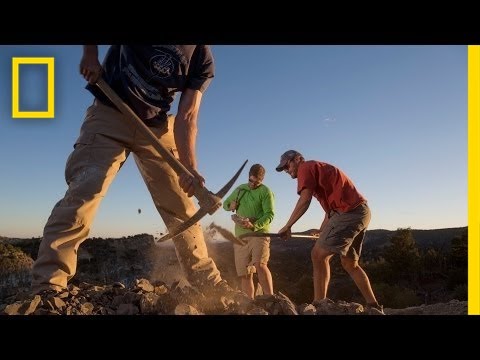
thing about dinosaur paleontology is not
finding the dinosaurs it’s not removing
the fossils from the ground it’s
actually removing the rock that covers
the layers where the fossils are
well after we find the specimen we have
to protect it somehow when it comes to
leaves we typically wrap these leaves up
with lots and lots of toilet paper and
that can protect the leaf from being
damaged and we try and do that pretty
soon after it’s exposed with dinosaur
bones it’s another story we first cover
the boat in some kind of tissue paper
towel or something so the plaster
doesn’t stick to the fossil but
ultimately the entire fossil ends up
jacketed as we call it in this coating
of plaster and burlap and that’s what
protects it to get it out of the field
we typically work until it gets dark we
wander back to camp occasionally people
get really excited out prospect and they
don’t come back until after dark we come
back to camp we do the same kind of
communal sitting around eating and
chatting around the campfire and then
most of us heard a bed pretty early
because we know we got to get up the
next day and do the same thing all over
again
you
monument is this 2 million acre area in
southern Utah and it represents one of
the last great unexplored regions for
dinosaurs in North America the thing
that I enjoy most about being a
paleontologist is just being out there
walking around and never knowing whether
you might find the equivalent of a
prehistoric Picasso well a typical day
in the field starts with getting up when
the Sun comes up get all the tools in
our bags and food all the lunch ready
and then we head out you can be almost
guaranteed of a lot of walking every
single day the terrain is extremely
rugged the hills are very steep in some
cases we can only even walk on the
ridges and in the valleys the hardest
thing about dinosaur paleontology is not
finding the dinosaurs it’s not removing
the fossils from the ground it’s
actually removing the rock that covers
the layers where the fossils are
well after we find the specimen we have
to protect it somehow when it comes to
leaves we typically wrap these leaves up
with lots and lots of toilet paper and
that can protect the leaf from being
damaged and we try and do that pretty
soon after it’s exposed with dinosaur
bones it’s another story we first cover
the boat in some kind of tissue paper
towel or something so the plaster
doesn’t stick to the fossil but
ultimately the entire fossil ends up
jacketed as we call it in this coating
of plaster and burlap and that’s what
protects it to get it out of the field
we typically work until it gets dark we
wander back to camp occasionally people
get really excited out prospect and they
don’t come back until after dark we come
back to camp we do the same kind of
communal sitting around eating and
chatting around the campfire and then
most of us heard a bed pretty early
because we know we got to get up the
next day and do the same thing all over
again
you
Please follow and like us: