
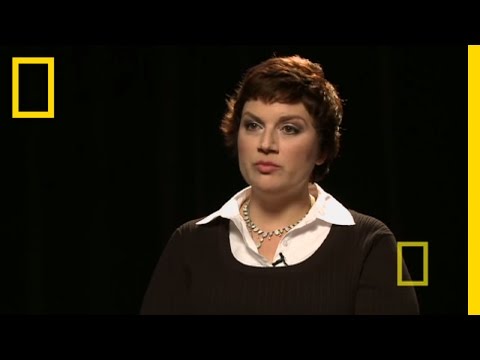
I had a driver who used to call me
teacher the Sun because well he used to
get up with me at dawn every morning
before dawn to photograph and he was
also it was just accustomed to my
obsession with how the light was falling
so this is what he called me Oh Stassi
a’tall chumps which means teacher of the
Sun in Arabic
I’ve been taking pictures since I was a
little girl about really six and a half
seven years old and then got a little
more serious about it when I was not on
your so hope my father really taught me
a lot he was a movie director and a
movie editor he would do things like
when he was making a movie he would let
me sit on his lap while he was editing
it and let me make cuts and he’d tell me
why this film was being cut in that
place in order to tell a story in this
way or that way and he also used to
dissect wife magazine with me this
pictures run large for this reason and
this small for this reason here’s the
establishing shot so he really
influenced me very deeply very young
I’m primarily a journalist but in order
to tell the stories I need to tell in
order to touch people I need to be able
to express myself and it expressed the
stories I’m seeing in an artistic form
and that’s nothing that you know
necessarily thought out is specifically
in that way it’s just something that I
know how to do its just using the camera
but it’s a very fluid thing for me it’s
a very natural form of expression it’s
not abstract to me people can jump right
through that lens at me and I I can my
heart goes out through that lens to them
and hopefully that ends up on film and
and that becomes something that somebody
at their breakfast table opens and
magazine and sees data and learn
something about another part of the
world and other people something that I
really try to capture is everything
that’s happening in life it’s not only
the center of the photograph but it’s
what’s coming in on the side and in some
ways it’s very much like music you know
it’s like there are different layers and
paths that kind of tell a story with in
one piece of music and I try to embed
that in a photograph in a way so pure
pleasure for me to make pictures I love
making photographs and and getting to
know people around the world just even
shopping for your groceries it’s a
wonderful thing because that’s your life
you’re living in Moscow or you’re living
in Gaza and your those shopkeepers are
your shopkeepers and then those people
on the front lines become your neighbors
that’s a whole different way of relating
to people than just dropping in on us
Dori and seeing them for two weeks which
you can also end up with profound
pictures that way obviously because
you’re trained to do it and that’s what
you do and but it adds another personal
level to it when you live there
if you work in conflict situations year
after year after year obviously you have
to have the Constitution for it and it
has to feel somewhat comfortable to you
to be in those situations that doesn’t
mean that I didn’t get scared of course
I did I mean there were times when I got
scared when I shouldn’t have been and
sometimes I wasn’t afraid when I should
have been and other times you know you
know I just didn’t feel afraid most of
the time I didn’t and usually you’re so
busy trying to make a really good
picture out of chaos and watching your
back watching your partner’s back that
it’s just it is it does become
instinctive I don’t think about failure
I don’t imagine failure I don’t that
does work comes into the picture for me
I take an assignment or give myself an
assignment and I do it and I just if I
encounter resistance I’m just very
persistent
I try to mix up my aesthetics you know I
tried to react to what I’m seeing
whether the situation calls for portrait
or it calls for just being a fly on the
wall letting things unfold I love to use
a wide angle lens and i love the
complexity of life just as it unfolds I
don’t you know I’m not that crazy about
studio photography and things like that
I like reality you know it’s one of the
great joys of photography it’s floating
so you this day is just to street you
and whatever comes toward me and I come
toward it and what happens in that
moment ends up being the picture and
that’s a wonderful thing it’s not
planned at all I had a very very very
deep commitment to telling stories about
people who were struggling for freedom
basically I felt committed to to follow
those stories and to capture them and I
think there’s a personal satisfaction in
being able to make a visually
comprehensible document something that
speaks to people in that kind of chaos
you
there’s another memoir me I think
because there are all those places that
aren’t in the Muslim world the Muslim
world that’s a path within my work but
there are all those other places too and
experiences to which I want to write
about and share with people
Please follow and like us: