
the BAE’s gotten a lot dirtier there’s a
lot more algae blooms and a lot more
sedimentation I’ve seen debate when I
was a teenager in the summer and the
baby very common to have visibility 12
or 15 feet even 25 or 30 feet in some
places now you’re lucky if you can see
down a foot as we learn more about what
causes our bathes degrade we’re going to
learn more about what will fix it and I
think that’s what our oyster program
here is helping to do so all these
shells are full of barnacle but it’s
also good for the spat as well so so
Chris you want to be the counter in
chief Maryland apartment natural
resources has a really effective
moisture gardening program called
Marylanders grow oysters and what they
do is they recruit waterfront property
owners that have piers or something and
they provide them with baby oysters or
with respect and they hold them in trays
under their pier for a year and the
oysters grow and the citizens go out and
they take care of those and then once a
year Maryland DNR pixels oysters up
takes them to a sanctuary area puts them
on the bottom while they were where they
will create this wonderful diverse
oyster ecosystem the main issue in the
Potomac River estuary in my opinion is
nutrients that means high algal blooms
floating on the water that sinks it
causes low dissolved oxygen which we
also call hypoxia or anoxia
so we are hoping that with our research
on the potential for aquaculture of
oysters to reduce the symptoms of water
quality health by taking them out of the
water body through filtration our oyster
hatchery here like most other hatcheries
we can control the temperature here and
we can get orders to be ready to spawn
pretty much whenever we want them to
once they spawn we collect the eggs we
fertilize the eggs we grow the larvae in
large tanks and it takes two to four
weeks from the time the eggs are spawned
and turning from a larva swimming larvae
into a spat those that have to go into
some kind of a structure that is held
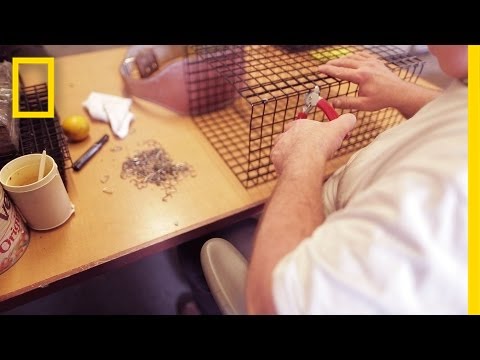
under the pier Maryland has a
cooperative program with the inmates in
Hagerstown at one of the prisons and
they actually provide the manpower to
build the cages why am i building which
the cages will to replenish the bay and
coming here put them together we do
approximately uh to two pounds a day
about 130 cages we have several guys
working on them they have different
stages when they get bored of doing one
area we switch them to another area that
way nobody gets monotonous about their
own jobs and also it goes pretty
smoothly really what it does is provide
a lot of our inmates for a valuable work
and a chance to contribute to society so
we think we’re doing that
we make these these four department
naturally more sources they pay us our
inmates were working on these and that
money goes back to pay the inmates pay
our salaries pay our trucks to deliver
them it work totally self-supporting
this all started by a flyer we had seen
in the mailbox which originally it was
going to be four cages I said we can
take more than that eight and then it
grew to ten so we’ve run ten cages for
the past two years it’s purely volunteer
so the biggest thing for us is we have
to make sure we’re down here every every
two weeks and do the oyster shaking
being down here we just we love the area
and we know the Chesapeake Bay is
challenged with keeping water quality up
we know the oysters are challenged
because they’ve dropped off so much over
the years and we thought this was our
way of maybe giving back a little bit
it’s not just the oysters that are
filtering it’s the community that the
oyster themselves generate lots of
things come and live around oysters many
of them are also filter feeders so when
we talk about the filtering capacity of
oysters what we really should be talking
about is the filtering capacity of the
community that develops because we’ve
put orders out there
you
Please follow and like us: