
the Protestant Reformation of the
sixteenth century
shook the very foundation of Europe’s
cultural identity the Reformation was a
revolution of religion in Western Europe
essentially it was the result of
centuries worth of political and social
grievances against the Christian Church
as it existed Christianity which began
as a fledgling religion in the first
century had grown by the 13th century
into an institution powerful enough to
rival state governments for instance the
Pope then the leader of the Christian
Church had greater political and
military influence than some emperors
and kings this tension was exacerbated
by the transformative social and
intellectual period known as the
Renaissance in particular this period
involved the rise of humanism a
philosophy that shifted man’s faith from
being determined by religious doctrine
to being determined by man himself
additionally some within the church
believed it had become increasingly
corrupt priests like John Wycliffe of
England and yon HUS of Bohemia
challenged the church’s teachings which
they believed had strayed away from the
Bible however one of the most well known
advocates for a reformed Christian
church was a German priest named Martin
Luther Martin Luther began to question
the church in the early 1500s he
believed it was abusing its power and
disagreed with some of its practices for
instance he challenged the church’s
doctrine that stated the Pope not the
Bible was the ultimate spiritual
authority plus he criticized the church
for selling indulgences the practice of
purchasing forgiveness for one sins by
giving money to the church Luther
believed the church needed to revise its
doctrine by returning to the Bible’s
teachings and by saying that salvation
could be granted by faith in Christ
alone
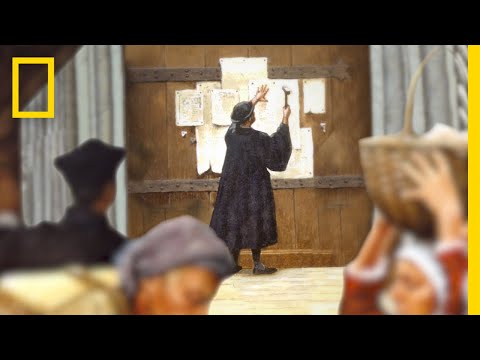
so on October 31st 1517 Luther took a
stand and what’s considered the birth of
the Protestant Reformation Luther is
said to have nailed 95 theses or
arguments against the church on to the
door of Castle Church in Wittenberg
Germany Luther was later put on trial in
front of church officials to defend his
theses but in January 1521 the church
declared Luther a heretic and
excommunicated him while Luther’s
membership with the church ended the
Reformation he argued for started to
gain momentum
unlike Luther’s predecessors who
challenged the church Luther had one
tool at his disposal that they didn’t
have the printing press this new
invention allowed his arguments to be
copied and spread across Europe this
unprecedented access to ideas such as
Luther’s inspired many others to
challenge the church there by splitting
Christianity into two major
denominations Catholic and Protestant
from the word protest also the Bible
became more accessible Luther and other
reformists translated biblical text from
Latin which was only known by nobility
and church officials to German English
and French
languages spoken by the general public
while the Protestant Reformation
revolutionised the Christian faith it
had ramifications that extended beyond
religion prior to the Reformation many
Europeans were dependent on an educated
upper class but perhaps the most
resounding impact of the Reformation was
that the common people were empowered to
question religion and other aspects of
life
the Reformation along with technological
innovations and the introduction of
other new ideas gave many in Europe’s
general public the freedom and power to
decide their own fate
[Music]
sixteenth century
shook the very foundation of Europe’s
cultural identity the Reformation was a
revolution of religion in Western Europe
essentially it was the result of
centuries worth of political and social
grievances against the Christian Church
as it existed Christianity which began
as a fledgling religion in the first
century had grown by the 13th century
into an institution powerful enough to
rival state governments for instance the
Pope then the leader of the Christian
Church had greater political and
military influence than some emperors
and kings this tension was exacerbated
by the transformative social and
intellectual period known as the
Renaissance in particular this period
involved the rise of humanism a
philosophy that shifted man’s faith from
being determined by religious doctrine
to being determined by man himself
additionally some within the church
believed it had become increasingly
corrupt priests like John Wycliffe of
England and yon HUS of Bohemia
challenged the church’s teachings which
they believed had strayed away from the
Bible however one of the most well known
advocates for a reformed Christian
church was a German priest named Martin
Luther Martin Luther began to question
the church in the early 1500s he
believed it was abusing its power and
disagreed with some of its practices for
instance he challenged the church’s
doctrine that stated the Pope not the
Bible was the ultimate spiritual
authority plus he criticized the church
for selling indulgences the practice of
purchasing forgiveness for one sins by
giving money to the church Luther
believed the church needed to revise its
doctrine by returning to the Bible’s
teachings and by saying that salvation
could be granted by faith in Christ
alone
so on October 31st 1517 Luther took a
stand and what’s considered the birth of
the Protestant Reformation Luther is
said to have nailed 95 theses or
arguments against the church on to the
door of Castle Church in Wittenberg
Germany Luther was later put on trial in
front of church officials to defend his
theses but in January 1521 the church
declared Luther a heretic and
excommunicated him while Luther’s
membership with the church ended the
Reformation he argued for started to
gain momentum
unlike Luther’s predecessors who
challenged the church Luther had one
tool at his disposal that they didn’t
have the printing press this new
invention allowed his arguments to be
copied and spread across Europe this
unprecedented access to ideas such as
Luther’s inspired many others to
challenge the church there by splitting
Christianity into two major
denominations Catholic and Protestant
from the word protest also the Bible
became more accessible Luther and other
reformists translated biblical text from
Latin which was only known by nobility
and church officials to German English
and French
languages spoken by the general public
while the Protestant Reformation
revolutionised the Christian faith it
had ramifications that extended beyond
religion prior to the Reformation many
Europeans were dependent on an educated
upper class but perhaps the most
resounding impact of the Reformation was
that the common people were empowered to
question religion and other aspects of
life
the Reformation along with technological
innovations and the introduction of
other new ideas gave many in Europe’s
general public the freedom and power to
decide their own fate
[Music]
Please follow and like us: