
this is the picture out of the
commercial airplane as I was landing in
Alaska I was like okay this is going to
be good I love any close encounter with
a wildlife I could just sit for hours
and watch them I didn’t ask her to do
this she just picked up this fish and
kissed it you can see there’s just water
everywhere and it’s like a sponge this
whole area is just like a sponge
so nobody wake me up I’m dreaming I’m
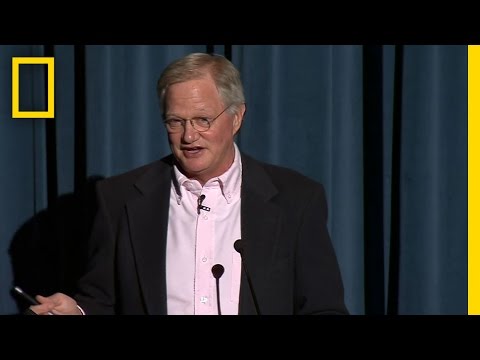
here at the headquarters of National
Geographic
I’ve just been introduced by the
director of photography and I’m speaking
in a program called masters of
photography clearly I’m dreaming so I
thought about that and it was like I
looked up masters in the dictionary and
I said you know a person who has
dominance or control over something he
is a master of well I thought about that
I was like you know what I’m not the
master Photography is my master and it’s
really sweet master to have so with that
introduction I’m going to take you on a
journey to Alaska I got a call one day
and they said okay where would you like
to go and do a two books on some part of
the country a guide book and a beautiful
book I said okay how about Alaska and
they said okay and they made up a list
which we’ll get to in a second but my
first assignment actually in Alaska was
for a magazine called geo in America you
know geo is known in Europe and they
started up here in America and so they
called up one day and said would you
like to go to Alaska we have two
assignments for you
so okay sure what are they well one is
to go to the Ruth glacier camp out on
this glacier and climb up every day and
ski down and so that’s what we did we
went out and we lived on this glacier
for about ten days and hiked around
roped up I mean it’s just an amazing
place I still like to ski I’m not sure I
could do it and the other assignment
when I was done with the glacier was go
to Prince William Sound and go sailing
not bad
not a bad introduction to Alaska so then
the books division called where would
you like to go alright make up a list ok
well that’s pretty simple let’s see I’d
like to go here
here here here here everywhere where
it’s green right I looked up all the
national parks and made a list and they
said fine go for it
I made a calendar every day I was gonna
be in someplace different and when I got
to Alaska the writer who was a good
friend of mine she looked at my calendar
and she laughed at me she goes this is
Alaska you you can’t plan anything here
because the weather is in control so I
said alright well I’ll do the best I can
and so I flew on this assignment I was
doing another assignment in Hawaii and
from Hawaii I flew to Alaska and this is
the picture out of the commercial
airplane as I was landing in Alaska and
I was like okay this is going to be good
three and a half months on someone
else’s nickel in Alaska
well reality set in it rains all the
time in certain parts of Alaska and this
is southeast doubted Misty Fjords it
rains so much you know everything is
moss covered and then I got dropped off
by a pilot and I camped out there and
there was a little boat there and the
pilot also dropped off a little motor
for me which I thought was kind of
sacrilege because I was out it was dead
silent it was just so beautiful so I was
rowing around Punchbowl lake and I was
had come to this spot in the middle you
know the afternoon I said would be a
good place to shoot and then I rode back
to the lean-to because it was kind of
overcast all day and then at the end of
the day I said oh my goodness the sun’s
going to drop underneath the clouds I
got to get back to that spot well good
thing I had the motor got it go and
forget about the silence and then you
know the romancin had to get to this
spot in time for this shot which is good
I got it and they ran it inside passage
most people when go to Alaska you know
you do the inside passage and then you
go up to Denali and hopefully you can
see denial but the inside passages is
just spectacular that’s where all the
whales are and I was there with my
daughter and we were there we were
hanging out with some stellar sea law
and we saw this humpback that was
breaching and so I got this shot you
know I went to include the landscape and
then we motored over there and knowing a
little bit about whales I know that
they’re not going to go down for you
know 10 minutes maybe so we went over we
turn the light the motor off and we
waited we waited we waited and I had put
a prime lens on an 85 millimeter lens
and I was kind of hoping it would come
up there and we were waiting and my
daughter turned to me and she goes daddy
where’s the breacher I mean the whale
must have been listening right as she
finished her sentence it came out right
there in front of us it was pretty
spectacular yeah you’re not supposed to
get within a quarter mile of a glacier
for obvious reasons because when they
Cavill off the entire wall can come down
and can get a little messy but and this
guy was pretty excited needless to say
that whole wall came down this is the
hubbard glacier it’s the fastest moving
glacier in North America and I camped
out just across from it and you know all
night long you could just hear it oh and
so I was lucky that the you know the
light was just on it perfectly when it
capped this is bear glacier this is the
the largest of the 18 glaciers in Kenai
Fjords from an airplane
speaking of airplanes I went in to
wrangle Saint Elias there’s a pilot they
are named Paul Smith in he’s Alaska’s
cowboy pilot and Alaska has a lot of
cowboy pilots so I said well you know
let’s go do some aerials and I’m we’re
flying around I say you know and be
really neat if I could get you you know
in the foreground
oh no problem he goes so he lands that
planes it’s done it’s on skis he lands
on a piece of snow like this which is
where I’m standing and he’s going you
know he lands and he goes up hill and
just before it stalls he turns it around
so he’s facing downhill and he turns to
me says okay you can get out now
all right but you got a promise to come
back for me and he went out and you know
it wasn’t you know it wasn’t long enough
for him to get enough speed to actually
take off so he goes downhill and all of
a sudden I seem to disappear you know
but he needed to get enough speed to
come back up again and so in any flew
around he and he did come back and get
me you know otherwise I wouldn’t be here
this is the route glacier and I met a
couple of guides there and there’s only
know a great place you know to take
pictures that’s I think they just wanted
to climb here and so they’re both roped
up she’s roped up you know to a Piton
right there and this other girls roped
up so they’re completely safe and I
walked all the way around and I have
crampons on and I got to this spot and
the storms coming in I’m very excited it
looks really good and then I realized
they’re roped up and I’m not and I look
straight down and it looks like that
there we go
me this maybe not too smart no I got
this shot and I backed off but it you
know it’s like that realization that
you’ve done something that’s pretty
stupid maybe you know and then I went up
to Denali National Park I’ve been there
a few times and the first time I went
there it looked like this it was
beautiful the next time I went it was
overcast the whole time and we never saw
Denali and the third time I went on the
forest fires were so bad you couldn’t
see across the street which was
interesting sometimes we get you know
there’s a lottery for photographers that
can get a car pass and you can actually
take your car into Denali
which is a photographer is pretty sweet
and there’s just some other shots long
lens pictures of Denali and the range as
the light changes after all it’s all
about the light and there I am three and
a half months alone for the most part
and have really good conversations with
myself and I have a red jacket so what
else do I need
then I went up to gates of the Arctic
these are the air gas Peaks which
translate into fingers of a hand
reaching to the sky and I went there
with a photo group I wasn’t leading it
but I was you know with the participants
to go up photographed caribou and we’re
up there and when we landed you know
there was this hill and a range in the
background and I had kind of pre
visualized a caribou going up going up
along the hill there and we saw very few
caribou and this one obliged me five
minutes before the plane landed to take
us out after four or five days up there
camping and I couldn’t believe I had all
my gear packed up I was waiting for the
plane I could hear the plane coming and
then here here comes this caribou so
quickly I had to grab this shot and also
while I was there it’s snowed and these
photographers were following this one
herd and kind of pushing them and so I
ran ahead around this lake and got
myself up on a hill so that when the
caribou came by I would could get a shot
I slowed down the shutter speed to make
it a little more interesting and also
another time I hid behind a rock as the
caribou were coming by and I thought
they would freak when they saw me and
this one was really close and it just
looked at me and it just kept on grazing
and moving slowly as they migrated and
it’s funny because I was down here at
Geographic I was probably editing with
Kurt might have been civil war or
something and whenever I’m here I mean
Caribou Coffee is you know how many
trips a day do I go to Caribou Coffee
and I was waiting there for my white
chocolate mocha waiting waiting waiting
I’m looking at this poster of this
caribou and I’m on wait a minute that’s
my shot
sure enough this was Iran the next day
in USA today and the check was really
sweet I got coffee’s on me next time you
see me down here and then I went up to
Cape Cougars Dean got this shot you just
flew I flew with one pilot up there
he was really good he had a small plane
and he must have weighed 300 pounds it
was kind of interesting and then he took
me over to the Bering Land Bridge and
dropped me off there for two nights and
you know the thing about Alaska in the
summertime is it never gets dark the
best light is usually between 11:00 at
night and 3:00 in the morning you know
so you have the option either you sleep
during the day or you don’t sleep at all
because you don’t want to miss the good
light and so this this was probably shot
about 2:00 in the morning as the moon’s
coming up and then he picked me up and
he took me to Kovac sand dunes sand they
actually have sand dunes up in Alaska
and I spent the night there and on the
way to the sand dunes I’m a pilot I used
to have an airplane so I feel pretty
confident around planes I’m looking over
at this guy and he’s like it is falling
asleep so I nudged him I say you know
you can do that on the way back but you
know please stay awake while we’re going
here so we landed I spent the night
there and got this shot and I had never
seen the Northern Lights before and I
was in Fairbanks I said alright I’m just
going to start driving up the haul road
this is it towards the end of my trip
it’s in September and I’m going to start
driving north and I’m not stopping till
I see the Northern Lights and I passed
this little stream here and the Northern
Lights hadn’t started happening yet and
I stopped I got out I looked at it I
knew the Northern Lights kind of went
northeast to Northwest and I said well
if the Northern Lights happened this
would be the place to shoot him so I
zeroed out my odometer got back in the
car exactly five miles later I looked up
and the sky was just giving a show well
what do you do now you don’t know how
long the nor the lights going to last
right it could be twenty minutes it
could be all night so I was so excited I
got out I got some shots
I was there but it wasn’t really
happening so I got back in the car drove
back to this spot five minute five miles
away and got this shot and they didn’t
last very long the Northern Lights they
lasted about 20 minutes that night but I
was very happy that was the first time I
saw him in a no picture does justice to
the Northern Lights once you’ve seen him
in person I encourage everyone to go
there took me two days to get into Dutch
Harbor I had one day a beautiful weather
and took me three or four days to get
out because that’s it’s always foggy
there and this is in Dutch Harbor or
Onalaska they’re two towns next to each
other one called
Dutch Harbor and the other Onalaska and
I waited on this hillside you know the
storm was kind of breaking up in these
little spots of light we’re going across
the landscape and I was waiting because
I wanted to get this shot with the Sun
just on the town and nothing else and
you know after two hours you know God
was waiting til the light got right in
the right spot and then it came out and
you know I had about two minutes of this
or less there’s more fish brought into
Dutch Harbor than any other port in
Alaska this is down in oak mock volcano
this is the one day of good weather I
had down there and then I went to the
Pribilof Islands which is out in the
middle of nowhere and there was this
eagle I got this shot and their puffins
there and so that kind of takes you on a
tour of you know Inside Passage wrangles
analyze denali gates of the Arctic Kobuk
sand dunes k-crew Gerstein bering land
bridge then i came to this area which
was called bristol bay and here’s a
closer in picture of bristol bay so what
we have here is we’ve got two rivers the
new xi gak and the qui jack and half of
the salmon the wild salmon from alaska
that we comes from here it’s an
extremely well managed fishery the state
monitors the
is coming up the river once they have
their escapement number they open it up
for commercial fishing or I like to call
it harvesting because it’s really more
of what it’s doing and then they’ll open
it up for eight hours and they’ll close
it again and they’ll wait until enough
salmon have come up river to sustain the
fishery so it’ll go on forever and it’s
very impressive the boats there’s a line
out here that the boats can’t go past
okay because the fish are coming in on
the rising tide and the tides are
30-foot tides and so very quickly okay
so here’s Togiak here’s like Clark
here’s woodtick chick here’s Katmai and
at the headwaters of two of the
tributaries from the two rivers that
feed Bristol Bay these two rivers just
about meet stone’s throw away they
actually do meet underneath ground level
and what they have found here in this
area is the largest deposit of gold and
the sixth largest deposit of copper in
the world and that is a lot of copper
and so you know that’s why we went up
there was to take a look at this
potential mind site and see what the
threat was to the area because you know
as we learn from PB and as we learnt in
Japan a couple of weeks ago you know
nothing is really for sure especially in
the mining industry so we went there to
take a look at it and try and be you
know give a fair assessment to the whole
thing and the name of the project is
called pebble project or pebble mine
they originally they wanted to call it
Pebble Beach mine because they said it
looked a lot like Pebble Beach you know
with the golf fairway and then they
thought women that’s probably not a good
idea because who in America would really
want a mine Pebble Beach so they changed
it to adjust the pebble project so this
is right up at one of those the
headwaters of one of those creeks that
cook tule and this is back in where the
new she gas
meets Bristol Bay okay so the salmon
look at the 30-foot tides okay high tide
it’s up here and at low tide it’s way
out and the salmon come up here with
each tide in July there’s an underwater
shot of the sockeye salmon right so
they’re born in the streams they live in
the streams till they get to a certain
size they go out and live in the ocean
for three years and then they come back
to the exact same stream that they were
born in and when they come back as a hit
fresh water their bodies turn this color
is red and their heads turn green and
the male’s get this big hook jaw and
they go up as far as they can in this
freshwater and they the females make a
little bed and lay their eggs and the
male’s deposit their sperm to fertilize
the eggs and then they die they get to
do it once there’s two kinds of fishing
going on there or harvesting as the as
the salmon are swimming by one is called
set net fishing which is you put the net
straight out from shore and as the fish
are coming up with a high tide they run
into the net and when the tide turns and
stops running you pull it you hook your
pickup truck up to the net and you pull
it on to shore 18 thousand pounds of
fish were brought on the beach this day
and which is pretty amazing we there’s a
30 million fish that returned to Bristol
Bay every year and more than half are
harvested and the rest are there to make
sure that the salmon keep coming back
the other kind of fishery is fishing is
drift net fishing so there’s a line that
the boats can’t go beyond it’s on their
GPS and so since they can only fish the
incoming tide all the boats want to get
as close as the lock to the line as they
can because the salmon are coming with
the tide and so this guy has put out his
net okay on the line and within two
minutes he’s all the way back here well
of course the next guy was to get in
front of him the next guy wants to get
in front of him and so it’s it’s a bit
of a war that goes on there
and what they call they call that
corking each other when you get in front
of somebody and so they you know they
the tempers flare boy you talk about the
advantage of digital photography you
know in the film days you know the most
I would shoot would be ISO 200 but
nowadays we can put our cameras at ISO
3200 be on a moving boat in almost total
darkness as the full moon is setting and
get a shot of another boat and the moon
while you’re moving it’s pretty amazing
the technology and so this is what you
know the process is they put the nets
out to have to turn the motor off and
they have to drift with the tide and the
salmon is they come in they just run
into the net and then they haul them up
and that’s why I call it harvesting
instead of fishing and the salmon are
you know when they come in they’re
bright silver that’s the salmon that
we’re eating and as they go up the
streams they turn red so I went out on a
couple of boats and unfortunately I had
envisioned you know this great you know
really rough seas and you know fish
flying all over the place
well the three days I was out on the
boat it was like you know dead calm the
Caribbean you know there was no there
was nothing going on as far as character
and weather going on so I was a little
frustrated but we did all right
and it’s amazing the amount of salmon
coming up there so beautiful and the
water is crystal clear and the natives
also are putting a set net out so they
get the salmon and then they fillet them
or gut them and then they hang them in
their smokehouse and they eat this all
winter and I was eating at all July
which oh I have some weight to lose it’s
it’s inside one of the smoke houses as
well
Bobby Andrew he’s one of the leading
natives who’s kind of tried to stop the
mine from happening
also in addition to making this huge
mine site here strip mining which will
create you know the largest earthen dam
in the world and we’re talking I’m just
going to give you some figures here on
how big
this mindsight is we’re talking you know
the sustainable fishery is worth about a
hundred and twenty million dollars a
year
okay the mine the amount of gold which
is about a hundred and seven ounces of
gold and forty billion tons of copper is
it worth about a hundred to five hundred
billion dollars okay so you have five
hundred billion dollars here and you got
120 million a year here that’ll last
forever versus this will last for 30
years you know it’s as should I say it’s
a tough choice it depends on who you’re
talking to you know a businessman or
someone who loves the environment one is
sustainable the other may be not so and
it’ll create about 2,000 jobs the mine
site in the construction and the
operation versus about eleven and a half
thousand jobs in the fisheries every
year so anyways those are just some of
the numbers that we’re talking about so
I have this slide up because in addition
to that they’re going to have to get the
ore out and they’re going to build a
road going to the Cook Inlet here so
that they can have a harbor here to ship
everything out and bring power in and so
you know the fear is not only what if
there’s an accident with the tailings
dam or just leak leakage into the
groundwater at the mine site which could
jeopardize the salmon fishery by
bringing in all this power and building
roads you know you’re just going to
change the whole area forever so this is
now I’m going to take you on a little
aerial tour of the area this is along
the Cook Inlet okay this is just north
of where that deepwater Harbor would be
hallow Bay is like right down here okay
so this is a glacier coming down and it
has you know that’s why the color of the
water is like this is because glaciers
are just grinding the rock up as they
move glaciers being rivers of ice and
that is just silt from the rocks
being ground up this is flying back
along that area in Katmai and this is
looking down on a braided river that’s
coming down from a glacier and this is
over at Lake Clark okay so there are
three rivers two of them going down into
Bristol Bay and the other the mulch
Ahtna going into Lake Clark this is just
a typical sunrise at Lake Clark I
couldn’t wake my pilot up this morning
so I thought I would just shoot from the
ground
this is Illumina volcano part of Lake
Clark National Park and there’s a mulch
otter which is coming down from the mine
site and my pilot as a gentleman named
Rick Halford who donated his time
because he recognizes that this is the
wrong place for this mine
and so he would flew me for the cost of
the fuel and the maintenance on the
plane and we are flying here it’s kind
of an overcast day and I’m like going
Rick you know I think we can go back he
goes on oh there’s a little hole there I
think I can get into that little hole
and so we got this shot I had a little
problem with Rick because he was not
only a pilot but he was the art director
in his own mind and he had control of
the airplane you know I saw I’d be like
Rick let’s go over here go no I’ll get
this shot over here so this is down
getting we’re getting close now to where
the new Shi gackt runs into the Bristol
Bay this is back up the new SH you can
see there’s just water everywhere and
it’s that way at the mind site is just
it’s like a sponge this whole area is
just like a sponge this is right near
Dillingham salmon are coming up here one
day to work I must have seen a thousand
belugas here in this river they were
eating the salmon too but I couldn’t get
a shot of it just you know we couldn’t
land on the water even though we had
floats because you know you hate to hit
a beluga you know just think of what it
would what it might do to the airplane
just kidding okay so this is the new Shi
gak where it enters Bristol Bay and this
is down a little further you can see
that low tide also right we’ve now
followed the nose down into Bristol Bay
I’m going to take you back
up to the mine site you know this whole
area this is where the ore body is so
all of this would be stripped minded I
don’t have a problem I use copper we’re
probably using copper here tonight I use
copper in my computer but if it
jeopardizes you know the environment and
a lifestyle
it’s just the wrong place that’s my own
personal opinion this was this is just a
core sample that they’re digging there
they just want to see what they have
actually found is this huge ore body
they will strip mine it down to a point
like 2,000 feet and then they will go
underground and what they have found is
that the ore is actually richer
underground and to the east so I mean it
this is a huge deposit this is the the
headwaters again at the tule there
will be a tailings dam from here all the
way across here which would be
equivalent of seven hundred and forty
feet high and four point three miles
approximately along okay and to give you
some scale the Washington Monument is
550 feet okay
and so this dam would be 700 feet high
that’s just to hold back the toxic waste
from this site and also the mine people
said that there was not there weren’t
any salmon coming up to spawn in the
headwaters of the Cocteau lis in the
upper telluric and we worked with the
Nature Conservancy who went up there and
dr. Carroll and woody who has been
studying these streams and it’s true the
salmon are not coming up here to spawn
but they’re fry their young are coming
up to feed and what these two gentlemen
are doing is they’re electro shocking if
we know shock electric shock in the
water and the little fish float up they
collect them they do a little census
they count them they measure them and
then they release them and they let them
go so we have here we have some rainbow
trout and we have some coho salmon and
we have a little scope in here and these
guys are looking can we go back home
get back to our stream now the rainbow
trout and the coho they grow up here and
then they go down river in the process
of going down river they’re helping to
feed this incredible sport fishery which
is worth about 61 million dollars a year
guys like me going up to have the
pleasure of fly-fishing for these fish
and then letting them go okay this is
one of those rainbows that went from
this to that
and this is another rainbow they like to
eat the salmon eggs as they come down
and so I’m just going to conclude with a
couple of shots of examples of what
could have happen this is Butte Montana
this is the Berkeley mine which was
closed in 1982 and by anaconda cable and
so they just took pulled out and turned
the pumps off which was pumping the
water out of the mine site and what
happens is when you have water that
mixes with a copper and it oxidizes it’s
one of its byproducts is arsenic and the
other one is sulfuric acid and so what
the result of this is that they made the
largest Superfund site in the United
States by letting this little mixture
brew and they realized that by 2020 that
this was going to fill up to the point
that would go into the water table and
all of the water in this area would be
polluted and so what they did was they
they’ve started pumping it out to stay
ahead of it and they process it down
here to clean it up
so but don’t ask me to move to Butte as
opposed to Bing of mine which is outside
of Salt Lake City which is the largest
open pit in North America and I usually
when I’m flying out of an airplane I’ll
usually flight 500 to a thousand feet
and in this town shoe with a 100 or 24
to 105 lens and in this particular case
I was 5,000 feet over the ground and
with a 16 millimeter lens so if you’re
interested you can go to save Bristol
Bay or
word which is a trout on limited website
you can put in your name and your zip
code and they’ll take care of it and
send a letter to your Congressman for
you or if you want to find out more
about it or if you want to find out the
other side of it you can go to pebble
project comm I just encourage you to
learn a little more about what the
options are and what the threat is
to Alaska and the salmon that we eat
thank you very much
you
commercial airplane as I was landing in
Alaska I was like okay this is going to
be good I love any close encounter with
a wildlife I could just sit for hours
and watch them I didn’t ask her to do
this she just picked up this fish and
kissed it you can see there’s just water
everywhere and it’s like a sponge this
whole area is just like a sponge
so nobody wake me up I’m dreaming I’m
here at the headquarters of National
Geographic
I’ve just been introduced by the
director of photography and I’m speaking
in a program called masters of
photography clearly I’m dreaming so I
thought about that and it was like I
looked up masters in the dictionary and
I said you know a person who has
dominance or control over something he
is a master of well I thought about that
I was like you know what I’m not the
master Photography is my master and it’s
really sweet master to have so with that
introduction I’m going to take you on a
journey to Alaska I got a call one day
and they said okay where would you like
to go and do a two books on some part of
the country a guide book and a beautiful
book I said okay how about Alaska and
they said okay and they made up a list
which we’ll get to in a second but my
first assignment actually in Alaska was
for a magazine called geo in America you
know geo is known in Europe and they
started up here in America and so they
called up one day and said would you
like to go to Alaska we have two
assignments for you
so okay sure what are they well one is
to go to the Ruth glacier camp out on
this glacier and climb up every day and
ski down and so that’s what we did we
went out and we lived on this glacier
for about ten days and hiked around
roped up I mean it’s just an amazing
place I still like to ski I’m not sure I
could do it and the other assignment
when I was done with the glacier was go
to Prince William Sound and go sailing
not bad
not a bad introduction to Alaska so then
the books division called where would
you like to go alright make up a list ok
well that’s pretty simple let’s see I’d
like to go here
here here here here everywhere where
it’s green right I looked up all the
national parks and made a list and they
said fine go for it
I made a calendar every day I was gonna
be in someplace different and when I got
to Alaska the writer who was a good
friend of mine she looked at my calendar
and she laughed at me she goes this is
Alaska you you can’t plan anything here
because the weather is in control so I
said alright well I’ll do the best I can
and so I flew on this assignment I was
doing another assignment in Hawaii and
from Hawaii I flew to Alaska and this is
the picture out of the commercial
airplane as I was landing in Alaska and
I was like okay this is going to be good
three and a half months on someone
else’s nickel in Alaska
well reality set in it rains all the
time in certain parts of Alaska and this
is southeast doubted Misty Fjords it
rains so much you know everything is
moss covered and then I got dropped off
by a pilot and I camped out there and
there was a little boat there and the
pilot also dropped off a little motor
for me which I thought was kind of
sacrilege because I was out it was dead
silent it was just so beautiful so I was
rowing around Punchbowl lake and I was
had come to this spot in the middle you
know the afternoon I said would be a
good place to shoot and then I rode back
to the lean-to because it was kind of
overcast all day and then at the end of
the day I said oh my goodness the sun’s
going to drop underneath the clouds I
got to get back to that spot well good
thing I had the motor got it go and
forget about the silence and then you
know the romancin had to get to this
spot in time for this shot which is good
I got it and they ran it inside passage
most people when go to Alaska you know
you do the inside passage and then you
go up to Denali and hopefully you can
see denial but the inside passages is
just spectacular that’s where all the
whales are and I was there with my
daughter and we were there we were
hanging out with some stellar sea law
and we saw this humpback that was
breaching and so I got this shot you
know I went to include the landscape and
then we motored over there and knowing a
little bit about whales I know that
they’re not going to go down for you
know 10 minutes maybe so we went over we
turn the light the motor off and we
waited we waited we waited and I had put
a prime lens on an 85 millimeter lens
and I was kind of hoping it would come
up there and we were waiting and my
daughter turned to me and she goes daddy
where’s the breacher I mean the whale
must have been listening right as she
finished her sentence it came out right
there in front of us it was pretty
spectacular yeah you’re not supposed to
get within a quarter mile of a glacier
for obvious reasons because when they
Cavill off the entire wall can come down
and can get a little messy but and this
guy was pretty excited needless to say
that whole wall came down this is the
hubbard glacier it’s the fastest moving
glacier in North America and I camped
out just across from it and you know all
night long you could just hear it oh and
so I was lucky that the you know the
light was just on it perfectly when it
capped this is bear glacier this is the
the largest of the 18 glaciers in Kenai
Fjords from an airplane
speaking of airplanes I went in to
wrangle Saint Elias there’s a pilot they
are named Paul Smith in he’s Alaska’s
cowboy pilot and Alaska has a lot of
cowboy pilots so I said well you know
let’s go do some aerials and I’m we’re
flying around I say you know and be
really neat if I could get you you know
in the foreground
oh no problem he goes so he lands that
planes it’s done it’s on skis he lands
on a piece of snow like this which is
where I’m standing and he’s going you
know he lands and he goes up hill and
just before it stalls he turns it around
so he’s facing downhill and he turns to
me says okay you can get out now
all right but you got a promise to come
back for me and he went out and you know
it wasn’t you know it wasn’t long enough
for him to get enough speed to actually
take off so he goes downhill and all of
a sudden I seem to disappear you know
but he needed to get enough speed to
come back up again and so in any flew
around he and he did come back and get
me you know otherwise I wouldn’t be here
this is the route glacier and I met a
couple of guides there and there’s only
know a great place you know to take
pictures that’s I think they just wanted
to climb here and so they’re both roped
up she’s roped up you know to a Piton
right there and this other girls roped
up so they’re completely safe and I
walked all the way around and I have
crampons on and I got to this spot and
the storms coming in I’m very excited it
looks really good and then I realized
they’re roped up and I’m not and I look
straight down and it looks like that
there we go
me this maybe not too smart no I got
this shot and I backed off but it you
know it’s like that realization that
you’ve done something that’s pretty
stupid maybe you know and then I went up
to Denali National Park I’ve been there
a few times and the first time I went
there it looked like this it was
beautiful the next time I went it was
overcast the whole time and we never saw
Denali and the third time I went on the
forest fires were so bad you couldn’t
see across the street which was
interesting sometimes we get you know
there’s a lottery for photographers that
can get a car pass and you can actually
take your car into Denali
which is a photographer is pretty sweet
and there’s just some other shots long
lens pictures of Denali and the range as
the light changes after all it’s all
about the light and there I am three and
a half months alone for the most part
and have really good conversations with
myself and I have a red jacket so what
else do I need
then I went up to gates of the Arctic
these are the air gas Peaks which
translate into fingers of a hand
reaching to the sky and I went there
with a photo group I wasn’t leading it
but I was you know with the participants
to go up photographed caribou and we’re
up there and when we landed you know
there was this hill and a range in the
background and I had kind of pre
visualized a caribou going up going up
along the hill there and we saw very few
caribou and this one obliged me five
minutes before the plane landed to take
us out after four or five days up there
camping and I couldn’t believe I had all
my gear packed up I was waiting for the
plane I could hear the plane coming and
then here here comes this caribou so
quickly I had to grab this shot and also
while I was there it’s snowed and these
photographers were following this one
herd and kind of pushing them and so I
ran ahead around this lake and got
myself up on a hill so that when the
caribou came by I would could get a shot
I slowed down the shutter speed to make
it a little more interesting and also
another time I hid behind a rock as the
caribou were coming by and I thought
they would freak when they saw me and
this one was really close and it just
looked at me and it just kept on grazing
and moving slowly as they migrated and
it’s funny because I was down here at
Geographic I was probably editing with
Kurt might have been civil war or
something and whenever I’m here I mean
Caribou Coffee is you know how many
trips a day do I go to Caribou Coffee
and I was waiting there for my white
chocolate mocha waiting waiting waiting
I’m looking at this poster of this
caribou and I’m on wait a minute that’s
my shot
sure enough this was Iran the next day
in USA today and the check was really
sweet I got coffee’s on me next time you
see me down here and then I went up to
Cape Cougars Dean got this shot you just
flew I flew with one pilot up there
he was really good he had a small plane
and he must have weighed 300 pounds it
was kind of interesting and then he took
me over to the Bering Land Bridge and
dropped me off there for two nights and
you know the thing about Alaska in the
summertime is it never gets dark the
best light is usually between 11:00 at
night and 3:00 in the morning you know
so you have the option either you sleep
during the day or you don’t sleep at all
because you don’t want to miss the good
light and so this this was probably shot
about 2:00 in the morning as the moon’s
coming up and then he picked me up and
he took me to Kovac sand dunes sand they
actually have sand dunes up in Alaska
and I spent the night there and on the
way to the sand dunes I’m a pilot I used
to have an airplane so I feel pretty
confident around planes I’m looking over
at this guy and he’s like it is falling
asleep so I nudged him I say you know
you can do that on the way back but you
know please stay awake while we’re going
here so we landed I spent the night
there and got this shot and I had never
seen the Northern Lights before and I
was in Fairbanks I said alright I’m just
going to start driving up the haul road
this is it towards the end of my trip
it’s in September and I’m going to start
driving north and I’m not stopping till
I see the Northern Lights and I passed
this little stream here and the Northern
Lights hadn’t started happening yet and
I stopped I got out I looked at it I
knew the Northern Lights kind of went
northeast to Northwest and I said well
if the Northern Lights happened this
would be the place to shoot him so I
zeroed out my odometer got back in the
car exactly five miles later I looked up
and the sky was just giving a show well
what do you do now you don’t know how
long the nor the lights going to last
right it could be twenty minutes it
could be all night so I was so excited I
got out I got some shots
I was there but it wasn’t really
happening so I got back in the car drove
back to this spot five minute five miles
away and got this shot and they didn’t
last very long the Northern Lights they
lasted about 20 minutes that night but I
was very happy that was the first time I
saw him in a no picture does justice to
the Northern Lights once you’ve seen him
in person I encourage everyone to go
there took me two days to get into Dutch
Harbor I had one day a beautiful weather
and took me three or four days to get
out because that’s it’s always foggy
there and this is in Dutch Harbor or
Onalaska they’re two towns next to each
other one called
Dutch Harbor and the other Onalaska and
I waited on this hillside you know the
storm was kind of breaking up in these
little spots of light we’re going across
the landscape and I was waiting because
I wanted to get this shot with the Sun
just on the town and nothing else and
you know after two hours you know God
was waiting til the light got right in
the right spot and then it came out and
you know I had about two minutes of this
or less there’s more fish brought into
Dutch Harbor than any other port in
Alaska this is down in oak mock volcano
this is the one day of good weather I
had down there and then I went to the
Pribilof Islands which is out in the
middle of nowhere and there was this
eagle I got this shot and their puffins
there and so that kind of takes you on a
tour of you know Inside Passage wrangles
analyze denali gates of the Arctic Kobuk
sand dunes k-crew Gerstein bering land
bridge then i came to this area which
was called bristol bay and here’s a
closer in picture of bristol bay so what
we have here is we’ve got two rivers the
new xi gak and the qui jack and half of
the salmon the wild salmon from alaska
that we comes from here it’s an
extremely well managed fishery the state
monitors the
is coming up the river once they have
their escapement number they open it up
for commercial fishing or I like to call
it harvesting because it’s really more
of what it’s doing and then they’ll open
it up for eight hours and they’ll close
it again and they’ll wait until enough
salmon have come up river to sustain the
fishery so it’ll go on forever and it’s
very impressive the boats there’s a line
out here that the boats can’t go past
okay because the fish are coming in on
the rising tide and the tides are
30-foot tides and so very quickly okay
so here’s Togiak here’s like Clark
here’s woodtick chick here’s Katmai and
at the headwaters of two of the
tributaries from the two rivers that
feed Bristol Bay these two rivers just
about meet stone’s throw away they
actually do meet underneath ground level
and what they have found here in this
area is the largest deposit of gold and
the sixth largest deposit of copper in
the world and that is a lot of copper
and so you know that’s why we went up
there was to take a look at this
potential mind site and see what the
threat was to the area because you know
as we learn from PB and as we learnt in
Japan a couple of weeks ago you know
nothing is really for sure especially in
the mining industry so we went there to
take a look at it and try and be you
know give a fair assessment to the whole
thing and the name of the project is
called pebble project or pebble mine
they originally they wanted to call it
Pebble Beach mine because they said it
looked a lot like Pebble Beach you know
with the golf fairway and then they
thought women that’s probably not a good
idea because who in America would really
want a mine Pebble Beach so they changed
it to adjust the pebble project so this
is right up at one of those the
headwaters of one of those creeks that
cook tule and this is back in where the
new she gas
meets Bristol Bay okay so the salmon
look at the 30-foot tides okay high tide
it’s up here and at low tide it’s way
out and the salmon come up here with
each tide in July there’s an underwater
shot of the sockeye salmon right so
they’re born in the streams they live in
the streams till they get to a certain
size they go out and live in the ocean
for three years and then they come back
to the exact same stream that they were
born in and when they come back as a hit
fresh water their bodies turn this color
is red and their heads turn green and
the male’s get this big hook jaw and
they go up as far as they can in this
freshwater and they the females make a
little bed and lay their eggs and the
male’s deposit their sperm to fertilize
the eggs and then they die they get to
do it once there’s two kinds of fishing
going on there or harvesting as the as
the salmon are swimming by one is called
set net fishing which is you put the net
straight out from shore and as the fish
are coming up with a high tide they run
into the net and when the tide turns and
stops running you pull it you hook your
pickup truck up to the net and you pull
it on to shore 18 thousand pounds of
fish were brought on the beach this day
and which is pretty amazing we there’s a
30 million fish that returned to Bristol
Bay every year and more than half are
harvested and the rest are there to make
sure that the salmon keep coming back
the other kind of fishery is fishing is
drift net fishing so there’s a line that
the boats can’t go beyond it’s on their
GPS and so since they can only fish the
incoming tide all the boats want to get
as close as the lock to the line as they
can because the salmon are coming with
the tide and so this guy has put out his
net okay on the line and within two
minutes he’s all the way back here well
of course the next guy was to get in
front of him the next guy wants to get
in front of him and so it’s it’s a bit
of a war that goes on there
and what they call they call that
corking each other when you get in front
of somebody and so they you know they
the tempers flare boy you talk about the
advantage of digital photography you
know in the film days you know the most
I would shoot would be ISO 200 but
nowadays we can put our cameras at ISO
3200 be on a moving boat in almost total
darkness as the full moon is setting and
get a shot of another boat and the moon
while you’re moving it’s pretty amazing
the technology and so this is what you
know the process is they put the nets
out to have to turn the motor off and
they have to drift with the tide and the
salmon is they come in they just run
into the net and then they haul them up
and that’s why I call it harvesting
instead of fishing and the salmon are
you know when they come in they’re
bright silver that’s the salmon that
we’re eating and as they go up the
streams they turn red so I went out on a
couple of boats and unfortunately I had
envisioned you know this great you know
really rough seas and you know fish
flying all over the place
well the three days I was out on the
boat it was like you know dead calm the
Caribbean you know there was no there
was nothing going on as far as character
and weather going on so I was a little
frustrated but we did all right
and it’s amazing the amount of salmon
coming up there so beautiful and the
water is crystal clear and the natives
also are putting a set net out so they
get the salmon and then they fillet them
or gut them and then they hang them in
their smokehouse and they eat this all
winter and I was eating at all July
which oh I have some weight to lose it’s
it’s inside one of the smoke houses as
well
Bobby Andrew he’s one of the leading
natives who’s kind of tried to stop the
mine from happening
also in addition to making this huge
mine site here strip mining which will
create you know the largest earthen dam
in the world and we’re talking I’m just
going to give you some figures here on
how big
this mindsight is we’re talking you know
the sustainable fishery is worth about a
hundred and twenty million dollars a
year
okay the mine the amount of gold which
is about a hundred and seven ounces of
gold and forty billion tons of copper is
it worth about a hundred to five hundred
billion dollars okay so you have five
hundred billion dollars here and you got
120 million a year here that’ll last
forever versus this will last for 30
years you know it’s as should I say it’s
a tough choice it depends on who you’re
talking to you know a businessman or
someone who loves the environment one is
sustainable the other may be not so and
it’ll create about 2,000 jobs the mine
site in the construction and the
operation versus about eleven and a half
thousand jobs in the fisheries every
year so anyways those are just some of
the numbers that we’re talking about so
I have this slide up because in addition
to that they’re going to have to get the
ore out and they’re going to build a
road going to the Cook Inlet here so
that they can have a harbor here to ship
everything out and bring power in and so
you know the fear is not only what if
there’s an accident with the tailings
dam or just leak leakage into the
groundwater at the mine site which could
jeopardize the salmon fishery by
bringing in all this power and building
roads you know you’re just going to
change the whole area forever so this is
now I’m going to take you on a little
aerial tour of the area this is along
the Cook Inlet okay this is just north
of where that deepwater Harbor would be
hallow Bay is like right down here okay
so this is a glacier coming down and it
has you know that’s why the color of the
water is like this is because glaciers
are just grinding the rock up as they
move glaciers being rivers of ice and
that is just silt from the rocks
being ground up this is flying back
along that area in Katmai and this is
looking down on a braided river that’s
coming down from a glacier and this is
over at Lake Clark okay so there are
three rivers two of them going down into
Bristol Bay and the other the mulch
Ahtna going into Lake Clark this is just
a typical sunrise at Lake Clark I
couldn’t wake my pilot up this morning
so I thought I would just shoot from the
ground
this is Illumina volcano part of Lake
Clark National Park and there’s a mulch
otter which is coming down from the mine
site and my pilot as a gentleman named
Rick Halford who donated his time
because he recognizes that this is the
wrong place for this mine
and so he would flew me for the cost of
the fuel and the maintenance on the
plane and we are flying here it’s kind
of an overcast day and I’m like going
Rick you know I think we can go back he
goes on oh there’s a little hole there I
think I can get into that little hole
and so we got this shot I had a little
problem with Rick because he was not
only a pilot but he was the art director
in his own mind and he had control of
the airplane you know I saw I’d be like
Rick let’s go over here go no I’ll get
this shot over here so this is down
getting we’re getting close now to where
the new Shi gackt runs into the Bristol
Bay this is back up the new SH you can
see there’s just water everywhere and
it’s that way at the mind site is just
it’s like a sponge this whole area is
just like a sponge this is right near
Dillingham salmon are coming up here one
day to work I must have seen a thousand
belugas here in this river they were
eating the salmon too but I couldn’t get
a shot of it just you know we couldn’t
land on the water even though we had
floats because you know you hate to hit
a beluga you know just think of what it
would what it might do to the airplane
just kidding okay so this is the new Shi
gak where it enters Bristol Bay and this
is down a little further you can see
that low tide also right we’ve now
followed the nose down into Bristol Bay
I’m going to take you back
up to the mine site you know this whole
area this is where the ore body is so
all of this would be stripped minded I
don’t have a problem I use copper we’re
probably using copper here tonight I use
copper in my computer but if it
jeopardizes you know the environment and
a lifestyle
it’s just the wrong place that’s my own
personal opinion this was this is just a
core sample that they’re digging there
they just want to see what they have
actually found is this huge ore body
they will strip mine it down to a point
like 2,000 feet and then they will go
underground and what they have found is
that the ore is actually richer
underground and to the east so I mean it
this is a huge deposit this is the the
headwaters again at the tule there
will be a tailings dam from here all the
way across here which would be
equivalent of seven hundred and forty
feet high and four point three miles
approximately along okay and to give you
some scale the Washington Monument is
550 feet okay
and so this dam would be 700 feet high
that’s just to hold back the toxic waste
from this site and also the mine people
said that there was not there weren’t
any salmon coming up to spawn in the
headwaters of the Cocteau lis in the
upper telluric and we worked with the
Nature Conservancy who went up there and
dr. Carroll and woody who has been
studying these streams and it’s true the
salmon are not coming up here to spawn
but they’re fry their young are coming
up to feed and what these two gentlemen
are doing is they’re electro shocking if
we know shock electric shock in the
water and the little fish float up they
collect them they do a little census
they count them they measure them and
then they release them and they let them
go so we have here we have some rainbow
trout and we have some coho salmon and
we have a little scope in here and these
guys are looking can we go back home
get back to our stream now the rainbow
trout and the coho they grow up here and
then they go down river in the process
of going down river they’re helping to
feed this incredible sport fishery which
is worth about 61 million dollars a year
guys like me going up to have the
pleasure of fly-fishing for these fish
and then letting them go okay this is
one of those rainbows that went from
this to that
and this is another rainbow they like to
eat the salmon eggs as they come down
and so I’m just going to conclude with a
couple of shots of examples of what
could have happen this is Butte Montana
this is the Berkeley mine which was
closed in 1982 and by anaconda cable and
so they just took pulled out and turned
the pumps off which was pumping the
water out of the mine site and what
happens is when you have water that
mixes with a copper and it oxidizes it’s
one of its byproducts is arsenic and the
other one is sulfuric acid and so what
the result of this is that they made the
largest Superfund site in the United
States by letting this little mixture
brew and they realized that by 2020 that
this was going to fill up to the point
that would go into the water table and
all of the water in this area would be
polluted and so what they did was they
they’ve started pumping it out to stay
ahead of it and they process it down
here to clean it up
so but don’t ask me to move to Butte as
opposed to Bing of mine which is outside
of Salt Lake City which is the largest
open pit in North America and I usually
when I’m flying out of an airplane I’ll
usually flight 500 to a thousand feet
and in this town shoe with a 100 or 24
to 105 lens and in this particular case
I was 5,000 feet over the ground and
with a 16 millimeter lens so if you’re
interested you can go to save Bristol
Bay or
word which is a trout on limited website
you can put in your name and your zip
code and they’ll take care of it and
send a letter to your Congressman for
you or if you want to find out more
about it or if you want to find out the
other side of it you can go to pebble
project comm I just encourage you to
learn a little more about what the
options are and what the threat is
to Alaska and the salmon that we eat
thank you very much
you
Please follow and like us: