
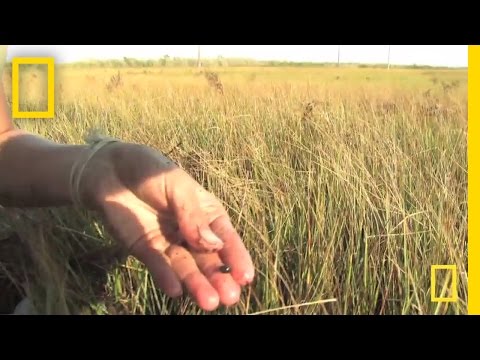
when people think of salt marshes they
usually think of the grasses the birds
and animals but people don’t always
think about the smallest creatures
living there as scientists try to
measure the environmental impact of the
world’s largest accidental oil spill
some are studying the smallest animals
namely the arthropods near the bottom of
the food chain arthropods are animals
like insects spiders and crustaceans and
the food web they form is a vital
component of this ecosystem more than
200 million gallons of oil gushed into
the Gulf of Mexico and some of that oil
crept into the marshes of the Gulf Coast
contaminating hundreds of miles of
coastline from tar balls to thick oil a
team from the University of Houston
conducted a study looking at the coastal
food web along the Gulf and the Atlantic
coast last year before the spill now the
researchers hope they can shed light on
the oils impact on that food webs we
have 22 sites and at each site we make a
collection of the arthropod food web and
we do this by vacuum sampling so we have
a backpack with a lawnmower engine on it
and it connects to a big hose and the
students base
what pennings team visits each site from
Texas to New England carefully surveying
animal in plant health as Brittany
DeLoach McCall sucks up arthropods at
this collection site in New Jersey her
colleagues check the marsh grass and
look for other small animals a food web
consists of variety of species that play
different roles so there’s plants which
are eaten by a variety of insects that
eat plants call those herbivores and
then they’re eaten by other things
predators like spiders with reference to
the oil spill it might be that some
members of this food web are more
vulnerable to oil than others by taking
light readings from under the marsh
grass taking cores of the roots and
Counting snails and other critters the
team can get a health snapshot by
comparing oiled and oiled areas that get
an idea the impact in this case we’re
likely to see that the oil would affect
more than just one or two species but
might affect you know a large proportion
and so that could perturb the food web
in in novel ways the team sampled five
heavily oiled sites we added some
locations
too since their locations were not
heavily oiled the team found a dramatic
difference in marshes affected by the
crew in the oiled sites we saw a lot of
dead plant material we saw a lot of mud
flats where the plants have died and
been eroded away we also saw a lot of
oiled crabs and snails and not it didn’t
seem like as many insects and the
control puts the current year of this
study is funded through the National
Science Foundation pennings hopes to
continue his research to monitor any
long-term impact of the spill and while
some scientists say much of the oil has
already broken down marshes are prone to
long-term contamination the nature of a
salt marsh is that the sediments retain
organic matter for a very long time and
decomposition is very slow what that is
likely to mean is that the small animals
that live in the marsh whether they’re
fiddler crabs or insects are likely to
be exposed to oil for decades to come
pening says he will focus on tracking
this effect to learn more about the
marsh food web and help understand the
oils impact
usually think of the grasses the birds
and animals but people don’t always
think about the smallest creatures
living there as scientists try to
measure the environmental impact of the
world’s largest accidental oil spill
some are studying the smallest animals
namely the arthropods near the bottom of
the food chain arthropods are animals
like insects spiders and crustaceans and
the food web they form is a vital
component of this ecosystem more than
200 million gallons of oil gushed into
the Gulf of Mexico and some of that oil
crept into the marshes of the Gulf Coast
contaminating hundreds of miles of
coastline from tar balls to thick oil a
team from the University of Houston
conducted a study looking at the coastal
food web along the Gulf and the Atlantic
coast last year before the spill now the
researchers hope they can shed light on
the oils impact on that food webs we
have 22 sites and at each site we make a
collection of the arthropod food web and
we do this by vacuum sampling so we have
a backpack with a lawnmower engine on it
and it connects to a big hose and the
students base
what pennings team visits each site from
Texas to New England carefully surveying
animal in plant health as Brittany
DeLoach McCall sucks up arthropods at
this collection site in New Jersey her
colleagues check the marsh grass and
look for other small animals a food web
consists of variety of species that play
different roles so there’s plants which
are eaten by a variety of insects that
eat plants call those herbivores and
then they’re eaten by other things
predators like spiders with reference to
the oil spill it might be that some
members of this food web are more
vulnerable to oil than others by taking
light readings from under the marsh
grass taking cores of the roots and
Counting snails and other critters the
team can get a health snapshot by
comparing oiled and oiled areas that get
an idea the impact in this case we’re
likely to see that the oil would affect
more than just one or two species but
might affect you know a large proportion
and so that could perturb the food web
in in novel ways the team sampled five
heavily oiled sites we added some
locations
too since their locations were not
heavily oiled the team found a dramatic
difference in marshes affected by the
crew in the oiled sites we saw a lot of
dead plant material we saw a lot of mud
flats where the plants have died and
been eroded away we also saw a lot of
oiled crabs and snails and not it didn’t
seem like as many insects and the
control puts the current year of this
study is funded through the National
Science Foundation pennings hopes to
continue his research to monitor any
long-term impact of the spill and while
some scientists say much of the oil has
already broken down marshes are prone to
long-term contamination the nature of a
salt marsh is that the sediments retain
organic matter for a very long time and
decomposition is very slow what that is
likely to mean is that the small animals
that live in the marsh whether they’re
fiddler crabs or insects are likely to
be exposed to oil for decades to come
pening says he will focus on tracking
this effect to learn more about the
marsh food web and help understand the
oils impact
Please follow and like us: