
months into the Gulf Coast BP oil spill
recovery it appears as though most of
the oil has disappeared but there are
still heavily oiled areas some of the
hardest hit places now show only
scattered tar balls and other traces but
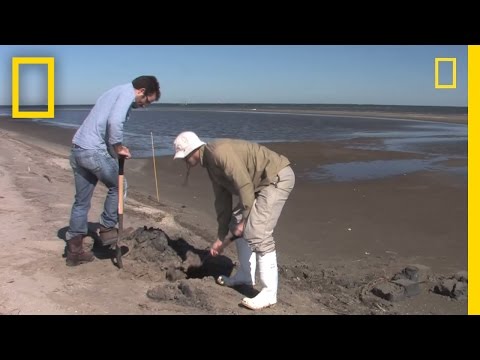
dig a bit and it is their oil hit Grand
Isle Louisiana early and often Tulane
University researcher Brad Rosenheim and
his students visited soon after oil
washed ashore and they’ve been returning
frequently to study the changes we’re
getting to a point now or even when we
dig these trenches the oil is hard to
recognize by by our naked eye it blends
in with other layers of organic carbon
that one would expect in such a dynamic
environment the team is studying the
weathering of the oil in different
environments and as various processes
break down the oils chemicals
rosenheim is using a different measure
to identify the oil isotopes
hydrocarbons are made up of hydrogen and
carbon chemically but carbon is made up
of different isotopes meaning different
numbers of neutrons in the carbon as is
hydrogen so we can potentially have a
carbon hydrogen bond that has several
different isotopes attached to it
looking for unique isotopes means
scientists can identify the oil even
after it has broken down over time
what we’re looking at is to see what
chemicals stick around the longest and
also probably more importantly as to
isotopically fingerprints some of the
breakdown chemicals that would get
incorporated into different parts of the
ecosystem isotopically we may have a
better chance at tracking that oil
through the next several years than we
would with just a chemical approach
because of course it’s going to change
chemically as Rosenheim studies the oil
colleague dean Mousavi and his students
study changes to the island itself
they’ve been measuring erosion and
buildup of the beach for three years
they regularly visit the same spots and
measure elevation of the beach along
transects out to the water and the
island may change after the spill and
cleanup activity back when the Exxon
Valdez spill occurred in Alaska there
was tremendous concern for the wildlife
at Exxon and companies
contracted went to great lengths to try
to clean the rocky beaches and coves of
Prince William Sound
they used high-pressure water washes
they use dispersants they use various
means to try to break up the oil clean
the oil off of the rocks in many cases
they found that the efforts to clean the
system actually were more harmful than
the oil itself had been because of the
physical disturbance of the system here
on Grand Isle BP has learned lessons
from that sea they’re taking a much more
cautious approach in terms of cleaning
the sand they have what looked like
giant combines that sift through the
sand capturing materials that are
sticking together which are presumably
contaminate with oil all those a way to
be steam cleaned treated to remove the
oil and then the sand is returned to the
beach now that process is meant to be
benign and for the most part it is but
you are still driving large vehicles
back and forth over the beach you are
disrupting whatever stratigraphy is
there you’re returning material that has
been sterilized
if Mousavi and other researchers
studying the gulf coast topography find
unexpected changes they suspect are
linked to the oil spill they will need
concrete evidence to determine whether
the oil or cleanup played a role that’s
where Mousavi and rosin Himes research
can be vital now we’re going to see some
changes in areas that did have a will
wash up and hopefully our work will help
scientists determine if those changes
changes which we would call geo
morphological changes to the coastline
can be assigned to any singular event of
oil washing up or if it’s just business
as usual on the Louisiana coastline it
may take years to know the spills total
effects but the research gathered at
Grand Isle by both research teams will
give scientists important tools to
measure the oils impact
Please follow and like us: