
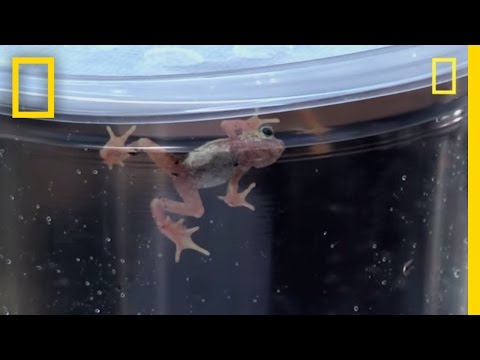
a tiny towed from Tanzania is extinct in
the wild but thriving in a lab in
Syracuse New York the konsi spray toad
which ranges from just one to
one-and-a-half inches in length is
believed to have lived only under a
three thousand foot waterfall on the
kanji River in southeastern Tanzania
construction of a dam upriver reduce the
flow of the waterfall and the resulting
spray needed by the toads but before the
population of toads declined about 500
were relocated researchers at the State
University of New York College of
environmental science and forestry are
hoping the survivors can be placed back
in their natural habitat the reason the
condé spray toad has gone extinct in
the wild is because of human impacts
they are native to a four hectare
wetland on the side of a waterfall in
Tanzania so they weren’t discovered
until they were starting to decline the
only reason they were discovered is
because a hydroelectric dam was being
built in the konsi Gorge upstream of
where they’re found but they crushed
suddenly and so a lot of people think
that it could have either been the fact
that the dam released a bunch of
sediments that were contaminated with
pesticides and one of those was endl
soften and that’s what we’re testing
here and another idea is a kitchen
fungus which has been a problem for
amphibian populations around the globe
there are really unique little frogs
they’re one of the few that give live
birth they don’t have a tadpole stage
the hope is to try to get these guys
back in the wild really soon and and
there’s a good chance they’re really
prolific breeders they rely so heavily
on the spray they live in the spray zone
so they require 22 hours of missing a
day and so they need to be in a wetland
habitat on the side of a waterfall
another biologist working on the project
says the toad might be the four-legged
vertebrate species with the smallest
range in the world
and they’re hopeful they can survive in
that range again
the wild but thriving in a lab in
Syracuse New York the konsi spray toad
which ranges from just one to
one-and-a-half inches in length is
believed to have lived only under a
three thousand foot waterfall on the
kanji River in southeastern Tanzania
construction of a dam upriver reduce the
flow of the waterfall and the resulting
spray needed by the toads but before the
population of toads declined about 500
were relocated researchers at the State
University of New York College of
environmental science and forestry are
hoping the survivors can be placed back
in their natural habitat the reason the
condé spray toad has gone extinct in
the wild is because of human impacts
they are native to a four hectare
wetland on the side of a waterfall in
Tanzania so they weren’t discovered
until they were starting to decline the
only reason they were discovered is
because a hydroelectric dam was being
built in the konsi Gorge upstream of
where they’re found but they crushed
suddenly and so a lot of people think
that it could have either been the fact
that the dam released a bunch of
sediments that were contaminated with
pesticides and one of those was endl
soften and that’s what we’re testing
here and another idea is a kitchen
fungus which has been a problem for
amphibian populations around the globe
there are really unique little frogs
they’re one of the few that give live
birth they don’t have a tadpole stage
the hope is to try to get these guys
back in the wild really soon and and
there’s a good chance they’re really
prolific breeders they rely so heavily
on the spray they live in the spray zone
so they require 22 hours of missing a
day and so they need to be in a wetland
habitat on the side of a waterfall
another biologist working on the project
says the toad might be the four-legged
vertebrate species with the smallest
range in the world
and they’re hopeful they can survive in
that range again
Please follow and like us: