
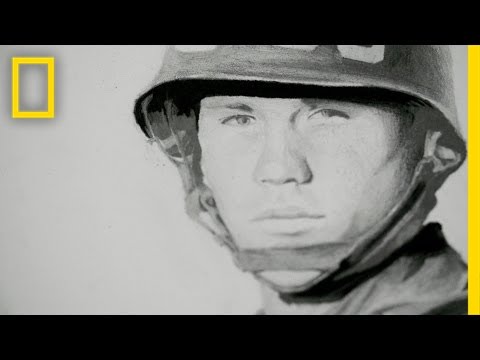
I can document those things that a
photographer might miss because in the
heat of the battlefield there’s 10,000
things going on and he’s got a lens
pointed in one direction I just think
there’s something that an artist can
bring to history that’s an emotionally
charged piece when I go back into the
collection and look at that art pieces
there are things right there
they give me goosebumps and I just feel
like that is an important part of
military history that you don’t want to
miss the army art program started in
World War one a back then the u.s.
followed Europe’s lead and a sent some
artists into the field to document the
war and we’ve been doing it ever since
every artist in any period is a product
of their time so they often bring you
know social aspects to their work
without even knowing it I think it I
think is gonna go away I was a high
school art teacher during the 9/11 and I
watched 9/11 happened the events of that
in the classroom for high school art
students and I knew that day that the
concert my community was larger than a
local community and I pretty much went
straight to a recruiters office and
joined the army
this position is a normal tour of duty
for a soldier so it’s a three to four
year position like I would love to stay
and never leave but it’s nice that we
have a changing perspective on what the
army does every three or four years I
think that is a incredibly smart thing
to do the Army has an obligation to the
American people to preserve this artwork
this is a national collection it’s
considered to be the same as a
Smithsonian
has a lot of meaning to be working and
handling these kind of items that have
been used in conflicts over such a great
period of time in our country the
understanding that you can get from what
was involved in what they were doing in
serving their country I think is much
more profound than as an armchair
historian of some kind these items that
are here will be here until the end of
time and it’s important that they’re
cared for carefully and when you start
looking at the requirements on how to
preserve items that’s what this facility
focuses on we have 16,000 pieces in the
Army art collection and it’s growing
every day the Nazi propaganda art was
collected by the US Army at the end of
World War two and that was because of
the Potsdam agreement which was enacted
in order to make sure that the Nazi
Party never started up again the reason
why it was collected rather than
destroyed is because it’s part of the
world’s history and if we destroyed it
are we really going to learn from it
it’s pretty intense to know that I am
the creator or document in this moment
in time for the history this close out
of the Global War on Terror is my legacy
as the artist in residence for me you
know each artists have painted this
little snippet of history but I feel
incredibly proud to know that the
closeout of this war is the story that I
get to tell
Please follow and like us: