
hello everyone I’m Lucy McNeil here at
National Geographic head courses for our
Google+ hangout today we’re talking
about risk-taking we want to hear from
you so please send us your questions and
join the conversation using hashtag
let’s explore we’re very excited to have
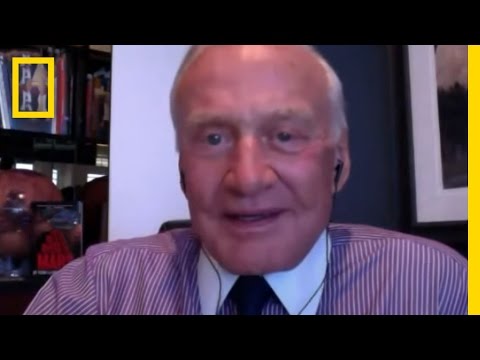
join us today astronaut Buzz Aldrin one
of the first people to set foot on the
moon and author of the new book mission
to Mars which you can see here say hi
buzz hi there hi there and we’re also
joined by a world-renowned Mountaineer
Conrad Anker who summited Everest among
many other incredible summits three
times Conrad hello welcome Conrad has
contributed to the call of Everest which
is a new book time with the 50th
anniversary of the first American
expedition to the world’s highest
mountain I’m so without further ado
we’re going to jump straight into the
first theme as we’re talking about risk
um if we’re conquering about if we’re if
conquering our greatest fears leads us
to feel humble and insignificant as I
know both of you have talked about over
the years about standing on the moon and
standing on Everest then what gives you
a sense of significance personally I
what does risk really mean to you um I
don’t know if you want to go first buzz
well I to me risk means to putting your
life or your mission things that you
hold dear to you at a jeopardy of losing
whatever they are and losing all the
efforts that you put into that and of
course we’ve lived our lives up to this
moment and we want to continue to enjoy
fellowship and and the earth that’s
great Conrad risk is the the price of
exploration because any time ago to
someplace we’ve never been before
there’s a chance we won’t come back and
this drive for exploration is why humans
are where we are today
right so why do you think it’s important
that we push boundaries I mean what are
the big risks humans should be taking
and on why well on my end I it’s sort of
metaphorical miss risk I go out there
and I try things that haven’t been done
but it’s our willingness to put yourself
out there and humans are going to have
plenty of challenges in the next
hundreds of years is we address our how
many people we have on this planet Wow
and Buzz what do you think about
boundaries there well I think the
difference between Conrad and myself is
that I’ve had a big team of people a
commitment and objective and a lot of
people are counting on let’s say in my
case the three of us to carry out the
challenge of making the first landing on
the moon so a lot of people are
witnessing our every moment and we need
to indicate to them and ourselves a
calmness a coolness we might call it and
certainly a lack of the cloudiness that
comes with fear and panic great and when
you think about risk in terms of what’s
more important that you push past fear
or that you don’t have regret later I
mean how do you buy what’s the balancing
act there I mean Conrad can you give us
a specific example of of where you’ve
had to do that my view is probably
ninety five ninety seven percent of time
I’m within my boundaries and what I need
to do and then every now then you have
to to push for that extra risk and a
judge if those rewards or a benefit to
you so but I’m compared to landing on
the moon climbing mountains is it’s a
it’s a selfish pursuit and I have just a
tremendous amount of respect for the
risk that the three of you on July
twentieth nineteen sixty-nine well one
of the one of this one of the stories
that I love that
you mentioned in the beginning of the
Everest but Conrad is that you were like
a teenager I think on your bicycle when
you got the news about buzz landing on
the moon and that your mom’s that had
these stories about you suddenly wanting
to be an astronaut that right that is
exactly the case and we had small black
and white TVs and 24 and buzzes age to
go from Mount Everest to the moon that
was 16 years from nineteen fifty three
to nineteen sixty-nine and it really as
a young person it just motivated me to
engage in school and and it’s got had a
great multiplier effect and that was
part of the reason we set out last year
on our Everest expedition to include
National Science Foundation curriculum
for fourth and fifth graders and to pay
back that motivation that I got from you
buzz and the astronauts well we knew we
were taking a chance but carrying out
their hopes and all the wishes of so
many young people who are tuned in but
we really couldn’t dwell on that
situation we were pretty busy directed
on accomplishing whatever was in the
checklist that we could remember and and
making sure that we did the things that
would make us proud of having
participated afterwards that’s a good
one hi what can I see what is what is
the decision-making factor about what is
too risky and how do you know and is
there a personal was there a personal
moment during the course of the flight
to the moon that you felt a very keen
sense of that buzz and the same with
Conrad like what is the point where you
think something is too risky i I really
don’t think that occurred until maybe we
were leaving orbit Neil and I in the
lander and we came about halfway down
the landing radar was
beginning to feed information into the
computer and all of a sudden we got
program alarms 1202 we didn’t know what
that meant and we certainly weren’t
going to go in and open the guidance and
navigation dictionaries of is about this
thick so Neal ask Houston give us a
reading on that and fortunately there
was a engineer back there who understood
that the computer was a little bit
overloaded but as long as it was not
repeating itself we were go for landing
so we had a few more of those even this
close as 3,000 feet off the ground and
how do you manage that you as a person I
mean what were the thoughts ticking
through your brain when that was going
on well we’re very happy that we have
such a talented capable team behind us
but you do you didn’t know what could
happen really bad did you know that you
could be safe no that’s why you need
trust in people and their knowledge to
play their part in contributing to your
being able to do the next step to carry
out mission success when we get down to
about a hundred feet the callout came
from Houston 60 seconds that’s how much
fuel we had left I was beginning to get
a little concerned but I didn’t want to
interrupt the concentration that Neil
had in flying over a kind of rocky area
at at 30 seconds we were ten feet above
the ground and I was pretty relieved we
could probably have the engine fail and
up and and still make kind of a hard
landing right that’s incredible I also
read that when you took back off again
you said we’re number one and on the
landing for takeoff so obviously humor
pays a big pot as well in it I think
well I I had been saving up that phrase
something who respond to maybe lighten
the moment as we received the
instructions tranquility base you’re
cleared for liftoff and I said Roger
Houston we’re number one on the runway
Barry 90 all pilots know what what that
means you’re you’re turning out and
you’re ready to pour the coal to the or
engage the afterburner and off you go
that’s great Conrad how have you found I
mean a does humor play a part in in sort
of the riskiest moments deserve taking
the edge off some really terrifying
things that are going on or an unfolding
situation where you know you know that
um you know things are pretty tricky but
it’s not going to help to escalate it
through being fearful so how do you use
it in a risky situation in the mountains
means that there you’re being threatened
by snow or I sec is above you that can
come down on you so that’s a we try to
avoid them as much as possible but when
you’re in a really when things are
desperate and it’s really hard and
you’re making decisions a little bit of
humor is great because what it serves in
a climbing setup is that it’s a check on
your partner if your partner still can
get your humor they’re doing okay and
it’s an important part of it and we
always have these silly jokes and but
when you might wash you like it well we
always we always try to put it like oh
it couldn’t be it’s not that bad so you
know it’s really that bad it’d be like
man can you what if we got ketchup on
our shirt that would be where you are so
don’t think there’s always the moments
always appropriate but that little bit
of humor is it check on your team and
your partner’s so that they’re doing
okay and you’re with that plus it it
lessens this moment when you have to
make those decisions right that’s a good
one now some sometimes you just don’t
know whether whether your partner is
telling a joke or not I remember we were
in lunar
orbit and Mike Collins says the hey Neil
have you thought about what you’re going
to say when when you get to walk on the
moon and Neil said oh I don’t know I’ll
wait till we successfully land and then
I’ll think about it I don’t think I
would have I thought about it well ahead
of time if it had been my task and I
really don’t think i have relied on on
my wisdom for such a significant moment
I i would have consulted somebody just
like leaders of big organizations have
speech writers they put their own tone
into things which I do I written a good
number of books but I am NOT a writer so
I deal with a professional and then
hopefully he understands what I’m
telling him the noise work out that way
but not always but it’s a good way of
thinking about it as well I think so
it’s good to have it takes a village
takes village yeah um so I think we have
a video question coming up now which is
going to be from Marga and i think
tomorrow in Yerevan and the question is
about advice for the next generation oh
I’m actually being told that that video
is not working just yet so we’re going
to try and run that one a little bit
later on so we’ll move to a new theme
and we’re thinking about more of a
personal idea now what drives you to
take risks we have Stanley on Google+
who asks what pushes you past the fear
when doing some of the things you do
what what is this in in a thought that
you really go to when you are trying to
push past scary things I don’t know if
Conrad wants to go first in mountain
climbing you’re out there for 10 weeks
and then of that you might have there’s
a lot of sitting around and things like
that but then when it’s busy it’s not
that immediate so you kind of keep a
calm thought knowing that if you are
nervous you’re going to be used
a physical energy that you could then
use in other parts of your body and ways
to keep warm and then when there is the
odd moment that something quickly
happens and the situation turns risky
immediately then you you have a surge of
adrenaline and you address it right
there right and buzz ah well most all of
us in the early phases of the space
program they were test pilots I used a
little bit more of my my head work and
chose not to pursue test pilot training
but to get more education so that I
could analyze how to do different things
and so at MIT instead of learning how to
how to intercept airplanes I looked at
how do we rendezvous in space and back
in 1962 we certainly didn’t know how to
do that so it was a paving new ground
and unfortunately looking ahead I was
able to do the same thing now about
going to Mars with orbits that swing
around the earth and then go to Mars
swing around Mars and essentially come
back and repeat that opportunity
continuously so they don’t start and
stop at at one destination or that
that’s more of an intellectual risk in a
way that you’re making an intellectual
calculation about how far to push an
idea well not not always to other people
understand for bridges motivations club
it and it might be a little jealous they
might be able to think you’re pushing
your your own ideas it’s essential that
whatever we can contribute to the
success of a mission we certainly like
to do so and sometimes you’re taking
risks in what you propose because it may
turn out to be not very practical right
and then you have to figure out what to
say to it
30 as well of course but worry about
that later alright we have now another
video we have another crack at a video
question we’ve got National Geographic
Explorer Kenny broad sent us a video
question and he’s also asking about risk
an adventure in the everyday I think
that one’s just coming up now tick tick
tick tick okay Kenny we know your dad
mr. Boddy we know you that think it’s
back to run seems to have some my life
closer to saying goodbye in life as you
know it not active cave diving her
part-time but actually driving to the
dive site on dating thing to do every
game forget about like you think it soon
into you youtube work in extreme
environments you think gotten over way
it’s low probability but very dramatic
event havens like avalanches and
underway things that are just common
events but much more likely harm how can
we translate at the other aspects of a
live environment in other sorts
well okay could you guys here first of
all and I’ll repeat the gist of it could
you both hear it okay yeah yeah little
bit okay so it’s about the money is the
mundane risk actually the risk that we
should be thinking about more
strategically because that can often be
too scary a piece of it and as you saw
Kenny had broken his arm by falling off
a scout for a dive site rather than on
the expedition itself I’m just repeating
that for some viewers who may not have
perfect full question Conrad um I i
think that the risk that i encounter in
driving in day-to-day life in the
mundane life is a lot less than
high-altitude climbing climbing at the
higher elevations on everest in those
taba mountains is one of the most
dangerous sportsman cannot partake and
so there’s been four fatalities this
season on ever so I am I think that my
heightened sense of risk awareness
because I’m in the mountains offers me a
little bit better assessment when I’m
driving around and I’m walking so I’m
tuned in my environment and make sure
that I’m aware of the other people their
automobiles and I work with it but um
for me unfortunately life is risk here
in the mountains of this here and I
can’t push it away and say oh well more
people die on automobiles for in my line
of work that’s not the case it really
isn’t i went and buzzed and i’m going to
come back to Conrad on a specific issue
on that buzz what do you think well
riskiness I think Barry’s with age I
remember I was quite young and I was
playing out on a pier at a lake and and
I was very proud of the bucket that I
had that was full of rocks and and my
friend decided he would just push me off
the pier so I went down and carrying
that bucket of rocks with me all the way
to the bottom fortunately my friend’s
father came down and fished me out of
the water I learned to swim
after that and I was so fascinated with
what you could do underwater that I
thought well why don’t I just get a hose
that’ll go up to the surface and I’ll
carry a rock and I’ll just walk down in
the water well that doesn’t work either
because it’s the difference between how
deep your lungs are and that’s why when
we snorkel we generally lie rather
rather flat now these are little little
piddling things but it’s good to
remember that you got to do the critical
things when you’ve just shot down a
mig-15 in Korea and you’re climbing out
to get back to the home base and you’re
all by yourself and all of a sudden it
occurs to you you’re not climbing as
fast as you should and and with great
chagrin and guiltiness you realize you
have still have your speed breaks out
and that’s why you’re climbing slowly
that’s kind of risky if my risky eggs
are trying to chase you as you try and
head climb to altitude and head on back
yeah I think that all they all tend to
be lessons that can end up as Kenny was
alluding to that we can sort of MIT mix
and match into real life it I mean for
somebody like you and Conrad you have to
deploy them in very serious situations
particularly but um that that actually
made me think about the situation on
Everest right now which is talked about
in this month’s edition of our magazine
and I wondered what you thought Conrad
about you know when you look at risks
and then you look at the amount of
people that we see on Everest now and
even the most recent situation with
simone moreau and the surface where does
conflict resolution techniques come in
when you’re trying to manage risk when
you’re on a mountain I mean how we talk
about risk as if it’s things that’s that
is going to happen because of the the
activities that we’ve planned for and
prepared for and have we planned enough
if you’re an adventurer and explore but
what is it what
the conflict piece way you need to work
with human capital to you know overcome
something like that in climbing you’re a
guest in whichever in climbing the
Himalayas you’ll be a guest in neither
the Karakoram or the central Himalayas
or the Eastern Himalayas and all these
ranges have people that live there and
they’re part of their communities
specifically on Everest there is a it’s
designed now equipped for large amounts
of climbers to go up there it’s not the
challenge that it was 60 50 years ago
rather it’s becoming more mainstream
there’s probably 500 climbers that go
there each day and it’s a great point is
to look at risk that is is out of what
you’re doing and for me that greatest
part would be the risk of getting a
stomach infection on the easy and when I
travel or the risk due to a political
strife and someone wanting to to be with
that but I found it in anytime that
there’s a between cultures that if you
watch it with dignity and respect to
each culture then you tend to smooth
things out right yes that’s a good
answer um what risks won’t you take have
you ever been confronted with something
we’ve said no that doesn’t fit into you
know there’s all sorts of things that
are attractive to me about that but I’m
actually not going to take that step
forward I’m all right sorry I certainly
have some risks I that I’m not willing
to take I’ve climbed up Mount Washington
when I was 10 12 years old but but now
I’m looking a little bit beyond even
beyond the moon and Conrad do you
realize that Mount Olympus on Mars is
90,000 feet high so when you think
you’ve really done something I just
think about wearing the spacesuit and
trying to climb up olympus mons yeah
that would be good also we need to get
the first ascent of the mood because the
the high point of the moon hasn’t been
reached yet so the equivalent of I mean
they’d be great to get more get
explorers up onto the moon just to show
that we can do it and we can it’s that
first step and then making that next
step out to Mars and Olympus Mons is it
looms big in the the history in the
figure of climbing everyone talks about
that is the ultimate climb and yeah
there’s it’s pretty popular you’re aware
of it well I I like to go in the other
direction I’ve been down to see the
Titanic in a yellow submarine with
Frenchman and believe it or not Jim
Cameron asked me at one time if I would
accompany him down to the deepest part
of the ocean I think when he found out
the details of putting a submersible
together he found that it was going to
be much easier for just one person and
and and not two people that’s okay with
me I am I think going down see the
Titanic is is enough the North Pole but
I’ve got to get to the South Pole and I
am looking forward to maybe doing that
believe it or not by driving Hummers to
the South Pole on a state to call it a
road it’s really an ice trail because
people down an Antarctic found it just
so expensive and the weather so
undependable to carry fuel down to the
spouse South Pole Station that that
they’re now driving it down there and
it’s much more dependable and economic
but anyway we’ve been trying to do that
for several years and I just don’t know
whether it’s going to pan out or not
this November December it’s very
exciting plans that I think so we have
one more question from Donald plot Pratt
on google+ before we’re going to go to
your questions from our youngest viewer
on our hangout Donald Pratt is asking
besides the risk this is quite a cute
one besides the risks you’ve taken in
exploring in adulthood what was the
riskiest thing that you did before you
turn 21 and do you regret
taking any of the risks before you a
fully-fledged adult and obviously we’re
keeping it PG because it’s a family show
well I saw somebody else use a pole and
put it in the ground and allow them to
go up a little bit higher so I became a
pole vaulter and occasionally way back
in those days you’d be on your way up
and all of a sudden the bamboo wood part
in the middle and break and zooming you
into the into the sawdust pit you don’t
anticipate that that’s really going to
happen but when it does there’s not very
much you can do about it except for the
law for the ride yeah some of the
earlier climbs that I had done what
before I really knew the systems in the
rope and everything and I look back at
the mistakes I made and of course their
experience and they taught me to be a
better climber but I was some of those
climbers when I was young and 14 15
something like that I recall just
getting away with the skin of my teeth
and having prevented death and really
upset my parents so that was it’s those
formative climbs that I went through
right maybe the menu today everyone
saying these people that kind of spread
their arms out and they have some cloth
or canvas structure and they’re able to
come down and fly and around and a
couple of them with smoke coming out I
said this what I say d1 I need you sign
on us no I I saw this one guy he was
going to fly through a hole in the
mountain and I thought that really takes
guts guys going on to is terrifying yeah
it’s free it’s terrifying yeah I’m not
sure it’s a little bit crazy you know I
can’t do bungee jumping either I really
don’t have to put my life on a rubber
cord a parachute yes I might have to
eject but I’m not going
they jump out of an airplane when the
engine is running properly I’d rather
come down and emotionally and land on
the runway okay well we have a question
now I think is from our very youngest
participant today who is Noah from
Northumberland in England and this is a
nice question I think for you both
you’re gonna have to interpret I can see
him I can see him but I can’t hear him
but I think that maybe I think we might
try and play it again let’s try one more
time about my family I’ll repeat it for
you he said buzz you’re very very brave
does your little boy want to be a
spaceman like you and I know who wrote
forward to your boots I think that’s a
very sweet question yeah well my
youngest son did write the foreword to
my book mission to Mars and and I’m very
proud of him for doing that he also was
a football player but he’s a Rocket Man
but but he literally lights the fuse on
a rocket that goes up and gets paid more
for doing that then I get got paid for
being on the top of the rocket going up
we’ll have to tell know that and then
one day he’ll be getting paid more money
than his dad who’s in that year I think
this will see how that goes Conrad what
about you when you think about you know
inspiring the next generation as buzz
has done for a lot of younger people and
as you do now in your field I mean what
are the I know there’s a lot of
community groups that you work with in
when you’re climbing I bobbing my
greatest inspiration when I connect with
school children and when someone asks
well Everest has been climbed
we’ve been to the moon we’re hopefully
going to Mars we’re doing all these
great things what’s the next frontier of
exploration and I always explain and try
to motivate them that it’s in the
sciences and in the nanosphere and
there’s all this knowledge out there
that’s not found so it’s what Livingston
was doing on who’s seeking the source of
nile Lewis and Clark across North
America and then eventually on to
Everest and then the moon all these
we’ve met those terrestrial and lunar
goals of exploration we now need to look
into it and so the metaphorical crossing
of Antarctica is finding solutions on
how we can feed shelter in clothes seven
billion people today and probably 9
billion by Noah’s will know as a young
man and young adult and a leader
there’ll be 9 billion people here so
solving that that’s kind of the the goal
and why I encourage exploration and in
why we do need to take a certain degree
of risk in pursuing that yeah that’s
great um okay buzz anything to add to
that before moving to some quickfire
questions well of course the space
program is going to take people from
Earth somewhere else but we’re certainly
not going to solve the overpopulation
problem here on earth we just won’t be
building spacecraft big enough to to be
able to do that I think we need to
marshal our behavior here on earth so we
can learn how to improve the situations
when we go somewhere else yeah that that
the moon is a it requires just way too
much to to make it hospitable but Mars
is a much much better place beside it
costs a lot of money to bring people
back from there too yeah that actually
brings us to a question of a quick fire
round which either of you consider
living on Mars if you had the chance
even if it was a one-way ticket well I I
can answer that I know what it entails I
know the challenges of getting along
with
people that probably not been my strong
suit it is thinking about new and
different and better ways to do things
and I need a big team behind me I don’t
like to be lonely I like to prepare
other people to do the things that will
be remarkable and and I’ll rely on my
intellect to try and use the experience
and guide people into bigger and better
things it sounds good kanade I’d sign up
tomorrow so I’m totally game I I’m 50
years old I’ve seen great things and if
I spent the next 50 years of my life if
I live that long on Mars I would be I
would love it i would do geology i would
i would try to do things it’s not that
we would want to be there but i would i
would sign up for and then with
technology as it is today the ability to
communicate between the Earth and Mars
we would keep me close to it and we
would find a way to do it but it would
just be to be that person that that that
took that that first commandment to be
on Mars even it was a one-way ticket I’d
be like yeah let’s go ah I I just don’t
like that one way ticket business I like
the the positive way of saying we’re
going to create permanence of human
beings that for thousands of years have
been here imprisoned by gravity to the
one planet earth and we’re now on the
verge of making a commitment to extend
human habitation growing permanence on
another planet in the Solar System and
that is a big deal in the unfolding of
human history and I always take the
opportunity to remind whoever’s
listening in that the president who
makes that kind of a commitment is going
to go down in history for hundreds of
thousands of years that’s right I think
that’s an awesome question that was Jeff
diamond from my
chusetts on google+ I have to credit him
with that okay so we’re going to move on
to thinking about the future and what’s
next really I mean where are we in the
global story the risk in the past versus
risk in the future question for Conrad
from Missha on youtube has evolving
technology made climbing and exploration
more accessible over the years
technology certainly has it’s um
obviously we’re great engineers and
there’s no mountain we couldn’t build a
cable car or a road to the top of it so
the challenge the adventure we get in
climbing is by doing it with less
equipment and less stuff so you’re
you’re creating that adventure in that
challenge but I come back to thinking
that the big challenge is the big
exploration the big risk stories the
next hundred years are going to be ones
that that involve and and sort of
include all the humans and how we’re
going to address the next 200 years and
those are that’s a great big unknown out
there but calming because it’s
adventurous and at risk it keeps that
spirit in that gene alive right yeah
it’s a great metaphor for what we need
to do yeah my choice would be to use a
helicopter to go to the top of Mount
Everest I think some of them could do
that but you know we choose to use the
words we choose to do this not because
it’s easy but because it’s hard and I
think that embodies the the human spirit
really tackle objectives to see that we
can do what hasn’t been done or what
challenges the rumen adventure and and
does something that will be admired
appreciated and sometimes rewarded
sometimes not what do you think what
advice would you have asks Elizabeth man
on Twitter for these new generations of
explorers who do perhaps more than any
other time in history have to think
about you know the legacy that they
leave behind in terms of the
sources that we have left I mean what
what do you have what advice might you
have if they have families how did they
get involved in in thinking about these
things well I certainly I talked to a
number of people who cherish their
participation 40 50 years ago in the
Apollo program so being a team member
when you contribute what you can as an
individual to the success of the
combined effort is really a great treat
for some human being to be able to do
not everybody can be as at the point of
the spear or carrying out the the big
step even though it’s a small step at
the moon it’ll be a giant leap for
permanence on Mars yeah and Conrad what
do you think ripe for families and the
people that are out there the spirit of
exploration and risk if you can bring it
into your life and bring into your heart
and on the weekend go out with your
family or friends and go for a hike and
sort of get out there and do something a
little out of your comfort range get
hungry get rained on get showered upon
so you come back and you’re like wow
that’s what it’s like to be human and
then willingness to take that on that
that the hard work and the diligence and
suffering that that great things require
that building that spirit into it will
collectively as buzz pointed out that’s
what we need to get us up there to Mars
yeah yeah there is this sense that you
know amongst a lot of people that we
only have the younger generation have
perhaps more of an academic relationship
with nature in that they can give us all
the statistics on climate change but
maybe have never slept in a tent before
so you know sort of like you need the
balance of both to move forward and I
think you to embody that that’s sort of
excitement about the world around us and
really rolling up your sleeves and get
in your hands in getting getting
involved in it is there anything that
you want to share with us about any
your projects that you’re involved in
now because we start to sort of gets a
few more questions in and before we
start to wrap up in a few minutes is
there anything you’d like to tell me
about well what one thing that I’m
involved in maybe for another six months
or so it has to do with the law that was
passed back in 08 that allows veterans
to show the pride that they have in
their service when the national anthem
is played at ceremonial events sporting
events that instead of putting their
hand over their heart the way most
others we may hand salute now so not
only to the veterans need to know this
for their own pride and comradeship with
other people that they seek but the
American people need to appreciate in a
greater way the sacrifices that be that
have been made and along that same line
we have 22 suicides a day of veterans
because of post-traumatic stress
disorder and I’m trying to do what I can
with my aviation background to provide a
simple a simulator airplane flying and
small flights to get a sense of
achievement a sense of feeling good
about yourself and and don’t dwell on
your problems I know enough about that
firsthand my up because I’ve I’ve fallen
into that trap many times yeah and
flipping the perspective is the way out
often of these things that’s the way
that you can walk a path out I mean that
is that is the way ahead a Conrad what
do you think about it in your field yeah
similar to buzz I’ve got a project i’m
working with veterans expeditions and
our goal is to take them outdoors and go
ice climbing mountaineering having them
be witnesses of climate change and like
getting them outdoors and have been
giving them the opportunity to live and
be me in the wilderness where they were
willing to offer the ultimate sacrifice
for that so it’s been
great program addressing the sort of
some of the challenges with that and
then also looking to engage more people
in science I and I’m a layperson
scientist but the value of it and being
able to get young people in fourth and
fifth grade because sooner than later
they’re going to be science technology
engineering all those really core things
that are the basis of where we need to
be as a nation going forward yeah and
then I guess um you know one more thing
what would you do differently if you’re
sort of 21 again starting out your
careers would you what what advice would
you have for people are what what would
you specifically change about the path
that you took because I think a lot of
people would like to sort of figure out
how to get into your shoes and be able
to take the sort of risks that you have
so what would you do differently I am a
most grateful person for having grown up
in the United States of America and
having parents that nurtured me in in
the development having an outstanding
education system in my hometown taking
advantage of serving my country and the
discipline that goes along with a West
Point education then I was fortunate
enough to get involved in in combat in
aircraft during the Korean War I even
was on alert with nuclear weapons I’m
five menit alert and if the this ayran
went we were hopped in our airplanes and
we deliver a nuclear weapon somewhere in
Poland or Czechoslovakia there are a lot
of people that were doing that and
people just don’t realize that that that
among many things are the sacrifices
that are involved then of course I left
out and
managed to talk my way into the space
program and and that brought about
tremendous rewards not for everyone one
of my very best friends at West Point
and as a fighter pilot was ed white and
he was killed in the Apollo 1 fire so
there there are sacrifices their things
unexpectedly that can come along and and
some of us whether these challenges and
enter able to succeed but we look back
at those who also were very talented
maybe even more talented than we are but
we’re denied the opportunity for the
same success that we had that’s right um
Conrad is that how how do you answer
that question the under-21 I’m happy
where I am in life and everything I
wouldn’t want to change anything if I
were to do anything over again I would
have stuck to playing music too late I
hate that yeah but we could have done
that but I’m uh I’m so happy in as was
mentioned we’re so fortunate here in the
United States to have the education
system the support system and it yeah I
would hey if I could at age 21 realize
that it’s not about what you take but
it’s about what you give back I think
that for me would have been it took me
later in life and it took me tragedy
having lost friends and things like that
to realize it’s not about us but how are
we going to give back to the people that
they’re coming after us because the
people that came before escape to us
right and then last question before we
close can you give us a sense of who
your favorite risk takers are and why
and that’s just a really quick question
well mine is a contemporary of my
father’s who was an aviation pioneer he
studied under Robert Goddard he was an
aide to Billy Mitchell he grew up and
was born in the same year as as a real
famous aviator
and the book was written about him 30
seconds over Tokyo and why was he why
was he so inspirational well he
certainly didn’t hesitate to take
command of other people and lead them on
one of the most daring missions of World
War two and that’s the bombing of Tokyo
which somehow affected the defense of
Japan and made them keep a lot of forces
there got out but but the courage to do
what they did and that’s to take off
from that carrier knowing that they have
been sighted so that they couldn’t
return back to the carrier but they had
a crash land in China and take take
their chances with survival that’s
incredible and the Conrad what about
yours current risk takers on the team
over at Golden Spike they’re trying to
get commercial aviation to this point
where they can land people on the moon
and when you do if this is going to be
viable and needs to be viable and
economic scale and being able to do that
I think that that whole team is is
putting it out there but they’re also
opening it up to the marketplace and
competitive engineering so I think that
a combination of the NASA program that
went on which was very much state planet
to private enterprise so that that that
would be in like on a big scale climbing
there’s there’s really talented climbers
out there they were doing crazy things
but sort of the big picture would be
this this chance to get people on the
moon again right we’ve got a we’ve got a
married couple that is going to in
January 2018 launch to fly by Mars and
come back 500 days later that’s a very
challenging and the title of the program
is inspiration Mars Glenda I think
that’s going to do much to lift the
spirits of those of us who seek further
and further goals in our space program
and extension of humanity
outward also sounds like the ultimate
reality show is a between between the
moon Everest and Mars we have all the
girls covered but you two are an
incredible inspiration I think for the
people who are watching and I think it’s
lovely to hear you give an assessment of
your stories on risk so thank you so
much for joining us today and thank you
to everybody joining the google hangout
we’re going to wrap now and thank you
for your questions to get closer to
other national geographic risk takers
you can have a look at our june issue
and we hope that you’ll keep exploring
with us join National Geographic Society
at National Geographic com if you want
to learn more and we’ll see you next
time thank you
Please follow and like us: