
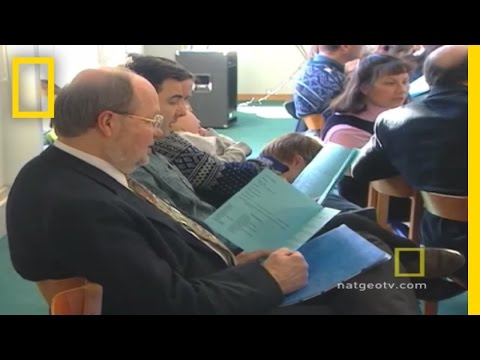
at Madison Christian community they
gather each Sunday to worship a higher
power these days seeing the light means
much more my prayer now is God let your
light shine in my life so I’m always
happy when the sun is shining pastor
Jeff wild appreciates the Sun even more
because of these solar panels the church
installed in 2002 he was surprised to
learn that the energy is church used to
consume released a staggering amount of
fossil fuel emissions sometimes within a
week’s time a ton of co2 to is being
released into the atmosphere so pastor
wild encouraged change the 480 member
community had already surrounded itself
with restored prairie grasses instead of
a lawn that requires fertilizer inside
it now relies in part on solar power
more energy efficient light bulbs and
more common sense as a result
electricity use is down forty percent
Kevin Lyttle installs software that
tracks energy consumption in buildings
this is the peak 15-minute period for
the whole week he says it’s important
for people to see what they’re saving
because the general idea of conservation
is often far removed from daily life its
preservation of wildlife in the Amazon
or it’s the the climate and Kyoto
protocols though this stuff is very
intellectual and takes a lot to
understand I think that if we have a
specific building a specific place then
I can begin to help people understand
that’s what Dave Steffensen is counting
on a retired Methodist minister and
teacher of environmental ethics Dave
founded the Wisconsin interfaith climate
and energy campaign a lot of the
churches were built 50 75
they’re big leaky barns in terms of per
hour per person use houses of worship
are probably the most energy wasteful
buildings in America that message is
spreading in the Green Bay diocese st.
Francis of Assisi Chapel is being held
up as a model of how to build green from
the ground up the floors are made of
recycled concrete fly ash from power
plants is part of the mix the oak pews
and other would work come from a local
sustainable forests st. Francis even has
an environmentally friendly holy water
font we ask the user cycle items so this
is all recycled the glass we don’t have
infinite resources we have finite
resources and by taking some care even
in a small project like this it’s going
to make a difference in the long term
that modern message fits a traditional
mission is this going to revolutionize
how churches use energy I don’t know but
I think it can help people to begin to
think about well what can we do the
possibility is tremendous
you
gather each Sunday to worship a higher
power these days seeing the light means
much more my prayer now is God let your
light shine in my life so I’m always
happy when the sun is shining pastor
Jeff wild appreciates the Sun even more
because of these solar panels the church
installed in 2002 he was surprised to
learn that the energy is church used to
consume released a staggering amount of
fossil fuel emissions sometimes within a
week’s time a ton of co2 to is being
released into the atmosphere so pastor
wild encouraged change the 480 member
community had already surrounded itself
with restored prairie grasses instead of
a lawn that requires fertilizer inside
it now relies in part on solar power
more energy efficient light bulbs and
more common sense as a result
electricity use is down forty percent
Kevin Lyttle installs software that
tracks energy consumption in buildings
this is the peak 15-minute period for
the whole week he says it’s important
for people to see what they’re saving
because the general idea of conservation
is often far removed from daily life its
preservation of wildlife in the Amazon
or it’s the the climate and Kyoto
protocols though this stuff is very
intellectual and takes a lot to
understand I think that if we have a
specific building a specific place then
I can begin to help people understand
that’s what Dave Steffensen is counting
on a retired Methodist minister and
teacher of environmental ethics Dave
founded the Wisconsin interfaith climate
and energy campaign a lot of the
churches were built 50 75
they’re big leaky barns in terms of per
hour per person use houses of worship
are probably the most energy wasteful
buildings in America that message is
spreading in the Green Bay diocese st.
Francis of Assisi Chapel is being held
up as a model of how to build green from
the ground up the floors are made of
recycled concrete fly ash from power
plants is part of the mix the oak pews
and other would work come from a local
sustainable forests st. Francis even has
an environmentally friendly holy water
font we ask the user cycle items so this
is all recycled the glass we don’t have
infinite resources we have finite
resources and by taking some care even
in a small project like this it’s going
to make a difference in the long term
that modern message fits a traditional
mission is this going to revolutionize
how churches use energy I don’t know but
I think it can help people to begin to
think about well what can we do the
possibility is tremendous
you
Please follow and like us: