
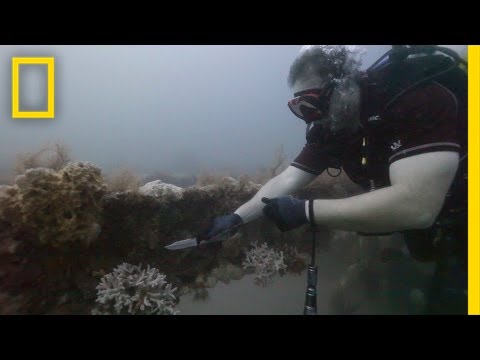
one of the big problems is is that
fishing line that accumulates on these
reefs over time becomes a nasty
entanglement hazard and it can basically
entrap all types of marine life and this
includes air-breathing animals such as
dolphins and turtles and that’s a big
motivating factor for us to come out and
do our part and to try to clean these
reefs as best possible today we’re
sending a group of marine conservation
divers offshore Jacksonville Florida to
perform a reef cleanup we’re gonna visit
three artificial reef sites that happen
to be sunken barges and on these barges
we’re gonna find you know corals and
sponges and all kinds of fish and
critters any reef site that’s utilized
by humans is basically an offshore
destination or an attraction and just
because people utilize these reefs means
that they’re gonna leave you know some
of their foot per behind and
unfortunately that’s gonna be in the
form of trash or say fishing line in
fishing lines pretty nasty itself
because generally it’s monofilament
which means it’s clear and it doesn’t
break down so you have this
crystal-clear line down there animals
generally can’t see it they get snagged
up in it it doesn’t biodegrade so it’s
there forever and it’s just a real nasty
potential hazard we used anything from
stainless steel shears to wire cutters
anything we could to remove this
material as best as possible
we brought up literally miles and miles
of fishing line and discarded anchor a
lot of monofilament lines which is
efficient you know lying down here they
get caught up on these barges and snap
the lines off and it just kind of lays
down there and you can imagine we’re
down 50 feet so there’s probably 100
foot Plus every time you pick up the
piece of line you’ve got 100 feet plus
you got to cut off fishing line found a
nice couple nice anchors a lot of
fishing line rope and we brought up a
big chunk of rope we cut all the live
stuff out and we saved what we could in
a separate storage container with water
and kept it all alive stuff like this
this is live for
I try to save it
and it’s actually going to a local
Marine Science Center into Jacksonville
University
everybody benefits from this not only
the environment in real life but us as
humans and as a community benefit from
this healthy reefs support tourism local
economy a seafood market and in several
sub industries and those industries and
in all those that benefit from it will
be negatively effective if we don’t have
healthy reefs so cleaning our briefs is
important everybody and that’s why we’re
doing our part
Please follow and like us: