
the Dominican Republic can boast some
very interesting finds in some of its
freshwater caves that have been mostly
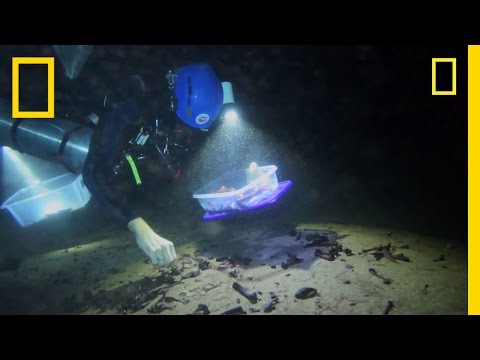
unexplored until now research divers
recently uncovered an unexpectedly large
variety of fossil remains of extinct
species of animals in the underground
Springs including crocodiles the
discoveries may turn a new page in
paleontology at least in the Caribbean
one of the wonderful things that we’ve
learned here in the past couple of years
is that we can really do
very solid collecting of paleontological
remains in underwater caverns this is
something entirely new it really hasn’t
been done before systematically and I
think it might be a brand new way
certainly for Hispaniola for the island
of Hispaniola
this is the way to do it one of the
crocodile skeletons is nearly complete
buried in silt except for the end of its
snout
the researchers are excited about this
find because crocodiles have never been
reported on this part of the island the
croc findings were so unexpected and
recent the scientists are still in the
midst of research to determine age and
species lead scientist and
anthropologist Alfred rosenberger and
his team set out to search for monkey
remains in the Dominican Republic caves
they found many and many more remains of
different animals including bats sloths
birds snakes lizards and fish one of the
cave sites discovered by locals has a
narrow vertical entrance under a fig
tree in the country’s eastern province
of La alta gracia after about a 26-foot
descent there is a large cave room and
in the surrounding water of this cave
extending at least 2,800 feet the
crocodile fossils were found in
excellent condition one of the beautiful
things about finding this material in
underground caves is that the the
preservation is extraordinary it is very
rare when doing normal dirt paleontology
so to speak to be able to find complete
bones that are unbroken
other caves have more inviting entrances
but because of their remoteness and the
fact they’re filled with water they had
remained largely unexplored until now
and the animal remains have been well
preserved in the cold water for
millennia funding for the expedition of
rosenberger the Museo del hombre
dominicano
and collaborators from the dominican
republic Speleological Society was
provided by a National Geographic Waite
Foundation grant with previous support
from the Leakey Foundation
you
you
[Music]
very interesting finds in some of its
freshwater caves that have been mostly
unexplored until now research divers
recently uncovered an unexpectedly large
variety of fossil remains of extinct
species of animals in the underground
Springs including crocodiles the
discoveries may turn a new page in
paleontology at least in the Caribbean
one of the wonderful things that we’ve
learned here in the past couple of years
is that we can really do
very solid collecting of paleontological
remains in underwater caverns this is
something entirely new it really hasn’t
been done before systematically and I
think it might be a brand new way
certainly for Hispaniola for the island
of Hispaniola
this is the way to do it one of the
crocodile skeletons is nearly complete
buried in silt except for the end of its
snout
the researchers are excited about this
find because crocodiles have never been
reported on this part of the island the
croc findings were so unexpected and
recent the scientists are still in the
midst of research to determine age and
species lead scientist and
anthropologist Alfred rosenberger and
his team set out to search for monkey
remains in the Dominican Republic caves
they found many and many more remains of
different animals including bats sloths
birds snakes lizards and fish one of the
cave sites discovered by locals has a
narrow vertical entrance under a fig
tree in the country’s eastern province
of La alta gracia after about a 26-foot
descent there is a large cave room and
in the surrounding water of this cave
extending at least 2,800 feet the
crocodile fossils were found in
excellent condition one of the beautiful
things about finding this material in
underground caves is that the the
preservation is extraordinary it is very
rare when doing normal dirt paleontology
so to speak to be able to find complete
bones that are unbroken
other caves have more inviting entrances
but because of their remoteness and the
fact they’re filled with water they had
remained largely unexplored until now
and the animal remains have been well
preserved in the cold water for
millennia funding for the expedition of
rosenberger the Museo del hombre
dominicano
and collaborators from the dominican
republic Speleological Society was
provided by a National Geographic Waite
Foundation grant with previous support
from the Leakey Foundation
you
you
[Music]
Please follow and like us: