
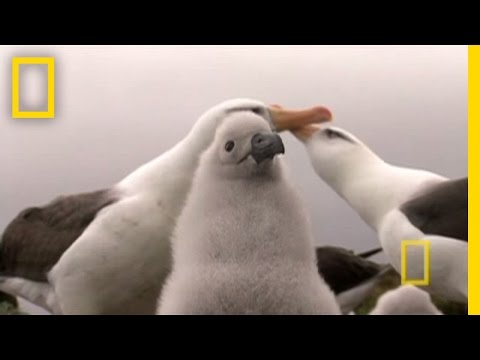
they come ashore only to breed otherwise
the albatross spins its life on the wing
efficiently designed to ride wind born
currents of air some will clock a
million and a half miles in air travel
over a lifetime when it’s time to come
home to roost they prefer out-of-the-way
Highlands to find the National
Geographic photographer Franz Lonnie
trek to the far reaches of sub and artic
campbell island off New Zealand here he
gets a glimpse of their protracted
courtship
young birds crowd the beach like excited
teens of shopping mall
summer on solid land for the first time
in years the most successful are shy
about showing off their assets flawless
wings and healthy plumage the birds have
very little fear for humans because they
never see any human beings in the course
of their lives
and that means I can get very close I
love being close to these birds you know
they’re so magnificent and their
behavior is so extravagant finding the
correct mane is vital
both parents raised the chick and they
will bear only one chick every two to
three years this slow rate of
reproduction makes the albatross
extremely vulnerable to disruptions and
now conservationists warned that 1724
albatross species are facing extinction
one major problem commercial fishing
hungry sea birds snatch at bait attached
to hooks and are pulled to their deaths
some estimated 100,000 of the sea birds
are killed each year these parts are so
magnificent and yet very few people know
about their lives because albatrosses
are always out there in the middle of
the open oceans and there’s this tragedy
that has been unfolding the conflict
between fisheries and albatrosses has
taken the lives of literally hundreds of
thousands of these seabirds
a long way from the sub-antarctic
another species of albatross gather on
the northwest Hawaiian Islands
fletchling’s are preparing to launch
into the world and support a variety of
embarrassing adolescent Mohawks the
youngsters are learning to fly with very
success every morning thousands of them
come to this Beach to learn how to fly
at the shoreline it looks like a scene
from New Jersey
some of the inexperienced birds don’t
clean enough oil under their feathers
and become waterlogged
these islands are off-limits to most
humans the National Geographic is here
with researchers so the exhausted birds
have a rare helping hand biologist Scott
Shafer tagged some of the youngsters in
an effort to discover the dangers they
face when they leave the beach when they
leave the asshole they leave with no
guidance from adults and so everything
they see whether it’s a moving fish in
the water is going to be new to them and
so to be able to understand what they
might do when they first learn to corage
with the amazing many scientists have
trouble catching the subjects of their
study scott has the opposite problem one
curious specimen takes an exploratory
nip
fortunately there may yet be hope for
these beautiful birds nearby fishermen
are learning new ways to drop hooks so
that the albatrosses can’t snatch a
debate before it sinks beneath the waves
as a result the fleet has killed an
estimated 97% fewer birds in the past 10
years conservationists hope to make
these simple methods an international
standard
with luck and care
the Albatross may continue to soar
across the world’s oceans and raise new
generations to come
Please follow and like us: