
in general on our skin we have thousands
of species and so we’ve studied a lot
about the bacteria living our skin Bunji
living our skin worms live on your skin
we all have those things mites are going
into hair follicles and into the pores
there could be hundreds of thousands or
even millions in the individual person
we don’t really know we know that
sometimes they appear to come out and
mate on your skin the mites have sex in
your head right mate so that’s happening
it’s probably happening right now you
know with with you with everybody who’s
watching and so they do have this funny
way of living on you that I think we
find totally gross if we talk about it
you know and yet independent of our
comfort with these realities these mites
do tons of different things and so
figuring that story out I think will
show us a ton not just about them but
about mammals and it’s just wide open
and insert for the most part for now we
can just go sample people and figure out
what they have your wildlife is a
citizen science outreach initiative and
so the me or mites project is an
extension of your wildlife this project
is really unique in the fact that we get
to engage the participants personally so
they get to learn about their mites
what’s living directly on them at the
time of the sampling and then we get to
learn about the things that are so
closely tied to our bodies that we know
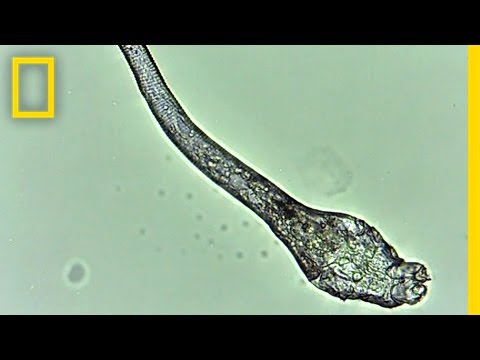
very little about face mites are these
tiny arthropods they’re microscopic and
they actually live all around your body
they seem to be really concentrated on
your face and they were originally
collected from foreheads so they got
coined that even though they could live
in a lot of other areas the lifecycle of
the mites is about 14 days and it’s
thought that the females once they
choose a poor more or less stay in that
poor and the male’s realm around a
little
so they live about five days as adults
going around mating on your face at
night the idea is the female comes to
the surface of the poor a male is
searching around for a mate finds her
they made it the opening of the poor the
female goes back down in and will live
the rest of her life down there laying
eggs and eating your sebum and the male
will go off and find another poor maybe
another mate or another place to just
hang out
they don’t have an anus so they’re not
really pooping the idea has been put out
there that they may explode we’ve looked
at a lot of mites and we’ve never seen
an engorged mite about to explode it’s a
bad way to go but you got to go some way
by looking at those mites we can figure
out stories about ourselves and that
would be the really neat thing because
they evolved super rapidly so one of the
main goals of this study is that we are
trying to get a lot of mites from
different populations of people around
the world because we’re really
interested in mapping the genetic
history of these mite so we can use the
relationships that we find in these mite
populations to determine not only how
they’re related to each other but we can
use that to determine how we’re related
to each other and how we spread around
the world and how humans moved through
time it’s very exciting to know that
there’s a tiny arthropod that that’s
associated with every person on the
planet
Please follow and like us: