
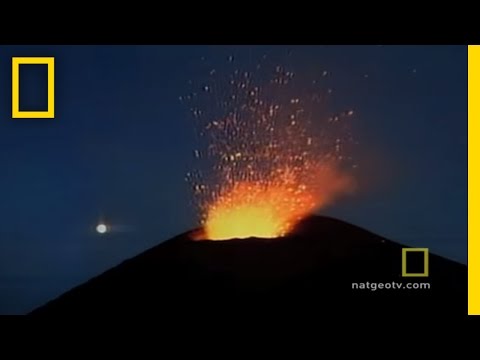
time stopped in the year 79 AD Mount
Vesuvius erupted sealing to Italian
towns in ash mud and lava
the better-known city of Pompeii and the
seaside resort of Herculaneum it was the
vacation spot of choice for wealthy
Romans
in 1752 workers excavating Herculaneum
uncovered a large villa and discovered
what appeared to be sticks of charcoal
in large quantities what they really had
found were two thousand-year-old Scrolls
of ancient works on papyrus rolls all
carbonized by an indiscriminate
pyroclastic flow from Vesuvius to the
naked eye they are nothing more than
black crumbly paper but thanks to a
process developed by NASA called multi
spectral imaging words suddenly appear
from the blackness and read like
yesterday’s newspaper
using a visible filter this is the image
we’re getting very little writing now
I’m going to stop the camera we’re going
to take a look at the very same scroll
taken with an an ultra infrared filter
this same fragment now taken with a
thousand nanometer filter so now we have
the text it’s perfectly readable as if
it was relatively recently written and
it’s opened up a treasure trove of
literature for classical scholars to
examine the writings are believed to be
that of first century BC philosopher
Villa Dimas some are in Greek others in
Latin
since 1999 researchers from Brigham
Young University have been examining the
Scrolls of historic National Library in
Naples Italy in that time the BYU team
has carefully exposed nearly a thousand
rules to the multispectral process and
collected more than 20,000 images
scholars believe that this same
Herculaneum villa may contain in its
library the written words of Aristotle
and other Greek and Latin authors in the
meantime researchers and historians at
Brigham Young are creating a digital
archive of the text and it’s a good
thing the scrolls have kept their
secrets for more than two millennia and
despite the best conservation efforts
they are rapidly being lost to the
volcano again
Vesuvius erupted sealing to Italian
towns in ash mud and lava
the better-known city of Pompeii and the
seaside resort of Herculaneum it was the
vacation spot of choice for wealthy
Romans
in 1752 workers excavating Herculaneum
uncovered a large villa and discovered
what appeared to be sticks of charcoal
in large quantities what they really had
found were two thousand-year-old Scrolls
of ancient works on papyrus rolls all
carbonized by an indiscriminate
pyroclastic flow from Vesuvius to the
naked eye they are nothing more than
black crumbly paper but thanks to a
process developed by NASA called multi
spectral imaging words suddenly appear
from the blackness and read like
yesterday’s newspaper
using a visible filter this is the image
we’re getting very little writing now
I’m going to stop the camera we’re going
to take a look at the very same scroll
taken with an an ultra infrared filter
this same fragment now taken with a
thousand nanometer filter so now we have
the text it’s perfectly readable as if
it was relatively recently written and
it’s opened up a treasure trove of
literature for classical scholars to
examine the writings are believed to be
that of first century BC philosopher
Villa Dimas some are in Greek others in
Latin
since 1999 researchers from Brigham
Young University have been examining the
Scrolls of historic National Library in
Naples Italy in that time the BYU team
has carefully exposed nearly a thousand
rules to the multispectral process and
collected more than 20,000 images
scholars believe that this same
Herculaneum villa may contain in its
library the written words of Aristotle
and other Greek and Latin authors in the
meantime researchers and historians at
Brigham Young are creating a digital
archive of the text and it’s a good
thing the scrolls have kept their
secrets for more than two millennia and
despite the best conservation efforts
they are rapidly being lost to the
volcano again
Please follow and like us: