
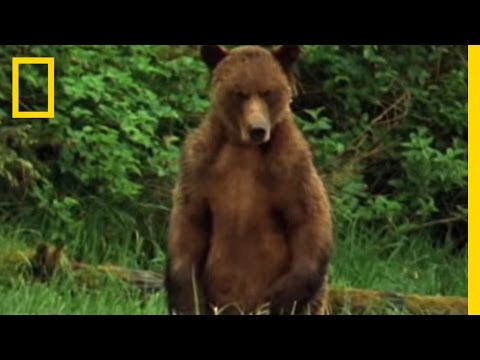
when it comes to studying formidable
predators like bears there are at least
two good reasons to use remote cameras
one you can discover where the animals
travel how they live what they eat and
two you avoid finding yourself on the
menu
national Geographics Crittercam has
revealed extraordinary behaviors of the
brown bear named the Grizzlies close kin
Alaska Panhandle the video provides
researchers with some of the most
intimate pictures ever captured of bear
life in the depths of the forest a rare
look into the private life
things might not remain quite some cozy
for the ground a for long
humans are encroaching on their
territory hunters come to Alaska to bag
brown bears for trophies
while loggers are cutting down their
habitat the number of grizzly bears in
the western United States is already
plummeting for more than a hundred
thousand to only one thousand today no
one wants to see a repeat of that
scenario with brown bears in Alaska so
researchers here are trying to discover
more about the Bears movements they want
to know how their range is being
affected by clear-cut forests and new
roads for that they rely on GPS these
devices make use of dozens of orbiting
satellites to calculate the precise
location of a tagged animal sometimes
they’re only off by a few feet not just
as with Crittercam first we have to get
a collar pair in order to track it
that’s where expert tracker Laverne
buyer and biologist Jack Whitman come in
we’re trespassing in a pretty major way
in in places where brown bears live
where most people shouldn’t go it would
be foolish regardless you know how one
feels about bears not to carry a weapon
as they enter the bears rainforest
habitat they stay downwind and silent as
possible
they pick up motion so you move slow and
deliberate and if preferably you move
when when they’re not looking at you
trying to determine whether the bear
knows if we’re here or not by the wind
when it’s kind of going right towards it
Laverne and Jack can hear noises
indicating that a bear is caught in one
of their snares it is not clear how firm
the trap is grab the animals foot at
this point is kind of how it’s all going
to play out you know where a lot where
there’s other things
they’re going to happen here to
determine whether it’s a good capture a
bad capture and ugly capture as the bear
shifts its position the trackers can see
the situation is tenuous a sudden jury
and this angry bear could be on them in
the blink of an eye
fortunately the tranquilizer is already
taking effect
not there my easily pool free and it’s
later she’s down the researchers waste
no time first a blood sample then it’s
time to fit the collar
now this bear like others can provide a
stream of important information as to
its movements
researchers are particularly concerned
about the situation onalaska’s Chichikov
island where many brown bears converge
during the summer
these are life-sustaining corridors
where bears have traditionally roam but
over the last 20 years
roads have cut deep into this once
virgin wilderness and timber
clear-cutting has turned some of the
bears summer stomping grounds into stump
fields as development extends further
and further into the brown bears ancient
domain humans and bears increasingly
coming face to face and that’s a
potential disaster so researchers need
to know how much can the Bears land
shrink before it will no longer be able
to sustain them through technologies
like critter camera and GPS tracking
they will be keeping a close eye on the
Bears movements from land and from space
these massive bears are on
conservationists radar they want to make
sure this awesome species doesn’t bear
the brunt of man’s incursions into their
land
sponsored by National Geographic mission
programs taking science and exploration
into the new millennium
Please follow and like us: