
– If you’re not pursuing your interests in life,
you’re not realizing who you really are.
An entrepreneur could be a business person,
could be an artist, could be a musician,
anybody who can have an idea and turn it into reality.
Your business can always go away.
You can never get complacent.
‘Cause I’ve had it all taken away from me before.
I actually was pretty depressed
when I graduated from college.
I mean, I was literally depressed for six months.
As soon as you are losing steam,
you’ve got to bring people into your business
that can add a relentless passion to it.
And the light bulb went off
and it was literally like I could see GoPros
mounted all over the place and I got chills.
Why are you laughing?
(audience laughs)
My wife is laughing.
(audience laughs)
I made the Dean’s List.
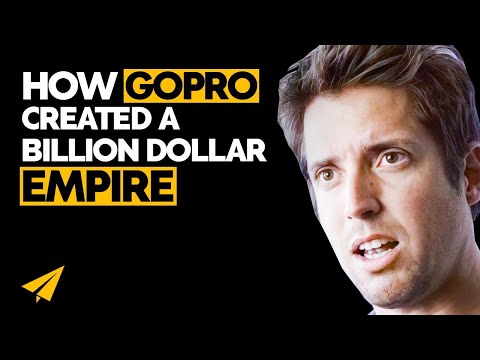
– He’s an American businessman and philanthropist.
He’s the founder and CEO of GoPro.
He has an estimated net worth of 770 million dollars.
He’s Nick Woodman and here’s my take
on his top ten rules for success.
Number 10 is my personal favorite
and make sure to stick around all the way
to the end for some special bonuses.
– We all have interests and passions for a reason.
It’s your inner voice telling you
what you should be doing with your life.
If you’re not pursuing your interests in life,
you’re not realizing who you really are and as a result,
you’re not going to be as happy as you can be.
– What does the word entrepreneur mean to you?
– When somebody can take an idea and make it real.
An entrepreneur could be a business person,
could be an artist,
could be a musician.
Anybody who can have an idea and turn it into reality.
– And how did you do that?
– I dedicated myself to it.
When I was 22-years-old,
I promised myself that I would work my tail off
until the age of 30, at a minimum,
to succeed as an entrepreneur.
That was extremely important
because I had a lot of failure along the way.
– Right, the first company you started failed.
– Yeah, actually and then there was a company
that I didn’t even start that I failed at.
So I really had two failures before I succeeded with GoPro.
– How do those failures drive you today?
Does it drive you? – Well at the time
they scared me.
Failure isn’t easy.
It wasn’t like I thought, oh, cool, I failed.
And success has taught me that one
of the most important things an entrepreneur can have
is perseverance, a dedication, a willingness to fail,
pick yourself up again and give it another shot.
Because if you don’t have that,
if you don’t have that grit,
you’re going to get run over.
– You started in 2002.
Let’s talk about that initiation of the dream.
How did that start and how’d that come about?
– I’d started a business before that.
I raised four million bucks of other people’s money.
Started a web marketing company.
Went boom and bust with the first .com boom and bust.
I knew I wanted to make it as an entrepreneur
and start another business but I had no idea
what I wanted to do.
So, for inspiration, I went surfing
and I planned a five-month surf trip
around Australia and Indonesia.
The inspiration came before I even left.
I wanted to capture photos of myself and my friends
that I was going on the trip with
while we were surfing out in the water.
No camera existed that allowed you to do that.
And so I set out to develop this wrist harness
that I could put a single-use disposable camera into
and surf with it.
I didn’t even mean it to be a business idea,
I just wanted to document my experience on this trip.
As soon as I got it working well,
the light bulb went off and I realized, oh my God!
There must be so many other surfers
in the world that want something like this!
– So you started with wrist straps, essentially.
But how do you go from wrist straps, which are very simple,
to hardware and to actually developing a camera?
– I wanted to use higher quality cameras
with my wrist strap to capture higher quality photos
but every camera that I would use with the strap surfing,
I would break the camera.
Because cameras weren’t designed to be used
during rigorous activities like surfing.
What I ended up doing was I spent two years
going to trade shows,
the camera trade shows around the world,
to look for a camera that was close
to what I would want to design.
After a year and a half, about a year, I found it.
Got the manufacturer to agree to make the modifications
and begin building the cameras for me.
I actually did the deal without
ever meeting the actual company.
It was all e-mail.
I had one phone call where we could
barely understand each other
because of language barriers.
– Were they Chinese?
– They’re in Shenzhen.
I wired my $5,000 for the tool to be,
the mold to be made
because it was actually cheaper just to wire five grand
than to fly over there, meet them,
have a business trip and I just figured,
okay, we’ll just go for it,
and they ended up being legitimate.
We were profitable from day one
because it was just me, one employee.
We just had no overhead
and rolled one good production run
into another and slowly scaled it.
The GoPro that everybody knows today
has been built on $265,000 of capital.
The Hero4 Session
is the first GoPro we’ve ever released
that didn’t immediately take off.
It wasn’t just that we’re selling
against the strength of HERO4 Black and Silver,
we also gaffed it and priced it wrong.
What I’m proud of is that when we recognized
that we mis-priced GoPro,
and that it wasn’t in the interest of the customer
and the customer just wasn’t grooving on it,
we changed it.
It’s not the last time we’re going to make moves like that,
a radical that are in favor of the customer’s experience
but if we can keep doing that,
we can keep differentiating ourselves from how
a lot of other businesses operate
and that differentiation
is part of what makes this company so special.
– How do you keep GoPro,
what you’re famous for,
how do you keep it the best of the bunch?
– Well, having failed a couple times,
I recognize that your business can always go away.
You can never get complacent
’cause I’ve had it all taken away from me before.
It’s important to wake up every morning
a little bit scared that that might happen.
Never think that you’ve finally made it
– Does Shuame scare you?
Does Apple scare you?
– No, no, no.
Actually, competition is a really good thing
because, yeah, of course they scare you a little bit.
That’s a good thing because it drives you.
It motivates you to put more into your work,
to stay running and stay running hard
and that’s something that we,
is alive and well at our culture,
and I think it’s also important
to never let yourself stop being a start-up.
Stop trying to re-invent yourself.
– You’re getting new video all the time.
– All the time.
This is actually a video of a firefighter
rescuing and resuscitating a kitten.
– Yeah.
– And a video like that
would very easily go viral all around the world.
I mean–
– Oh my, God, yeah.
– That’s essentially a commercial for GoPro.
– Essentially a commercial for GoPro.
(kitten meowing)
It’s a marketer’s dream
and it’s all based off of authenticity, right?
It’s our customers doing interesting things
around the world and they’re so stoked
that they’re able to finally self-document
these things that they like to do
and share it with people.
They’re so stoked at how good they look in the video
that when they share the video,
they often give us credit.
My GoPro ski trip.
My GoPro day at the park with my kids.
– You’re the only CO that I’ve ever interviewed
who’s used the word stoked.
– Like five million times.
– Five million times, yes.
– Well, you know, you’ve got to stay true to who you are
and I recognize that my approach to life
and now our company’s approach to life
is what has made GoPro what it is
and so there’s no reason to change that.
Everybody around me,
their parents were lawyers
or investment bankers or entrepreneurs.
They were all involved in business.
That actually didn’t seem very much fun to me growing up.
I thought that being an adult’s kind of a drag.
I actually was pretty depressed
when I graduated from college.
I mean, I was literally depressed for like six months.
I woke up at one o’clock in the afternoon
and laid on a couch and looked up at the ceiling
and was just like, dude, what am I going to do?
So, with no inspiration, I just decided, you know what?
The only thing I can think of to do right now
that’s going to make me happy is if I go surfing.
So I planned a five month trip
around Australia and Indonesia
living out of a back pack and a van at the time.
If I didn’t follow my passion for surfing,
I would have never had the idea for GoPro.
You have got to be relentless.
One of the things that’s really benefited GoPro
is a healthy dose of fear
that you’re going to get taken out by somebody
and a healthy enthusiasm for all of your great ideas
and being impatient as hell to bring them to reality.
You know, having failed in business before
scared the hell out of me.
You know, I still wake up scared
that it’s all going to go away.
– Right.
– Less scared than I used to be.
But it happens.
You can never say, ahh, we made it,
’cause that’s when you get hit by the competitive truck.
– Or a surf board.
– Or a surf board.
You have to stay scared
and you also have to really, really, really be relentless.
I always think about what is the other company doing?
The other guy or gal,
what is their mindset
and how can we be more aggressive than them?
How can we have a more aggressive roadmap,
development time line
to where we just absolutely out-pace the competition?
Just wear them into the ground.
– Sure.
– I think that
that’s been one of the secrets to our success.
If you look at our development
and product release history,
from the HERO to the HERO2 to the HERO3
to the HERO3+ to the HERO4,
we’ve launched five new cameras in the last 11 months.
We’ve made significant advancements in our software,
all the while expanding our global marketing,
growing into more than 40,000 retail stores
with our in-store retail merchandisers
in every single store.
Once we have those in store, that’s not enough.
Now, we need to grow footprints.
So we grow from two linear feet
of retail merchandising shelf space
to now 12 feet in big stores like Best Buy.
Even our smaller format stores
are going from two to five to some eight feet of linear.
You can never be done.
– So you’ve got to be relentless.
– You have to be relentless
and as soon as you are losing steam,
you’ve got to bring people into your business
that can add a relentless passion to it.
If you don’t feel like you’re relentless,
chances are that you’re competing
against somebody who is.
It’s a race.
As long as you can bootstrap,
not at the sacrifice of competitive advantage,
meaning not leaving yourself open,
not moving so slowly that you leave yourself
to be eaten alive by your competitors.
Bootstrapping is a really powerful thing
because it allows you to be totally devoted to your vision
and not have to deal with the pressures of investors
to maybe realize milestones and unrealistic timelines.
– Sure.
– Everybody has an idea over time
of what the business should be.
When the business is going well, people leave you alone.
But I think maybe during the formative period,
too many opinions could be disruptive.
I know it really helped GoPro
that we didn’t have to answer to anybody for years.
I think an example is when we,
as soon as we could afford it, we bought a race car.
We went racing up at Sonoma Raceway in Sonoma
and I learned how to drive a race car
and I became our chief R&D developer for motor sport.
– When you’re the founder,
you can do whatever you want to do.
– Yeah, but if we’d had investors at that point,
they might have questioned, you know,
is this really a great use of company proceeds?
In the end,
it led to one of the biggest ideas
that we ever had at GoPro,
which was to get the camera off of the wrist
and make mounting accessories
so that you could use the camera,
mount the camera in any way imaginable.
The way that that happened was
I was in racing school
and they wanted to charge me a bunch of money
to put a camera on the car.
And I thought, that’s crazy.
I’ve got my wrist camera in my trunk
of my street car.
I went and got it,
strapped it to the roll bar,
and the light bulb went off.
It was literally like I could see GoPro’s
mounted all over the place.
I got chills.
Until then,
we had been a little wrist camera company plodding along.
Then that was a major hockey stick moment
for the company that was totally inspired
by climbing into a race car,
which is not what a board of directors
would normally think was a great idea.
I had a deal with my parents that
I got into Berkeley.
But I didn’t get in here.
I was terrified of going to Berkeley
’cause it was so close to home.
(laughing)
My parents said, “You know what we said
“about you being able to pick where you can go to school?”
“Yeah.”
“As soon as you got into Berkeley that choice went away.
“You’re going there.”
And I made a deal with them
that if I could get into UC San Diego,
would they let me go here?
This is where I wanted to go
and my motivation was it was the best education
combined with the best surf.
I mean, just,
just being honest.
(laughing) (audience applauding)
I wrote a very earnest letter of appeal.
Thank God, I got in!
The rest is the history that we’re continuing to write.
– What was the case that you made?
Do you remember?
– Yeah.
I promised that I would really buckle down
and put my head down. (wife laughs)
Why are you laughing?
(audience laughs)
My wife is laughing.
I made the Dean’s list.
(audience laughs)
In my freshman year, I think I made it.
I think I made it once or twice,
then kind of fell from there.
I promised to really devote myself
and make the most out of the education.
That I wasn’t coming to party.
That I wasn’t coming just to screw around.
That if UC San Diego would give me the opportunity,
I would really make something of myself at the school.
Thanks for taking a flyer on me.
The lesson there just is never give up.
Never give up.
‘Cause if I went to Berkeley,
I don’t think I would have had the…
That life is a winding path.
I just don’t think I would have had the same
interests and inspiration there that led me, ultimately,
to my idea for GoPro.
– Thank you guys so much for watching!
I hope you enjoyed.
I made this video because grnhy asked me to.
So if there’s a famous entrepreneur
you want me to profile next, leave in the comments below
and I’ll see what I can do.
I’d also love to know which of the top 10 rules
had the biggest impact on you and why.
Leave them in the comments and I will join the discussion.
Thank you so much for watching.
Continue to believe and I’ll see you soon.
– A secret to GoPro’s success,
people would wonder how did you cash flow the business?
We learned early on that our international distributors
would pay FOB Hong Kong, right?
They would pay when we would ship to them from Hong Kong.
We would, in the day, get paid
by our international customers
before we even owed the factory the money.
We went against the grain,
and we built our international business first
because they would pay up front.
We used the international revenue
to build the domestic business which is the inverse
of what traditional business logic would tell you,
which is build your domestic brand first
and then take it overseas.
I don’t know that that really works this day and age.
You’d pretty much have to build globally quickly
or else somebody else’ll do it for you.
Everything you need to succeed in life
is already out there.
You don’t need a ton of money
and just go be scrappy and be dedicated,
and you can build your own GoPro.
you’re not realizing who you really are.
An entrepreneur could be a business person,
could be an artist, could be a musician,
anybody who can have an idea and turn it into reality.
Your business can always go away.
You can never get complacent.
‘Cause I’ve had it all taken away from me before.
I actually was pretty depressed
when I graduated from college.
I mean, I was literally depressed for six months.
As soon as you are losing steam,
you’ve got to bring people into your business
that can add a relentless passion to it.
And the light bulb went off
and it was literally like I could see GoPros
mounted all over the place and I got chills.
Why are you laughing?
(audience laughs)
My wife is laughing.
(audience laughs)
I made the Dean’s List.
– He’s an American businessman and philanthropist.
He’s the founder and CEO of GoPro.
He has an estimated net worth of 770 million dollars.
He’s Nick Woodman and here’s my take
on his top ten rules for success.
Number 10 is my personal favorite
and make sure to stick around all the way
to the end for some special bonuses.
– We all have interests and passions for a reason.
It’s your inner voice telling you
what you should be doing with your life.
If you’re not pursuing your interests in life,
you’re not realizing who you really are and as a result,
you’re not going to be as happy as you can be.
– What does the word entrepreneur mean to you?
– When somebody can take an idea and make it real.
An entrepreneur could be a business person,
could be an artist,
could be a musician.
Anybody who can have an idea and turn it into reality.
– And how did you do that?
– I dedicated myself to it.
When I was 22-years-old,
I promised myself that I would work my tail off
until the age of 30, at a minimum,
to succeed as an entrepreneur.
That was extremely important
because I had a lot of failure along the way.
– Right, the first company you started failed.
– Yeah, actually and then there was a company
that I didn’t even start that I failed at.
So I really had two failures before I succeeded with GoPro.
– How do those failures drive you today?
Does it drive you? – Well at the time
they scared me.
Failure isn’t easy.
It wasn’t like I thought, oh, cool, I failed.
And success has taught me that one
of the most important things an entrepreneur can have
is perseverance, a dedication, a willingness to fail,
pick yourself up again and give it another shot.
Because if you don’t have that,
if you don’t have that grit,
you’re going to get run over.
– You started in 2002.
Let’s talk about that initiation of the dream.
How did that start and how’d that come about?
– I’d started a business before that.
I raised four million bucks of other people’s money.
Started a web marketing company.
Went boom and bust with the first .com boom and bust.
I knew I wanted to make it as an entrepreneur
and start another business but I had no idea
what I wanted to do.
So, for inspiration, I went surfing
and I planned a five-month surf trip
around Australia and Indonesia.
The inspiration came before I even left.
I wanted to capture photos of myself and my friends
that I was going on the trip with
while we were surfing out in the water.
No camera existed that allowed you to do that.
And so I set out to develop this wrist harness
that I could put a single-use disposable camera into
and surf with it.
I didn’t even mean it to be a business idea,
I just wanted to document my experience on this trip.
As soon as I got it working well,
the light bulb went off and I realized, oh my God!
There must be so many other surfers
in the world that want something like this!
– So you started with wrist straps, essentially.
But how do you go from wrist straps, which are very simple,
to hardware and to actually developing a camera?
– I wanted to use higher quality cameras
with my wrist strap to capture higher quality photos
but every camera that I would use with the strap surfing,
I would break the camera.
Because cameras weren’t designed to be used
during rigorous activities like surfing.
What I ended up doing was I spent two years
going to trade shows,
the camera trade shows around the world,
to look for a camera that was close
to what I would want to design.
After a year and a half, about a year, I found it.
Got the manufacturer to agree to make the modifications
and begin building the cameras for me.
I actually did the deal without
ever meeting the actual company.
It was all e-mail.
I had one phone call where we could
barely understand each other
because of language barriers.
– Were they Chinese?
– They’re in Shenzhen.
I wired my $5,000 for the tool to be,
the mold to be made
because it was actually cheaper just to wire five grand
than to fly over there, meet them,
have a business trip and I just figured,
okay, we’ll just go for it,
and they ended up being legitimate.
We were profitable from day one
because it was just me, one employee.
We just had no overhead
and rolled one good production run
into another and slowly scaled it.
The GoPro that everybody knows today
has been built on $265,000 of capital.
The Hero4 Session
is the first GoPro we’ve ever released
that didn’t immediately take off.
It wasn’t just that we’re selling
against the strength of HERO4 Black and Silver,
we also gaffed it and priced it wrong.
What I’m proud of is that when we recognized
that we mis-priced GoPro,
and that it wasn’t in the interest of the customer
and the customer just wasn’t grooving on it,
we changed it.
It’s not the last time we’re going to make moves like that,
a radical that are in favor of the customer’s experience
but if we can keep doing that,
we can keep differentiating ourselves from how
a lot of other businesses operate
and that differentiation
is part of what makes this company so special.
– How do you keep GoPro,
what you’re famous for,
how do you keep it the best of the bunch?
– Well, having failed a couple times,
I recognize that your business can always go away.
You can never get complacent
’cause I’ve had it all taken away from me before.
It’s important to wake up every morning
a little bit scared that that might happen.
Never think that you’ve finally made it
– Does Shuame scare you?
Does Apple scare you?
– No, no, no.
Actually, competition is a really good thing
because, yeah, of course they scare you a little bit.
That’s a good thing because it drives you.
It motivates you to put more into your work,
to stay running and stay running hard
and that’s something that we,
is alive and well at our culture,
and I think it’s also important
to never let yourself stop being a start-up.
Stop trying to re-invent yourself.
– You’re getting new video all the time.
– All the time.
This is actually a video of a firefighter
rescuing and resuscitating a kitten.
– Yeah.
– And a video like that
would very easily go viral all around the world.
I mean–
– Oh my, God, yeah.
– That’s essentially a commercial for GoPro.
– Essentially a commercial for GoPro.
(kitten meowing)
It’s a marketer’s dream
and it’s all based off of authenticity, right?
It’s our customers doing interesting things
around the world and they’re so stoked
that they’re able to finally self-document
these things that they like to do
and share it with people.
They’re so stoked at how good they look in the video
that when they share the video,
they often give us credit.
My GoPro ski trip.
My GoPro day at the park with my kids.
– You’re the only CO that I’ve ever interviewed
who’s used the word stoked.
– Like five million times.
– Five million times, yes.
– Well, you know, you’ve got to stay true to who you are
and I recognize that my approach to life
and now our company’s approach to life
is what has made GoPro what it is
and so there’s no reason to change that.
Everybody around me,
their parents were lawyers
or investment bankers or entrepreneurs.
They were all involved in business.
That actually didn’t seem very much fun to me growing up.
I thought that being an adult’s kind of a drag.
I actually was pretty depressed
when I graduated from college.
I mean, I was literally depressed for like six months.
I woke up at one o’clock in the afternoon
and laid on a couch and looked up at the ceiling
and was just like, dude, what am I going to do?
So, with no inspiration, I just decided, you know what?
The only thing I can think of to do right now
that’s going to make me happy is if I go surfing.
So I planned a five month trip
around Australia and Indonesia
living out of a back pack and a van at the time.
If I didn’t follow my passion for surfing,
I would have never had the idea for GoPro.
You have got to be relentless.
One of the things that’s really benefited GoPro
is a healthy dose of fear
that you’re going to get taken out by somebody
and a healthy enthusiasm for all of your great ideas
and being impatient as hell to bring them to reality.
You know, having failed in business before
scared the hell out of me.
You know, I still wake up scared
that it’s all going to go away.
– Right.
– Less scared than I used to be.
But it happens.
You can never say, ahh, we made it,
’cause that’s when you get hit by the competitive truck.
– Or a surf board.
– Or a surf board.
You have to stay scared
and you also have to really, really, really be relentless.
I always think about what is the other company doing?
The other guy or gal,
what is their mindset
and how can we be more aggressive than them?
How can we have a more aggressive roadmap,
development time line
to where we just absolutely out-pace the competition?
Just wear them into the ground.
– Sure.
– I think that
that’s been one of the secrets to our success.
If you look at our development
and product release history,
from the HERO to the HERO2 to the HERO3
to the HERO3+ to the HERO4,
we’ve launched five new cameras in the last 11 months.
We’ve made significant advancements in our software,
all the while expanding our global marketing,
growing into more than 40,000 retail stores
with our in-store retail merchandisers
in every single store.
Once we have those in store, that’s not enough.
Now, we need to grow footprints.
So we grow from two linear feet
of retail merchandising shelf space
to now 12 feet in big stores like Best Buy.
Even our smaller format stores
are going from two to five to some eight feet of linear.
You can never be done.
– So you’ve got to be relentless.
– You have to be relentless
and as soon as you are losing steam,
you’ve got to bring people into your business
that can add a relentless passion to it.
If you don’t feel like you’re relentless,
chances are that you’re competing
against somebody who is.
It’s a race.
As long as you can bootstrap,
not at the sacrifice of competitive advantage,
meaning not leaving yourself open,
not moving so slowly that you leave yourself
to be eaten alive by your competitors.
Bootstrapping is a really powerful thing
because it allows you to be totally devoted to your vision
and not have to deal with the pressures of investors
to maybe realize milestones and unrealistic timelines.
– Sure.
– Everybody has an idea over time
of what the business should be.
When the business is going well, people leave you alone.
But I think maybe during the formative period,
too many opinions could be disruptive.
I know it really helped GoPro
that we didn’t have to answer to anybody for years.
I think an example is when we,
as soon as we could afford it, we bought a race car.
We went racing up at Sonoma Raceway in Sonoma
and I learned how to drive a race car
and I became our chief R&D developer for motor sport.
– When you’re the founder,
you can do whatever you want to do.
– Yeah, but if we’d had investors at that point,
they might have questioned, you know,
is this really a great use of company proceeds?
In the end,
it led to one of the biggest ideas
that we ever had at GoPro,
which was to get the camera off of the wrist
and make mounting accessories
so that you could use the camera,
mount the camera in any way imaginable.
The way that that happened was
I was in racing school
and they wanted to charge me a bunch of money
to put a camera on the car.
And I thought, that’s crazy.
I’ve got my wrist camera in my trunk
of my street car.
I went and got it,
strapped it to the roll bar,
and the light bulb went off.
It was literally like I could see GoPro’s
mounted all over the place.
I got chills.
Until then,
we had been a little wrist camera company plodding along.
Then that was a major hockey stick moment
for the company that was totally inspired
by climbing into a race car,
which is not what a board of directors
would normally think was a great idea.
I had a deal with my parents that
I got into Berkeley.
But I didn’t get in here.
I was terrified of going to Berkeley
’cause it was so close to home.
(laughing)
My parents said, “You know what we said
“about you being able to pick where you can go to school?”
“Yeah.”
“As soon as you got into Berkeley that choice went away.
“You’re going there.”
And I made a deal with them
that if I could get into UC San Diego,
would they let me go here?
This is where I wanted to go
and my motivation was it was the best education
combined with the best surf.
I mean, just,
just being honest.
(laughing) (audience applauding)
I wrote a very earnest letter of appeal.
Thank God, I got in!
The rest is the history that we’re continuing to write.
– What was the case that you made?
Do you remember?
– Yeah.
I promised that I would really buckle down
and put my head down. (wife laughs)
Why are you laughing?
(audience laughs)
My wife is laughing.
I made the Dean’s list.
(audience laughs)
In my freshman year, I think I made it.
I think I made it once or twice,
then kind of fell from there.
I promised to really devote myself
and make the most out of the education.
That I wasn’t coming to party.
That I wasn’t coming just to screw around.
That if UC San Diego would give me the opportunity,
I would really make something of myself at the school.
Thanks for taking a flyer on me.
The lesson there just is never give up.
Never give up.
‘Cause if I went to Berkeley,
I don’t think I would have had the…
That life is a winding path.
I just don’t think I would have had the same
interests and inspiration there that led me, ultimately,
to my idea for GoPro.
– Thank you guys so much for watching!
I hope you enjoyed.
I made this video because grnhy asked me to.
So if there’s a famous entrepreneur
you want me to profile next, leave in the comments below
and I’ll see what I can do.
I’d also love to know which of the top 10 rules
had the biggest impact on you and why.
Leave them in the comments and I will join the discussion.
Thank you so much for watching.
Continue to believe and I’ll see you soon.
– A secret to GoPro’s success,
people would wonder how did you cash flow the business?
We learned early on that our international distributors
would pay FOB Hong Kong, right?
They would pay when we would ship to them from Hong Kong.
We would, in the day, get paid
by our international customers
before we even owed the factory the money.
We went against the grain,
and we built our international business first
because they would pay up front.
We used the international revenue
to build the domestic business which is the inverse
of what traditional business logic would tell you,
which is build your domestic brand first
and then take it overseas.
I don’t know that that really works this day and age.
You’d pretty much have to build globally quickly
or else somebody else’ll do it for you.
Everything you need to succeed in life
is already out there.
You don’t need a ton of money
and just go be scrappy and be dedicated,
and you can build your own GoPro.
Please follow and like us: