
if you’re looking for ways to get in the
right environment don’t conform and do
what’s meaningful then this video is for
you we always want to fit in and this uh
this this pressure to fit in is uh is
really powerful you want to be in the
place where you can talk to as many
people as possible about your ideas I
think you should be doing something
you’re passionate about
what’s that belief nation it’s Evan my
one word is believing I believe in you I
believe you have an amazing gift inside
you that I want to see explode out into
the world so let’s get your motivation
to attend and get you believing in you
grab a snack and chew on today’s lessons
from a man who had to change elementary
schools seven times and was hit by
teachers when he made mistakes to being
the co-founder of PayPal a venture
capitalist and making billions he’s
Peter Thiel and here is my take on his
top ten rules to success volume two
enjoy
so let’s kick things off right rule
number one is solve problems I actually
think you should think twice before
starting certain types of businesses so
I think there are probably too many bad
businesses getting started and not
enough good ones so that’s it’s you know
I don’t think there’s I don’t think
there’s anything about entrepreneurship
per se that is that is is good you know
I was talking one of my friends a few
years ago I was asking him what do you
want to be doing in five or ten years no
it’s really clear I want to be an
entrepreneur that’s like saying I want
to be rich I want to be famous and I
don’t think I don’t those are what those
are good things being rich and famous or
they’re not good as direct goals like if
you if you have that as your sole goal
you’re unlikely to I think really really
succeed and so I think you become an
entrepreneur because you’re working on
an important problem nobody else is
working on I think you should start a
business if you have something if you’re
if you’re working on a problem that
otherwise would not get solved moving on
the rule number two always be open to
learning assembling a crew of people who
are very smart very fast learners was
kind of the key to a success and a
start-up as opposed to trying to get
someone who had you know if they had 10
years experience doing something that’s
great but the more fundamental
characteristic is would they learn fast
on the new problems and new challenges
yeah it’s it always feels wrong to be
anti experienced but the the place where
it can backfires if the experience makes
you think that you know everything yes
so it’s again it’s important to know
things and it’s important to be open to
learning more and in theory experience
is a plus in practice it’s often often a
bit of a minus because people are less
open to learning new things or they’re
more set on doing a particular job in
the context of a start-up which is
always very tricky where you have small
numbers of people and people need to be
very flexible about the roles and the
roles change as the company gets built
next step rule number three don’t
conform I have seen people and it
happens to everybody no matter what it
is I’ve seen people rip you apart on
both sides
for both mm-hmm how how does that what
what what how does that drive you does
that drive you at all does that does
that on political correctness of having
to conform and being what everybody says
you’re supposed to be does that drive
you at all
well it’s you try it you try to you try
to ignore it to some extent you know you
try on not to you but you don’t you know
you don’t try to you don’t try to put
yourself into any of these very
uncomfortable straight jackets and you
know you don’t want and I think that’s
that’s what’s so pernicious about all
the identity politics that that you know
we we all have to be in in this category
we’re all the same I think people are
all different they’re all you know we’re
all we’re all you know I’m somewhat
idiosyncratic but I think all of us are
all of us are a synchronic in different
ways and I think I think this is a this
is something that most people experience
that they’re being put into boxes way
more than they’re comfortable you know
there’s this interview question I always
like asking people tell me something
that’s true that very few people agree
with you on and it’s a very hard
question to answer and it’s it’s not
because people don’t have answers they
actually have lots of answers to it it’s
because they’re uncomfortable answering
it in the context of an interview
because um you know if it has to be
answer has to be something the person
asking you won’t agree and we’re always
nervous about doing that we always want
to fit in and this this this this
pressure to fit in is uh is really
powerful let’s go to rule number four
don’t compete most business books tell
you how you should compete more
effectively and mine goes somewhat
against that grain and tells you that
you should not compete as a founder or
an entrepreneur your aim should always
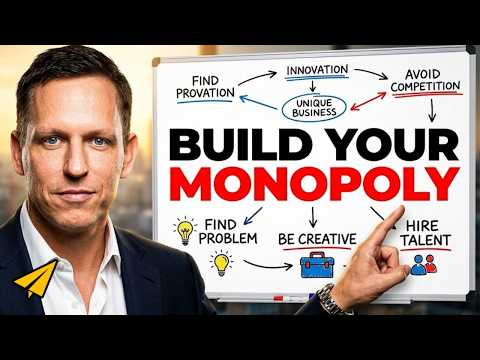
be to create a creative monopoly in some
new area that’s been under unexplored
and underdeveloped and I think that’s
always the key to great companies and so
my my my pattern recognition is that
when I hear about a company that makes a
lot of sense but it is really fresh and
strange that’s often a really promising
kind of idea whereas when it’s the
fourth
my pet food company or the tenth
thin-film solar panel company or the
1000th restaurant in San Francisco
that’s often not as good an investment
it’s time for real number five get in
the right environment
if you’re going to politics you go to DC
if you go into finance New York movies
probably still LA and and Texas Silicon
Valley Silicon Valley has an aspect
that’s that’s very open very fluid and
and it helps tremendously on these
cutting-edge ideas you want to be in the
place where you can talk to as many
people as possible about your ideas on
because that’s the way you will know
that they’re cutting edge and you will
improve them even more let’s go to rule
number six think ahead I think there
definitely are things that one can
iterate on but the the core thing is to
have a great product and then you can
always improve and and iterate on that
in all sorts of ways and I think you
know I think even in the tech industry
on what’s striking is how weak on a
quantitative basis so many of those
successful companies were it was just
they had a great product and then years
later they were able to optimize it in
all sorts of all sorts of ways whereas
if you’re just trying to optimize and
you don’t have a great product I think
that that rarely works um I think it’s
always worth asking you know where
you’re gonna go with this business um
and so I think we’re always focused on
very short time horizons because you
have to you know figure out a way to get
through the next month the next quarter
you know how do you get some customers
how do you how do you track but it’s
it’s always worth thinking it had you
know five to ten years you know why will
this be a really valuable business in
five to ten years and you know how’s the
competitive landscape going to develop
house technology going to develop how’s
the world gonna develop these are hard
questions to answer but I think I think
I think the the great entrepreneurs that
I know always have some perspective on
it and it might be wrong but it’s just
this is what’s going to happen and then
it’s sort of well-reasoned and and so
you have a you have a plan and you know
it’s when I was playing chess you know
in junior high school one of the early
lessons I learned was a bad plan is
still always better than nope
at all right and so you know have a plan
you can always change it but don’t don’t
just pretend that that you have no clue
about what’s gonna happen and that
everything about the future is random if
you if you sort of say that everything’s
random and out of your control
that’s that’s that’s the way you set
yourself up for failure it’s time for
rule number seven understand what
customers want this is sort of like the
Steve Jobs question do you think you
should focus on making something that
you believe people want or something
that you want I definitely think it
should I would focus it should be on
something that that that people want you
on but but I think the the nuance on
this is you shouldn’t there’s always a
question whether you’re making the
judgment or you’re taking some survey of
people to make the judgment and and so
I’m very much in the Steve Jobs camp of
you want to have like this ESP linked to
the population at large and understand
what they want better than they
understand themselves and I have I take
the view that people don’t generally
know what they want and so if you ask
them surveys if you do market studies
you will not actually get get the right
answer and so so there is something
about sort of this inspired you know
information inspired intuition about
what what the world as a whole wants
jump into rule number eight do something
completely new it swirling is very
difficult about teaching
entrepreneurship in general is that
there’s maybe 20 or 30 percent where you
follow certain rules and there’s certain
processes for doing things but 70 to 80
percent of it is about doing something
that’s never been done if it’s been done
before you know you’re not really not
too preneur the next you know the next
bill Gates probably will not start a
desktop operating system and almost so
and even if you studied Bill Gates
meticulously you wouldn’t you know go
there and you know the next Steve Jobs
probably will not be building a
smartphone technologies by definition
non-repetitive and every moment in
technological history only happens once
there’s a point where things are
developed for the first time yeah and
then there’s a point where they become
normal and standard and not even
surprising so the PayPal the big PayPal
insight that we sort of came up with in
the summer
99 was the idea of linking money and
email as this basic product and saying
there’s a lot we built around that that
was sort of the the key intuition and it
seems really simple basic and retrospect
although we had spent six seven months
in the business without thinking of that
beforehand and it turned out that was a
really key idea when someone’s thought
about it very easy to explain before the
fact nobody had thought of it let’s go
to rule number nine do what’s meaningful
I think you should be doing something
you’re passionate about so the question
is always you know when I give my
younger self advice you know what I
still go to Stanford which will go to
the Stanford Law School possibly but I
think a lot more about why I was doing
it was is it just you know and I was on
this super tract and myself ended up at
a big law firm in New York in my eighth
grade junior high school yearbook one of
my friends wrote and I know we’re gonna
get into Stanford in four years I went
to Stanford four years later went to
Stanford Law School ended up at a big
law firm in in New York we’re on the
outside everybody wanted to get in on
the inside everybody wanted to get out
when I left after seven months and three
days what one of the one of the people
are down the hall from he said it was
you know really reassuring to see it was
possible to escape from Alcatraz
which you know and all you do is really
just go out the front door but but so
much of our identity gets wrapped up in
the competitions we win and on that and
when you compete and I think a lot of
the credentialing resume building is
this sort of competition when you
compete you do get better at what you’re
competing at if you take lots of SAT
test prep classes you’ll get a better
school on the SAT and when you compete
you get better at beating people on the
narrow things you need to beat them on
but but you often it it often comes with
this very high price of of losing sight
of what’s what’s truly valuable and
important and meaningful which is well I
think passion there’s well there’s sort
of all sorts of other there all sorts of
things that could be that but but i
think i think it often that i think it
often ends up being something that’s a
little bit off the beaten path because i
think you know
it’s obviously financial where you get
to be have a monopoly like business
there’s a meaningful version I think is
always counterfactual where if you
weren’t doing this would you know it’s
great to be working on problems where if
you weren’t working on them nobody else
would do them you know if you’re working
at the fourth online pet food company
the 10th in film solar panel company the
one thousandth restaurant in
Philadelphia there’s a sense that if you
weren’t doing it someone else would you
know if you’re working at at something
where it’s the only thing of its kind in
the world that’s very meaningful if we
weren’t if we won’t end it to be
for-profit nonprofit all sorts of
contexts if we weren’t doing this this
problem would absolutely not be tackled
I think that’s the kind of that that’s
what’s that’s what’s meaningful and rule
number 10 work with extraordinary people
so let’s say you’re trying to select
people for your teal fellowships or
maybe to work for one of your companies
or to start a new company with and just
you Peter TL as a judge of talent
what trait do you look for in that
person that is being undervalued by
others a lot of what you’re looking for
like this almost zen-like opposites so
you want people who are both really
stubborn and really open-minded okay
that’s like like a little bit
contradictory you want um you want
people who are you know sort of
idiosyncratic and really different but
then who can work well together in teams
and so this is again sort of maybe not
180 degrees opposite bits were like 175
degrees and this is why you like a go I
don’t like Hegel that much but but but
but so great so I think it’s not so if
you sort of focus too much on one or the
other
end of it you get it completely you
would tend to get it completely wrong so
so I but I like to get things where you
get these combinations of unusual traits
so so if you have people with some you
know really interesting very different
idea that suggests okay we’re in sort of
in the idiosyncratic category then the
important question becomes okay would
they actually be able to function
socially and execute and then and maybe
the teamwork question you’d ask would be
what’s the prehistory of this company
how did you meet how long even
working together and if there’s a long
prehistory that would be that would be
good on the other side so I think it’s
always getting these combinations right
thank you guys so much for watching I’m
gonna have to say that rule number three
is my personal favorite don’t conform I
think that’s something as entrepreneurs
we tend not to want to conform it’s a
really interesting question that he
asked at the end of his job interviews
about something that you think is true
but that other people don’t think is
true they may not agree with you on I
like that as an interview question and I
think just in general we do not need to
have to feel like we need to fit in and
do things a certain way and just accept
cultural norms and do things because
their parents or friends want us to we
do the things we want to do that’s why
we’re entrepreneurs and that’s why we
started our businesses and so I’m a huge
fan of this rule it’s my favorite I’d
love to know from you guys though what
was your favorite rule are you with me
is don’t conform your personal favorite
or is the one that you like better let
me know down in the comments below now I
made this video because Diego Hernandez
asked me to if there’s a famous
entrepreneur that you want me to profile
next check out the link in the
description you can go and cast your
vote on the request line and I also want
to give a quick shout out to Tuan Union
from dude Buddha comm Tuan picked up 55
copies of my new book the top ten roots
a success and then he made this awesome
video where he asked the kids and his
family to read the book and pick out
what their favorite rule was Tuan man
you are a leader I appreciate all your
support and wish you must success in
2018 so thank you guys again for
watching I believe in you I hope we
continue to believe in yourself and
whatever your one where it is
much love I’ll see you soon one song
the most important work ever if you had
to think of one word that’s most
important to you or that sums you Apple
that would be collect a little beacon
pay believe nation if you want to know
what the most important one word is for
Tony Robbins Gary Vaynerchuk Oprah
Winfrey will.i.am and Howard Schultz I
have a very special secret video for you
check the description for details
[Music]
Please follow and like us: