
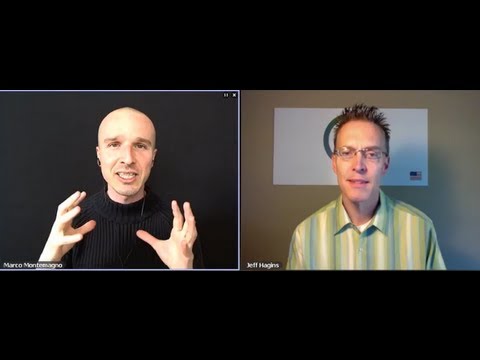
hello everyone marco montemagno here
digital domination summit 2013 and with
me Jeff Hagen’s co-founder and CTO of
everything right I’m connecting with
people from all over the world I should
do a video probably you know the world
tour in the split-screen video
interviews you are in Los Angeles now I
mean UK yeah before I was talking with
the field boss right he was in Australia
so it’s crazy
I really just changing so Jeff um I just
go straight to the point and you have a
great background and great experience in
all this world of internet of things
everyone talked about Internet of Things
now we met at the last level web in
Paris and the the theme was only about
Internet of Things and I think is will
have a really huge impact on companies
all over the world and on people all
over the world but still it’s not so
clear what war really doesn’t mean and
what you really could do with that so I
would like to start from this topic and
then I would like to go deep inside the
smartthings experience because there’s
obviously a very successful adventure
and it’s still going you know so it’s
very interesting and I think there are a
lot of lessons we can learn from from
your experience so in terms of things
what’s going on in your horror
experience can you try to translate this
this concept in a very easy way that all
the companies could understand sure so
you know I think one thing that’s
important to understand is that we’re
we’re just at the beginning of this
journey right we’re just at the
beginning of this this evolution of
connected devices and you know we’re
we’re in a mode or a phase of this
evolution where we’re seeing lots and
lots of discrete connected devices right
ranging from quantified self devices
like the Fitbit to home automation
solutions to home security in dust
applications elder care and healthcare
applications brought lots of
applications but but by a large at the
moment they’re all individual discrete
devices that have their own
infrastructure in the cloud from a
mobile app perspective right and so and
everybody’s familiar with these right I
might have a Fitbit that has its own
mobile app I might have I might have the
Belkin Wemo that I can use to turn on
and off a light and that Belkin Wemo
device uses their the Belkin cloud
infrastructure and the Belkin Wemo app
on your phone and and that that phase of
individual solutions is an absolutely
necessary part of this evolution of the
Internet of fans but it seems pretty
clear that that’s not where it’s going
to end up right that every device should
be an island that has its its own app
its own cloud infrastructure right
because because I don’t think the the
true benefit of the Internet of Things
is not just about being able to to to to
see and control individual devices from
your mobile app right that’s not the
benefit of the Internet of Things it’s
it’s cool don’t get down wrong right
it’s great to be able to to unlock my
front door from this device with the
lockitron door lock right but the real
benefit right of the Internet of Things
is when all of these devices can work
together right can start interacting
with each other but so that when you
know when something happens right when I
arrive home that my front door
automatically unlocks because I’m home
right now how do you how do you start to
accomplish those types of things and and
that’s really about this next evolution
of the Internet of
it’s right where we’re devices have to
connect to some some kind of common
connectivity layer or fabric or platform
that allows consumers and businesses and
industries to to automate and and
provide intelligence across devices
without without the device manufacturers
themselves having to understand or know
how any of but but do you agree Jeff
that until this moment I would say the
majority also of developers and
companies around the world perceived all
the Internet of Things development as a
as a difficult thing you know if you
have to develop I don’t know platform
online platform or maybe a mobile app is
you know quite easy you just you can go
on oDesk and say yeah I need this this
tool just do it but until this moment
and that’s why I think smart thinks is
so interesting I think was very
difficult to even imagine to develop
Internet of Things apps or all this kind
of stuff now things are changing I think
I mean smarting is one of the of the
most interesting play around but the
ecosystem probably is changing am I
right or wrong
absolutely you know I think things are
getting easier right that there are
companies not just smart things but
others that are investing in in creating
solutions that make solving these
problems much much easier right so that
manufacturers who want to have connected
devices right and want their devices to
be able to participate in this this
world of the Internet of Things can do
that without having to to invent
everything from scratch right that there
are there are tools and platforms and
services that are now that are now being
being developed or coming online that
make this much much easier can you give
me Jeff some example few examples of but
sack doors were do you think that
Internet of Things will have the biggest
impact in your opinion sure
you know I think we do a lot of demos at
smart things where we’re doing kind of
fun son demos as as you remember from
LeWeb in Paris where we’re turning on
the Christmas tree lights or or turning
on someone’s hot tub the Attic because
they’re on the way home and there are a
lot of fun things that can come out of
the internet of things but but but the
Internet of Things also has the
potential to to really completely
redefine a number of industries and I
think that that ranges from home
security and home automation as as a
prime consumer example but also
industries like healthcare you know and
and and some some cases that people
don’t really think about right like like
what if I had a connected thought
thermometer at home right so that every
time I took my child’s temperature to
see if they had a fever that data was
automatically made available to my
doctor okay right so and and my daughter
could have a set of rules that said when
when you take your child’s temperature
and it’s over you know over a certain
temperature the doctor should
automatically be notified right and and
one of the other kind of home health
care devices that can also participate
in that kind of connectivity and
automation I for one you would like it
if if the doctor would call me instead
of me having to call the doctor right
but if if a certain set of things
happens at home with my children that
the doctor calls and says you know you
should probably bring your child in
because it’s not a them behave good yes
yep and that kind of back you know you
can take that same idea you can take
that same idea of kind of of optimizing
the value chain right for for a certain
industry whether it’s home health care
or elder care
at home right we’ve already seen with
our platform we’ve already seen someone
write an application that monitors so
that if if if grandma if my grandmother
gets out of bed in the middle of the
night and goes to the goes to the
restroom and then doesn’t come back to
bed within 10 minutes okay but I can get
an automated notification that says
something’s wrong here I because I got
out of bed in the middle of the night
and it didn’t come back right and and
that’s just the tip of the iceberg there
as well but the ability to kind of
monitor someone who you know in an elder
care situation who needs that kind of
monitoring automation and we want to be
able to preserve their their quality of
life their standard of living without
having to have a you know an in-home
nurse to take care of the young person
right end but you want to be able to
know is everything okay sand source
I was thinking also I don’t know for
insurance companies I mean how this can
change so many things probably yes
another absolutely it’s another great
example of an industry that is going to
be redefined by the Internet of Things
because insurance home insurance in
particular but insurance of all kinds
healthcare home insurance auto insurance
is is an industry that is driven by
actuarial risk right the rates that you
pay are a function of the actuarial risk
of something bad happening right but
what in the indication home insurance
one of the one of the top kind of number
one or number two categories of claims
is water damage in looking right but now
what if I can put a system in your home
that will automatically detect water
when someplace where there’s not
supposed to be water right under my
dishwasher my refrigerator my washing
machine my hot water heater it will
detect water where there’s not supposed
to be water and it will automatically
turn off a vowel to prevent
damage from that water cool if I do that
and if I can do that at scale now the
actuarial risk of water damage drops to
two to a very low number and my rates
come down right and and the insurance
companies that are that are that are
going to take the leap in the internet
of things and actually provide this kind
of technology to their customers are
going to be at the leading edge of
redefining an entire industry yeah
that’s amazing I was thinking that
recently I read these news about a
company that basically is producing a
pluster with a sensor inside and we may
who want to get pregnant basically they
just get this plaster on the plaster
communicate Wireless with with an app
basically and when there are the 24
hours 48 hours that are good you know to
do to get a baby then pop up small hours
and say hey probably you should you
should work it out you know but is think
of it as a silly thing but it’s very
important I mean think how many couples
would like to to get a baby but they you
know they can get ahead I can get help
and I mean or in all the industries very
specific tip what would you recommend to
a company who wanna enter in this
Internet of Things wart but simply don’t
know how doesn’t know how to start where
to start from what was your what’s your
take about it sure
it’s a great question because there are
lots of manufacturers who are obviously
experts in whatever it is they
manufacture right the company that
builds the garage door opener for your
garage at home right is an expert at the
garage door but they’re not an expert in
in connectivity to right lab they’re not
an expert at writing mobile apps they’re
not an expert at at the wireless
frequencies and protocols and what’s
going to work best right and there are
lots of different choices right so so
you know my first record
nation is don’t try to solve these
problems on your own
right it’s not where we’re now right at
the edge of this evolution where we’re
you know and up until this point
companies haven’t had any choice right
they have if I’m a manufacturer I have
to solve these problems everything I own
right because they’re habit
there haven’t been platforms or
solutions available to help them but now
we’re at a point where those types of
technologies are available so if I’m if
I’m building an automated pet feeder to
to feed my dog and I want to be able to
connect that device to the to the cloud
and have a mobile app so that I can push
the button and feed feed my dog from
anywhere right don’t solve that problem
when you’re on reach out to one of the
companies in this face that is building
solutions building platforms that can
provide the the discrete technology to
help you bring this online and that’s
actually going to help you reduce your
time to market right and it’s gonna get
you a more robust solution that it then
if you did it all by yourself yeah I
would like to go on the smartthings
topics mouthing say is the company that
you you co-founded and I remember
successful Kickstarter campaign and I
was talking with Phil butcher from lifx
and they also had a very successful
campaign on Kickstarter they’ve been
rising over 1 million five hundred
thousand dollars so successful campaign
well what are the lessons learned from
from that experience this is number one
and number two I always wonder who is
successful on Kickstarter if they
previously had a community of people
that they leveraged basically or if you
started from zero and you know you just
got your your success on the on
Kickstarter you know it’s a great it’s a
great question we did have a very
successful campaign we had about 6500
6500
that that supported us on Kickstarter I
think in terms of broad lessons learned
on Kickstarter and before I even go into
that one thing that’s important
understand is that we weren’t using
Kickstarter as a vehicle for funding the
company okay
company was already funded right the
karate was already well on its way the
product was was basically built and we
really used Kickstarter as a channel to
reach out to our three different
constituencies consumers developers and
makers right and because of the nature
of our business we really needed to
start to build a community there of
consumers developers and makers and we
decided that Kickstarter was the right
vehicle for reaching out to those
different constituencies and starting to
build that broader community that said
and to your point we didn’t just throw
the the Kickstarter project open and
wait for something magical to happen
right that and I think that’s a mistake
that a lot of companies make I they
launched it they launched something on
Kickstarter and just wait you know wait
to see if something’s going to happen
right wait to see if it’s going to take
off and you know and if it does great
but you can’t depend on that and so in
our appeals you can put an enormous
about an amount of energy first of all
into building a Facebook fan base before
we launched a Kickstarter campaign we
had 10,000 Facebook fans okay right and
we and and we put not only energy but we
put money into building that Facebook
standards right we were running Facebook
advertising and doing other types of
social marketing in order to in order to
promote smart things in my facebook and
to acquire those Facebook but then after
we had launched the Kickstarter campaign
sort of in in tandem with the launch we
also had a
a hundred different technology bloggers
that we wanted to cover the company and
what we were doing right and we have a
very intense PR effort to reach out to
all of those technology bloggers and to
get them to cover us and to talk about
what we were doing that’s interesting so
yeah so the lesson here is that you
could use Kickstarter everyone think
that Kickstarter is only for mm-hmm
raising funds but you say you could also
use it to reach your community makers
developers or user so it’s a very smart
use I think of it i we have a few
minutes more so I just have to run Jeff
I was interested also in the production
part because we talked often about
digital software or software as a
service platform but you physically
create an object and you have to deliver
an object so number one are you
producing in China like everyone in the
world is doing or you have a different
kind of production where we’re actually
producing in the US right now all right
we’re we’re evaluating whether we’re
going to take that offshore okay
good China or some other offshore
manufacturing center you know the cost
implications are are important right
yeah if we want to get the cost of our
Hardware down as low as we can in order
to reduce the barrier to say right or
the average consumer but we are
manufacturing onshore today and you’re
absolutely right that then building real
consumer electronics devices you know
it’s not called hardware or not right
it’s heart it’s not and and and building
one is hard but building five is five
times this hard right and that’s what we
actually chose to do was to build five
different consumer electronics devices
and take them to market at the same time
that we were launching our cloud
platform launching our mobile
applications and launching our developer
and maker tools for them for people to
build on our platform so there are there
are a lot of moving parts for sure and
how are you delete
now how many orders you have to deliver
now we have we had about 10,000
pre-orders between Kickstarter and and
additional three orders that we took on
our web okay and how are you delivering
now this product so we just started
shipping first of April we started
shipping but now we’re kind of in its
full manufacturing mode which means that
we have our manufacturing production
lines up and running we had our our
fulfillment center up and running that’s
responsible for all of the the assembly
and kidding and shipping to individual
customers and by the end of May we will
have our e-commerce site up and running
so that we can now start to take
additional orders as well as allow
people to do in-app purchases so that if
you want to buy more things from us
you’ll actually do that from within the
mobile app and that’s an important
that’s a super important part of our
strategy because we firmly believe that
the average consumer is not going to you
know just decide that they need to buy
another camera or to buy another motion
sensor for their home what they are
going to respond to is a very use case
centric view where they see an
application that they want to use on our
platform yeah and they say oh I want
that application and the application
tells them oh but you need you need some
more hardware to do this and they push a
button and we’re shipping them the new
hardware that they need in order to
actually create the experience but they
will not have in terms of connected
devices any tips about production Jeff
for companies around the world who have
to you know they have to produce finally
physical object but the physical or just
to be connected with the digital world
and maybe they have any comers so it’s
you know for so many companies is really
tough because it’s it’s not so easy to
handle everything in your experiment
facture then you don’t need to hear from
me because you already know about
manufacturing right if you are a maker
or inventor and you you have an idea for
something again go work with someone
whether it’s a consulting company go
work with someone who has that
experience in industrial design in
circuit board design in in injection
molding in setting up the manufacturing
production line in kidding in assembly
there is so much that is involved in
taking a product from idea to actual
production and ready for delivery right
and while while some accent aspects of
that have gotten so much easier I we are
in this kind of Renaissance of hardware
where you know I can I can have circuit
boards manufactured in a day now and
turn around a new design deity assume it
is very important that you iterate over
and over and over again until you get it
right don’t assume that you’re going to
get it right the first time because
you’re not you’re not gonna get it right
the second or the fifth time either you
have to go through a very iterative
process in order to finally get the
product that you are ready to build that
doesn’t have any issues from a
production perspective right and it’s
it’s a lot of energy so again find
someone who has expertise in these
things who can help you with everything
I’ve talked about yep
last question three mobile apps or three
tools or three platforms or three
websites that you really would recommend
for all the companies doing online
business if it’s anything that you use
everyday or that you think god I
couldn’t live without this app or you do
you ever as your top three if if I can
ask or also your favorite one but I’m
always curious you know about what what
tools are used by by entrepreneurs and
by companies around yeah you know I
think we certainly do everything online
right software as a service
we’re web services is critical to our
business and moving quickly right so so
whether it’s googled for mail and Google
Docs and Google Hangouts and all the
things that we can do there that that
increase our productivity to
salesforce.com
right actually is the backbone of our
our business management and our order
management platform all right we use the
skirt we use a an e-commerce platform
called spree which is an amazing kind of
next generation ecommerce platform Reid
SPR EE
every REE all right now and and I think
but the theme there is you know
software-as-a-service online services am
at the Amazon Cloud is you know we
couldn’t have gotten where we are
without without the flexibility of of
the Amazon Cloud in order to quickly get
up and running and not have to work on
these things and all about is this kind
of business infrastructure that you know
10 years ago 15 years ago would have
would have consumed us as a business to
to figure out how to do all the other
things and now we can kind of push a
button
it’s excellent thank you so much Jeff
against the CTO of smart things Jeff a
good luck for everything and thanks for you Tom Thank You Marco
Please follow and like us: