
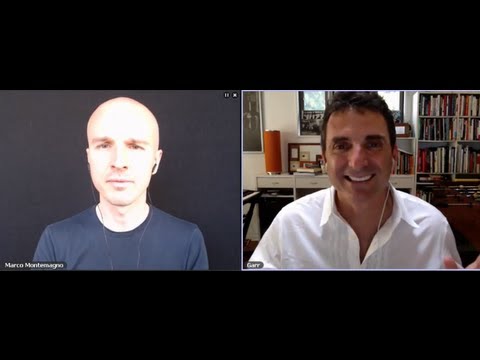
hello everyone marco montemagno here
digital domination summit 2013 and here
with me Garr Reynolds from Japan hi gar
how you going I’m doing okay how about
you I I have to say that at six o’clock
in the morning I could only wake up or
for my partner in my house or for for
you guard that’s the only because yes I
did you know now I was thinking I didn’t
interview with Doust raelia United
States everywhere but japan a–
are still missing and also the the
timezone is very very difficult from UK
to japan so you have always to find the
right timing but i’m so happy to have
you here and car one topic that we’re
missing here at digital domination
summit is the topic related with
presentation so and i’m you’re following
fun for for many years now reading your
books and your post and everything and i
have to say that personally I started to
experiment with presentations after that
I read your post and your your books and
really a lot of people I think did it
you probably you open you know this this
idea of trying to do different kind of
presentations instead of bullet points
you know in business that are so boring
so um we do today I would like to try to
find out you know tape suggestions
mistakes and so on let’s start with that
the most common mistakes that you see in
business because we we during the summit
we saw so many kind of business and so
many people may be launching a start-up
launching a project but then they arrive
in a point that they have to present
themselves in their product or service
and they really don’t know where to
start from so they basically have a
PowerPoint and they start to read the
PowerPoint or stuff like that well what
are the most common mistakes that you
saw during these years well you know
that’s just the bad habit so we fall
into conventional wisdom and
conventional wisdom and business for at
least since the 80s when in the late
eighties when PowerPoint was invented
was to you know put a bunch of bullet
points together
which is seems very logical and in a way
I guess it sort of helps you to get your
ideas down I mean if you’re someone who
who gets nervous and gets completely
lost
you know while speaking then I guess
speaking to a group of bullets is is
better is better than completely losing
your mind in the audience but just you
know for a generation it’s just been the
normal way of doing things and then as
you said around what seven years ago or
so there was a little bit of a a change
and it’s because you know I learned
presentation back in high school and
this is before PowerPoint was invented
using thirty five millimeter slides and
so I was sort of like a little mini Al
Gore or you know Steve Jobs in a way
this is in the in the 80s I’m not saying
that I’m as good presenter like Steve
Jobs but what I mean was is is that the
visuals were very very dynamic they were
full-bleed photographs and any on some
data slides and things like that but the
idea of you know looking at notes and
reading a slide and boring an audience
just wasn’t part of my presentation DNA
if you will you know we learned these
things I think early on in high school
and probably where the bad habits go and
even a lot of pitching to to VC these
bad habits come from college and even
Business School but before that an
undergraduate school where students look
at their professor and we look up to
professors generally and they’re going
through the motions and they’re reading
off PowerPoint slides so we just think
it’s the way to do things
and if you open up PowerPoint or keynote
for example the default slide is what it
says click to add title click to you
know write text so okay I mean this is
Microsoft and I paid $500 for this so
they must know what they’re doing so
this this sort of thing just keeps
perpetuating but I’m telling you and
there’s loads of evidence in the
cognitive sciences too that say this is
completely ineffective now it might be
normal for so for some people they’re
well at least it’s normal like here in
Japan it’s so normal in business that if
you did something different you know
that’s going to raise some eyebrows but
it’s completely ineffective in term
of actually making a connection and
transferring emotion you might transfer
a little bit of information for two or
three minutes until you’ve completely
lost the audience but well the thing I
wanted to say is that you know it’s very
difficult to talk about presentation you
have to because context is so important
so you know there’s TED talks and
there’s ignite talks and as Pecha Kucha
and there’s pitching for VC there’s
college teaching I want to say lecturing
I think lecturing is largely passe and
completely ineffective but college
teaching which I use a whiteboard most
of the time I mean I love multimedia but
when I teach University it’s all
whiteboard in its discussion and it’s
mainly the students should be talking or
doing rather you know rather than the
professor talking so you really have to
be clear what we’re talking about now if
you’re talking to a bank and a bunch of
bankers or for example they tend to like
a lot of numbers right and the the
narrative part is still very important
but you you can’t forget to give them
that data you might for example then
keep the slides if you use slides quite
simple with some key points and some
some key visual you know a quantitative
displays and then give them handouts or
because that’s where you can have a lot
more information but if you’re doing a
kind of a TEDx talk or a TED talk or a
keynote at a conference I mean the
keynote at a conference that’s
definitely where the storytelling
elements can come in that’s definitely
where you want to take people on a
journey on so could we say that rule
number one is trying to think about the
context first because doesn’t exist the
perfect presentation for I mean I read
so many books about public speaking and
so on and so many times these people say
oh you know this is the perfect
presentation to these days and days and
my experience is never like that you
never know the situation the context so
is it try to start from thinking about
the context and then think about your
breath oh yeah absolutely I mean most of
presentation is in the preparation and
the first part when the biggest part is
to think about what is this all about
and how do I want my audience
to change who of course who are the
audience specifically how much can you
find out about them and be very clear
with your expectation I think the
biggest mistake people make and giving a
presentation is that they decided to
give a presentation at all especially in
business while working in a company of
course I worked for Apple in Silicon
Valley where you know boring
presentations were not tolerated a lot
of meetings on beanbag chairs and and
whiteboards but I worked for another
company before that and superfluous
meetings of just people droning on and
on two PowerPoint decks was was very
normal and completely ineffective so but
I think the biggest thing is sometimes
you just have to decide that you know
what I don’t really have an idea worth
presenting at this time so you know if
you’re invited to present at a
conference or a small group you really
need to have something to say and
sometimes that is better said in a in a
blog post or or an or an article or a
paper or a tweet I don’t know so you
really need to have something valuable
to say if you’re gonna get up and take
people’s time I think one thing garden
that I learned from you was a mistake
that I personally did for many years was
that when I had to do a presentation
whatever presentation would be I would
immediately start with using the tool
PowerPoint right whatever I started with
the tool and I started to put down the
ideas and then I I find out that what
was much better to start you know with
you know paper I try to figure out the
context the final result and then I just
use the tool image videos of whatever is
to execute my presentation but not the
other way around
can you elaborate on that because I
think this is very very important
no absolutely there’s something and this
is what I was amazed at when I first
worked in Cupertino is that although
it’s a Apple I guess you call the tech
company some people would but at the
time I was there I left in almost 2003 a
lot of the creative folks saying package
design and some
art directors they had these beautiful
displays like the one I have in front of
me and it was always off and they had
sticky notes all over it and they would
get yelled at by the management’s they
turn on your friggin computer they’re
like I don’t need it and you know
meetings we didn’t bring computers and
there’s just something so what I use
always so this is a sample presentation
you kind of see it here it’s a sticky
notes and in writing things down
I love whiteboards and I don’t care how
big they make a computer screen or a
tablet there’s nothing as great as a
wall a massive wall with your ideas
where you know 2 to 20 people can stand
around and look at things or even if
you’re doing it alone just to kind of
look at things and even if it was
something like something this size you
know I go to a coffee shop or something
with a pen there’s something and there
is evidence and there’s some research
about this especially in Japan about you
know the brain and and writing something
with this you know this utensil a pencil
or a pen rather than typing things in
there’s something about there’s
something going on with the creative
process when you maybe this is deep in
our DNA or in our brain stem you know
before we had pens we would use our
finger and or a stick if there’s
something going on there I think it just
opens up the creative process in a way
that sitting at a little box like some
kind of monkey just doesn’t do and no
offense to monkeys you know who can type
I mean that’s a great talent but for us
I think we need to get away from
technology as much as possible as much
as I love it in fact I think the more
you love it the more you got to get away
from it and not let the tool drive you
because you can’t trust software
companies anyway you know I mean their
company you can’t trust marketers as
Seth Godin was there they’re all liars
and I am a marketer and I can tell you
that and also probably if you do a
presentation I mean it’s also a creative
you have to think you need ideas you
know it’s not a matter of using a tool
is a matter of creating a story and
thinking how you can impact the people
in front of you so if you are you know
writing and it probably helps another
point that
that I really appreciated always in your
the tips that you shared online and in
your books Wilson that I remembered the
day that I discovered your blog
presentations and and I was really I got
this huge impact from the different kind
of presentations that I saw there
because I was used to use only
traditional presentations and then I saw
I don’t know Lawrence Lessig with his
style of presentation kind of KZ stories
who was this guy D card he did this 3d
card I thought you said a card for I am
yeah dick heart that’s right
well is a crazy present it was really
unique presentation in it was using a
lot of Vemma jizz very fast and and so a
no word open you know because I started
to think gosh you you can do
presentations so many things whoa what
do you think are the most interesting
styles of presentations that you saw
that you said you’re indeed yeah well
you bring up a good point and when i
I’ve always pointed to people doing
different things and then then you’ll
have the you know curmudgeons the the
haters who will say well you can’t do it
that way at XYZ bank or this university
or whatever no that was never the point
the point is to just as a musician or an
artist is we should look at different
things to be inspired maybe we can take
one element from there so seeing the way
things seem the way dick Hart would do
it or lawrence lessig which he left like
four hundred slides and in 40 minute I
mean just boom boom boom and I’m not
saying that everyone should do it but
for him he’s he’s very left brain in a
way to eat a lawyer it’s very logical
but also visual and kind of funky and
different it keeps you engaged so he
definitely Lawrence Lessig and in Japan
we have something called the takahashi
method which is just using big Chinese
characters filling the screen with
Chinese characters and and that works
for him you know the way Al Gore would
do it was Inconvenient Truth was you
know actually a lot of quantitative
displays and then photographs and then
empty spaces of where it’s just black
and then you focus on the presenter
of course Steve Jobs got a lot of
attention with his style and I love
seeing people who don’t use any slides
actually if you go on on Ted right now
there they focus I think on 9 9
presenters who presented that a TED
education summit of some sort Bill Gates
was one of them and and Bill Gates and I
love Bill Gates his presentation which
used some slides the slides are
well-designed but still it just seemed
very kind of stiff and it was such a
juxtaposition to Ken Robbins Sir Ken
Robinson who is just amazing
I mean he’s not using any notes he tells
stories it sometimes just sometimes non
sequiturs for a moment but he comes
right back you know and he takes you
someplace so I don’t say that you have
to use slides I think anyone as long as
it’s not an ego trip as long as they’re
it’s not about them but it’s really
about the audience as long as it seems I
don’t want to say spontaneous but it has
to seem natural I can’t seem memorized
even if it is more or less met sometimes
some TED talks are more or less
memorized but you don’t know it because
those who who really learn the
presentation well you don’t know that
they’ve memorized it and I myself don’t
even like that word it must be a better
word than memorization because I think a
memorization is really your kind of
reading the teleprompter on your
forehead you know I’m terrible at
memorizing things so other people I mean
this is the way jobs to do a jobs
rehearsed a lot but he didn’t memorize
he didn’t write he didn’t write it out
but the ideas were very clear what he
was gonna say and that’s to me that’s
more like jazz music or you know music
where you improvise of course you
practice and you know what you’re doing
and you know the chord progression you
know the key you know these things and
you know the song but you know it
depends on a lot of things that depends
on the audience and it depends on the
moment so that’s why I like Sir Ken
Robinson he knows where he’s going to
say but there’s also flexibility in
there and sometimes when you have slides
you know it’s sometimes I can get in the
way because something completely
different might happen and in the case
of venture capital for examine your
pitching let’s say not just for
but whatever the pitching situation is
and let’s say you have 10 slides or
something or 20 slides but after the
first slide they they interrupt you and
they start asking you questions which
aren’t exactly in line with what you’re
what you want to say but who cares
you’ve got these guys that interested in
what you’re talking about so you
shouldn’t try to push ahead with your
damn slides in this type of situation
i-i-i-i I saw an amazing presentation
from Bobby McFerrin that the musician
yeah was amazing he was just explaining
one musical concept by jumping and
singing with the audience but so and was
really impressive for me and no slides
nothing so so many examples out there
that are really really inspiring I think
when you enter in this mentality then
you start to experiment otherwise you
keep you know following the traditional
approach and and and people watching a
PowerPoint presentation I think they
believe well give me this PowerPoint I
will read it at home if you have to read
it on stage just give it to me and now
unfortunately imagine that you have I
don’t know a start-up or a manager of a
company coming to you right now and with
the presentation to do tomorrow for his
new project or new idea every day it’s a
car I have a problem I have to do a
presentation and give me just you know 1
2 tips to do at least do it the best
that I can
would you think from well that’s not
much time to improve but but still
anyone can improve I mean I I believe
that of course some people are more
charismatic than others but you can
coach people to get much better and the
difference between the first time I see
a presentation and then after people
work with me and then the next time they
do it the difference between the it’s
sort of like in sports like in football
we call soccer Bay football you know the
difference between your second match of
the season and your first match is night
and day right there’s so much
improvement between the first match in
the second match and I think it’s true
with presentation too so if if someone
like that came to me and I would sit
down and you know ask them to pitch it
to me probably what’s going to be the
problem is they have too much
information also they probably have
unrealistic goals or say stupid things
like exact numbers about market share
and all this kind of nonsense I would
tell you the truth I would much rather
see it if it’s in the case of you know
pitching to use less slides and more
whiteboards more like they really know
what they’re they’re talking about and
because they do you know what I mean
because like I said again I’m not having
to go at monkeys but if you put a bunch
of stuff bullet points and then you know
a good monkey from what I’ve seen
watching Madagascar with my kids at
least some monkeys can speak and one
monkey can read but I think it’s much
more human if you get up there and Jobs
used to do this at Apple this I don’t
know how well this is known but of
course at Pixar he’s famous for doing
that but in Apple he would always use
the whiteboard never never slides inside
the company and I just think that’s very
effective way to get to stand up of
course because there’s a you know degree
of authority when you stand up at a
whiteboard and then explain some things
you don’t have to be a great artist or
anything but it could be a number it
could be a picture not a picture of a
flower I mean a relevant picture or
diagram of whatever it is whatever your
product is and because also because
slides are so common that you kind of
stand out if you if you don’t have any
slides but you should still have some
prepared because it depends on who the
audience is some some venture capitalist
will say hey where’s my where’s my deck
where’s your deck right so okay here’s
your deck but I’m gonna get up here and
talk about some real things our one
board about design because on the other
side there is the presentation and then
there is the design that often is so
difficult I mean if you’re not a
designer it’s so difficult to do
something that looks good simply looks
good and what are your tips on this too
creates lights that at least don’t suck
and people don’t think all those are
orrible design do you have any yeah well
if you’re if you’re using slides it must
be because the audience is is quite big
I mean if it’s just a few people at a
table then as I said don’t don’t use
slides but you’re using slides or
multimedia because it’s a big audience
and in that case slides are much more
like a billboard on the highway that is
they have to be easy to see and it
doesn’t mean that you’re dumbing things
down but you have to make the graphics
simple if you have 30 you know 30
different elements that people need to
see that’s going to be very hard to see
on a slide so you would print that out
you could hand that out around the table
and people could look at that if it’s
relevant the slides just have to be
simple but in the funny thing is them
the more that you remove you know the
more restraint that you have in terms of
the elements that you put into the
actual visual the easier it is in a way
to to not go wrong and not to design I
mean most people fail because they to
put too much stuff in too much crap they
listen to this the software speaking
which says you know design is easy
anyone can do it just follow this
template and add this template over here
and buy this plug-in over here and voila
you know the lessons are everywhere if
you look at really good you know design
and in advertising or in marketing such
as Apple or the you know the big brands
Nike and Starbucks and things very very
very very simple so not many fonts but
one font or one typeface maybe in
different weights you know photographs
have to be of course high quality if you
use them it must be relevant not just
decorative but I you know we do still
need designers and I’m not saying that
anyone can be a professional graphic
designer or any kind of designer for
that matter but you don’t have to go to
design school to be a good designer
that’s for sure and you can learn a lot
by getting books and just trying to get
a little bit better you still may may
need to have to hire a designer of
course but it doesn’t do you any good if
you’re ignorant about what you’re
talking about so if you under this is
where you know again you can keep
bringing jobs back into this but he
wasn’t a designer but he understood
design so he could
talk to designers he knew what worked
and what didn’t and what was possible so
you know like I always say simplicity is
is is the most of the most important
things but it isn’t easy but we’re easy
everyone would do it it’s very easy to
just to keep adding stuff it’s a great
poster in my university this week that
was clearly designed by a committee of
professors for this big event and you I
just wonderfully I’m gonna put it on my
blog someday because it it couldn’t be
worse absolutely the worst poster you
could ever imagine and designed by very
smart people all with PhDs from
important schools but because you just
keep adding and adding and adding and
and using effects here is quality is
coming by subtraction not addition so
less try to less content less just to
focus on what is really important and
not keep adding or using tools or fancy
things to make it better
that’s well you think about the audience
you know a lot of times we put more
stuff in because in Japanese we say need
not that many so it to be to be safe
because I’m afraid what if someone says
well why didn’t you say this or why
didn’t you say that so okay I’ll put
everything in there so out of fear
rather than out of the motivation should
be absolute clarity and you know you
know you know your materials so you
don’t have to put notes there to remind
you what to say hopefully you know what
you’re saying
otherwise you shouldn’t be that good um
just a last question then I let you go
storytelling you know we talking about
presentation on one side on the other
side the design and that the the missing
part is the storytelling then I recently
read a post by a big sur person I don’t
remember
oh yeah we’d I don’t know 22 rules used
by some of them they were very
interesting you know also I’m a black
belt of movies for kids having you know
for kids so I know
the Madagascar Shrike under me and so on
so and I see and always the same kind of
story more or less that they create and
they follow very specific patterns again
what are your tips on this topic that
you I know you you work well right I
mean there’s a lot of course there’s a
lot written about storytelling and and
Joseph Campbell of course as his books
on the mythology and the monomyth or the
mano story some people call it if you
look at any any movie basically any
novel it’s a circle I mean this is you
go from a state of perfection to a state
of imperfection
there’s the challenges and through these
challenges you have transformation you
come out the other side a different a
different person and I like you I’ve
been I’ve gosh I’ve seen literally every
Pixar movie and DreamWorks Animation I
think ever made because I have two
little kids and we watch them over and
over it’s good for their English too so
that’s how I justify it and I could very
easily see now I can just see the story
structure everywhere but there’s one one
technique that is important in the in
the middle part of storytelling is
called the yes/no reversal and you could
see it for example in Star Wars and
Newton and New Hope right Star Wars for
so remember the whole movie in the
middle part is you know escaping and
then being caught right being caught
again but then escaping in and into the
garbage chute yay we’re free but then
the garbage chute is now gonna close oh
no how can we get out and then r2d2 gets
us out so is this all this yes no yes no
you can call it yes no or fail succeed
you know whatever but there’s this this
there’s this narrative that keeps the
audience wondering what’s gonna happen
next and we’re not you know going to be
George Lucas that’s not that’s not the
point but we do need to use the the
narrative style to keep the audience
engaged wondering what’s going to happen
next not as most audience which is what
the is happening now because they
don’t know what’s going on that’s not a
good thing what is this all about but I
mean I’m listening I want to know what
happens next so good storytelling you
know stimulates the audience’s brains to
ask a question so they’ll move that’s
right
interesting or that’s unbelievable or
how did that happen so somehow we mean
the narrative flow must be stimulating
people’s brains to ask questions and
then we answer those questions and it
just keeps going on and on like that
like a journey really yeah
excellent garbage a question that I
asked to all the digital nation some
speakers do you have one or three
favorite app that you always use every
day and you think that for business or
for presentation or for be more
efficient
you would really recommend where’s my
iPhone well I mean I I just I just work
I just did a thing for Adobe in Japan
but it’s really true I mean I I use
Photoshop like crazy but there is
another app that and I don’t work for
them it called pixel sorry Tom McDaniel
Pixelmator Pixelmator and I was put a
plug in it I really love it it’s quite
cheap it’s less than a hundred euros or
dollars it’s not very maybe much that
I’m not sure how much but much less than
Photoshop
I love Photoshop but it has a lot there
that you know frankly you don’t you
don’t need and Pixelmator is does some
it’s you know like pixel and then mate
or so they’re pixel mate or PPI XEL
m8000 are if I’m reading again I don’t
work for them I just wanted to get maybe
I’d never heard of that and I some blog
post someplace I found that and wow this
is really cool because it’s got some
things it’s just very very easy to do
but it’s got the depth of a Photoshop
but doesn’t have all the features of
course but it has to it’s sort of like
what keynote is to PowerPoint I’m not
trying to say the Photoshop is like
PowerPoint Photoshop is an amazing but
you don’t need all this stuff and it’s
quite easy to use what’s the other one
and I know I use a keynote a lot but
it’s not that’s not nothing new is it
excellent guard thank you so much John
Reynolds presentations and guys go to
check the presentations and blog because
is the place for me to get tips on
presentation and obviously all the
guards book guard thank you so much and
good luck for all right thank you very much bye
digital domination summit 2013 and here
with me Garr Reynolds from Japan hi gar
how you going I’m doing okay how about
you I I have to say that at six o’clock
in the morning I could only wake up or
for my partner in my house or for for
you guard that’s the only because yes I
did you know now I was thinking I didn’t
interview with Doust raelia United
States everywhere but japan a–
are still missing and also the the
timezone is very very difficult from UK
to japan so you have always to find the
right timing but i’m so happy to have
you here and car one topic that we’re
missing here at digital domination
summit is the topic related with
presentation so and i’m you’re following
fun for for many years now reading your
books and your post and everything and i
have to say that personally I started to
experiment with presentations after that
I read your post and your your books and
really a lot of people I think did it
you probably you open you know this this
idea of trying to do different kind of
presentations instead of bullet points
you know in business that are so boring
so um we do today I would like to try to
find out you know tape suggestions
mistakes and so on let’s start with that
the most common mistakes that you see in
business because we we during the summit
we saw so many kind of business and so
many people may be launching a start-up
launching a project but then they arrive
in a point that they have to present
themselves in their product or service
and they really don’t know where to
start from so they basically have a
PowerPoint and they start to read the
PowerPoint or stuff like that well what
are the most common mistakes that you
saw during these years well you know
that’s just the bad habit so we fall
into conventional wisdom and
conventional wisdom and business for at
least since the 80s when in the late
eighties when PowerPoint was invented
was to you know put a bunch of bullet
points together
which is seems very logical and in a way
I guess it sort of helps you to get your
ideas down I mean if you’re someone who
who gets nervous and gets completely
lost
you know while speaking then I guess
speaking to a group of bullets is is
better is better than completely losing
your mind in the audience but just you
know for a generation it’s just been the
normal way of doing things and then as
you said around what seven years ago or
so there was a little bit of a a change
and it’s because you know I learned
presentation back in high school and
this is before PowerPoint was invented
using thirty five millimeter slides and
so I was sort of like a little mini Al
Gore or you know Steve Jobs in a way
this is in the in the 80s I’m not saying
that I’m as good presenter like Steve
Jobs but what I mean was is is that the
visuals were very very dynamic they were
full-bleed photographs and any on some
data slides and things like that but the
idea of you know looking at notes and
reading a slide and boring an audience
just wasn’t part of my presentation DNA
if you will you know we learned these
things I think early on in high school
and probably where the bad habits go and
even a lot of pitching to to VC these
bad habits come from college and even
Business School but before that an
undergraduate school where students look
at their professor and we look up to
professors generally and they’re going
through the motions and they’re reading
off PowerPoint slides so we just think
it’s the way to do things
and if you open up PowerPoint or keynote
for example the default slide is what it
says click to add title click to you
know write text so okay I mean this is
Microsoft and I paid $500 for this so
they must know what they’re doing so
this this sort of thing just keeps
perpetuating but I’m telling you and
there’s loads of evidence in the
cognitive sciences too that say this is
completely ineffective now it might be
normal for so for some people they’re
well at least it’s normal like here in
Japan it’s so normal in business that if
you did something different you know
that’s going to raise some eyebrows but
it’s completely ineffective in term
of actually making a connection and
transferring emotion you might transfer
a little bit of information for two or
three minutes until you’ve completely
lost the audience but well the thing I
wanted to say is that you know it’s very
difficult to talk about presentation you
have to because context is so important
so you know there’s TED talks and
there’s ignite talks and as Pecha Kucha
and there’s pitching for VC there’s
college teaching I want to say lecturing
I think lecturing is largely passe and
completely ineffective but college
teaching which I use a whiteboard most
of the time I mean I love multimedia but
when I teach University it’s all
whiteboard in its discussion and it’s
mainly the students should be talking or
doing rather you know rather than the
professor talking so you really have to
be clear what we’re talking about now if
you’re talking to a bank and a bunch of
bankers or for example they tend to like
a lot of numbers right and the the
narrative part is still very important
but you you can’t forget to give them
that data you might for example then
keep the slides if you use slides quite
simple with some key points and some
some key visual you know a quantitative
displays and then give them handouts or
because that’s where you can have a lot
more information but if you’re doing a
kind of a TEDx talk or a TED talk or a
keynote at a conference I mean the
keynote at a conference that’s
definitely where the storytelling
elements can come in that’s definitely
where you want to take people on a
journey on so could we say that rule
number one is trying to think about the
context first because doesn’t exist the
perfect presentation for I mean I read
so many books about public speaking and
so on and so many times these people say
oh you know this is the perfect
presentation to these days and days and
my experience is never like that you
never know the situation the context so
is it try to start from thinking about
the context and then think about your
breath oh yeah absolutely I mean most of
presentation is in the preparation and
the first part when the biggest part is
to think about what is this all about
and how do I want my audience
to change who of course who are the
audience specifically how much can you
find out about them and be very clear
with your expectation I think the
biggest mistake people make and giving a
presentation is that they decided to
give a presentation at all especially in
business while working in a company of
course I worked for Apple in Silicon
Valley where you know boring
presentations were not tolerated a lot
of meetings on beanbag chairs and and
whiteboards but I worked for another
company before that and superfluous
meetings of just people droning on and
on two PowerPoint decks was was very
normal and completely ineffective so but
I think the biggest thing is sometimes
you just have to decide that you know
what I don’t really have an idea worth
presenting at this time so you know if
you’re invited to present at a
conference or a small group you really
need to have something to say and
sometimes that is better said in a in a
blog post or or an or an article or a
paper or a tweet I don’t know so you
really need to have something valuable
to say if you’re gonna get up and take
people’s time I think one thing garden
that I learned from you was a mistake
that I personally did for many years was
that when I had to do a presentation
whatever presentation would be I would
immediately start with using the tool
PowerPoint right whatever I started with
the tool and I started to put down the
ideas and then I I find out that what
was much better to start you know with
you know paper I try to figure out the
context the final result and then I just
use the tool image videos of whatever is
to execute my presentation but not the
other way around
can you elaborate on that because I
think this is very very important
no absolutely there’s something and this
is what I was amazed at when I first
worked in Cupertino is that although
it’s a Apple I guess you call the tech
company some people would but at the
time I was there I left in almost 2003 a
lot of the creative folks saying package
design and some
art directors they had these beautiful
displays like the one I have in front of
me and it was always off and they had
sticky notes all over it and they would
get yelled at by the management’s they
turn on your friggin computer they’re
like I don’t need it and you know
meetings we didn’t bring computers and
there’s just something so what I use
always so this is a sample presentation
you kind of see it here it’s a sticky
notes and in writing things down
I love whiteboards and I don’t care how
big they make a computer screen or a
tablet there’s nothing as great as a
wall a massive wall with your ideas
where you know 2 to 20 people can stand
around and look at things or even if
you’re doing it alone just to kind of
look at things and even if it was
something like something this size you
know I go to a coffee shop or something
with a pen there’s something and there
is evidence and there’s some research
about this especially in Japan about you
know the brain and and writing something
with this you know this utensil a pencil
or a pen rather than typing things in
there’s something about there’s
something going on with the creative
process when you maybe this is deep in
our DNA or in our brain stem you know
before we had pens we would use our
finger and or a stick if there’s
something going on there I think it just
opens up the creative process in a way
that sitting at a little box like some
kind of monkey just doesn’t do and no
offense to monkeys you know who can type
I mean that’s a great talent but for us
I think we need to get away from
technology as much as possible as much
as I love it in fact I think the more
you love it the more you got to get away
from it and not let the tool drive you
because you can’t trust software
companies anyway you know I mean their
company you can’t trust marketers as
Seth Godin was there they’re all liars
and I am a marketer and I can tell you
that and also probably if you do a
presentation I mean it’s also a creative
you have to think you need ideas you
know it’s not a matter of using a tool
is a matter of creating a story and
thinking how you can impact the people
in front of you so if you are you know
writing and it probably helps another
point that
that I really appreciated always in your
the tips that you shared online and in
your books Wilson that I remembered the
day that I discovered your blog
presentations and and I was really I got
this huge impact from the different kind
of presentations that I saw there
because I was used to use only
traditional presentations and then I saw
I don’t know Lawrence Lessig with his
style of presentation kind of KZ stories
who was this guy D card he did this 3d
card I thought you said a card for I am
yeah dick heart that’s right
well is a crazy present it was really
unique presentation in it was using a
lot of Vemma jizz very fast and and so a
no word open you know because I started
to think gosh you you can do
presentations so many things whoa what
do you think are the most interesting
styles of presentations that you saw
that you said you’re indeed yeah well
you bring up a good point and when i
I’ve always pointed to people doing
different things and then then you’ll
have the you know curmudgeons the the
haters who will say well you can’t do it
that way at XYZ bank or this university
or whatever no that was never the point
the point is to just as a musician or an
artist is we should look at different
things to be inspired maybe we can take
one element from there so seeing the way
things seem the way dick Hart would do
it or lawrence lessig which he left like
four hundred slides and in 40 minute I
mean just boom boom boom and I’m not
saying that everyone should do it but
for him he’s he’s very left brain in a
way to eat a lawyer it’s very logical
but also visual and kind of funky and
different it keeps you engaged so he
definitely Lawrence Lessig and in Japan
we have something called the takahashi
method which is just using big Chinese
characters filling the screen with
Chinese characters and and that works
for him you know the way Al Gore would
do it was Inconvenient Truth was you
know actually a lot of quantitative
displays and then photographs and then
empty spaces of where it’s just black
and then you focus on the presenter
of course Steve Jobs got a lot of
attention with his style and I love
seeing people who don’t use any slides
actually if you go on on Ted right now
there they focus I think on 9 9
presenters who presented that a TED
education summit of some sort Bill Gates
was one of them and and Bill Gates and I
love Bill Gates his presentation which
used some slides the slides are
well-designed but still it just seemed
very kind of stiff and it was such a
juxtaposition to Ken Robbins Sir Ken
Robinson who is just amazing
I mean he’s not using any notes he tells
stories it sometimes just sometimes non
sequiturs for a moment but he comes
right back you know and he takes you
someplace so I don’t say that you have
to use slides I think anyone as long as
it’s not an ego trip as long as they’re
it’s not about them but it’s really
about the audience as long as it seems I
don’t want to say spontaneous but it has
to seem natural I can’t seem memorized
even if it is more or less met sometimes
some TED talks are more or less
memorized but you don’t know it because
those who who really learn the
presentation well you don’t know that
they’ve memorized it and I myself don’t
even like that word it must be a better
word than memorization because I think a
memorization is really your kind of
reading the teleprompter on your
forehead you know I’m terrible at
memorizing things so other people I mean
this is the way jobs to do a jobs
rehearsed a lot but he didn’t memorize
he didn’t write he didn’t write it out
but the ideas were very clear what he
was gonna say and that’s to me that’s
more like jazz music or you know music
where you improvise of course you
practice and you know what you’re doing
and you know the chord progression you
know the key you know these things and
you know the song but you know it
depends on a lot of things that depends
on the audience and it depends on the
moment so that’s why I like Sir Ken
Robinson he knows where he’s going to
say but there’s also flexibility in
there and sometimes when you have slides
you know it’s sometimes I can get in the
way because something completely
different might happen and in the case
of venture capital for examine your
pitching let’s say not just for
but whatever the pitching situation is
and let’s say you have 10 slides or
something or 20 slides but after the
first slide they they interrupt you and
they start asking you questions which
aren’t exactly in line with what you’re
what you want to say but who cares
you’ve got these guys that interested in
what you’re talking about so you
shouldn’t try to push ahead with your
damn slides in this type of situation
i-i-i-i I saw an amazing presentation
from Bobby McFerrin that the musician
yeah was amazing he was just explaining
one musical concept by jumping and
singing with the audience but so and was
really impressive for me and no slides
nothing so so many examples out there
that are really really inspiring I think
when you enter in this mentality then
you start to experiment otherwise you
keep you know following the traditional
approach and and and people watching a
PowerPoint presentation I think they
believe well give me this PowerPoint I
will read it at home if you have to read
it on stage just give it to me and now
unfortunately imagine that you have I
don’t know a start-up or a manager of a
company coming to you right now and with
the presentation to do tomorrow for his
new project or new idea every day it’s a
car I have a problem I have to do a
presentation and give me just you know 1
2 tips to do at least do it the best
that I can
would you think from well that’s not
much time to improve but but still
anyone can improve I mean I I believe
that of course some people are more
charismatic than others but you can
coach people to get much better and the
difference between the first time I see
a presentation and then after people
work with me and then the next time they
do it the difference between the it’s
sort of like in sports like in football
we call soccer Bay football you know the
difference between your second match of
the season and your first match is night
and day right there’s so much
improvement between the first match in
the second match and I think it’s true
with presentation too so if if someone
like that came to me and I would sit
down and you know ask them to pitch it
to me probably what’s going to be the
problem is they have too much
information also they probably have
unrealistic goals or say stupid things
like exact numbers about market share
and all this kind of nonsense I would
tell you the truth I would much rather
see it if it’s in the case of you know
pitching to use less slides and more
whiteboards more like they really know
what they’re they’re talking about and
because they do you know what I mean
because like I said again I’m not having
to go at monkeys but if you put a bunch
of stuff bullet points and then you know
a good monkey from what I’ve seen
watching Madagascar with my kids at
least some monkeys can speak and one
monkey can read but I think it’s much
more human if you get up there and Jobs
used to do this at Apple this I don’t
know how well this is known but of
course at Pixar he’s famous for doing
that but in Apple he would always use
the whiteboard never never slides inside
the company and I just think that’s very
effective way to get to stand up of
course because there’s a you know degree
of authority when you stand up at a
whiteboard and then explain some things
you don’t have to be a great artist or
anything but it could be a number it
could be a picture not a picture of a
flower I mean a relevant picture or
diagram of whatever it is whatever your
product is and because also because
slides are so common that you kind of
stand out if you if you don’t have any
slides but you should still have some
prepared because it depends on who the
audience is some some venture capitalist
will say hey where’s my where’s my deck
where’s your deck right so okay here’s
your deck but I’m gonna get up here and
talk about some real things our one
board about design because on the other
side there is the presentation and then
there is the design that often is so
difficult I mean if you’re not a
designer it’s so difficult to do
something that looks good simply looks
good and what are your tips on this too
creates lights that at least don’t suck
and people don’t think all those are
orrible design do you have any yeah well
if you’re if you’re using slides it must
be because the audience is is quite big
I mean if it’s just a few people at a
table then as I said don’t don’t use
slides but you’re using slides or
multimedia because it’s a big audience
and in that case slides are much more
like a billboard on the highway that is
they have to be easy to see and it
doesn’t mean that you’re dumbing things
down but you have to make the graphics
simple if you have 30 you know 30
different elements that people need to
see that’s going to be very hard to see
on a slide so you would print that out
you could hand that out around the table
and people could look at that if it’s
relevant the slides just have to be
simple but in the funny thing is them
the more that you remove you know the
more restraint that you have in terms of
the elements that you put into the
actual visual the easier it is in a way
to to not go wrong and not to design I
mean most people fail because they to
put too much stuff in too much crap they
listen to this the software speaking
which says you know design is easy
anyone can do it just follow this
template and add this template over here
and buy this plug-in over here and voila
you know the lessons are everywhere if
you look at really good you know design
and in advertising or in marketing such
as Apple or the you know the big brands
Nike and Starbucks and things very very
very very simple so not many fonts but
one font or one typeface maybe in
different weights you know photographs
have to be of course high quality if you
use them it must be relevant not just
decorative but I you know we do still
need designers and I’m not saying that
anyone can be a professional graphic
designer or any kind of designer for
that matter but you don’t have to go to
design school to be a good designer
that’s for sure and you can learn a lot
by getting books and just trying to get
a little bit better you still may may
need to have to hire a designer of
course but it doesn’t do you any good if
you’re ignorant about what you’re
talking about so if you under this is
where you know again you can keep
bringing jobs back into this but he
wasn’t a designer but he understood
design so he could
talk to designers he knew what worked
and what didn’t and what was possible so
you know like I always say simplicity is
is is the most of the most important
things but it isn’t easy but we’re easy
everyone would do it it’s very easy to
just to keep adding stuff it’s a great
poster in my university this week that
was clearly designed by a committee of
professors for this big event and you I
just wonderfully I’m gonna put it on my
blog someday because it it couldn’t be
worse absolutely the worst poster you
could ever imagine and designed by very
smart people all with PhDs from
important schools but because you just
keep adding and adding and adding and
and using effects here is quality is
coming by subtraction not addition so
less try to less content less just to
focus on what is really important and
not keep adding or using tools or fancy
things to make it better
that’s well you think about the audience
you know a lot of times we put more
stuff in because in Japanese we say need
not that many so it to be to be safe
because I’m afraid what if someone says
well why didn’t you say this or why
didn’t you say that so okay I’ll put
everything in there so out of fear
rather than out of the motivation should
be absolute clarity and you know you
know you know your materials so you
don’t have to put notes there to remind
you what to say hopefully you know what
you’re saying
otherwise you shouldn’t be that good um
just a last question then I let you go
storytelling you know we talking about
presentation on one side on the other
side the design and that the the missing
part is the storytelling then I recently
read a post by a big sur person I don’t
remember
oh yeah we’d I don’t know 22 rules used
by some of them they were very
interesting you know also I’m a black
belt of movies for kids having you know
for kids so I know
the Madagascar Shrike under me and so on
so and I see and always the same kind of
story more or less that they create and
they follow very specific patterns again
what are your tips on this topic that
you I know you you work well right I
mean there’s a lot of course there’s a
lot written about storytelling and and
Joseph Campbell of course as his books
on the mythology and the monomyth or the
mano story some people call it if you
look at any any movie basically any
novel it’s a circle I mean this is you
go from a state of perfection to a state
of imperfection
there’s the challenges and through these
challenges you have transformation you
come out the other side a different a
different person and I like you I’ve
been I’ve gosh I’ve seen literally every
Pixar movie and DreamWorks Animation I
think ever made because I have two
little kids and we watch them over and
over it’s good for their English too so
that’s how I justify it and I could very
easily see now I can just see the story
structure everywhere but there’s one one
technique that is important in the in
the middle part of storytelling is
called the yes/no reversal and you could
see it for example in Star Wars and
Newton and New Hope right Star Wars for
so remember the whole movie in the
middle part is you know escaping and
then being caught right being caught
again but then escaping in and into the
garbage chute yay we’re free but then
the garbage chute is now gonna close oh
no how can we get out and then r2d2 gets
us out so is this all this yes no yes no
you can call it yes no or fail succeed
you know whatever but there’s this this
there’s this narrative that keeps the
audience wondering what’s gonna happen
next and we’re not you know going to be
George Lucas that’s not that’s not the
point but we do need to use the the
narrative style to keep the audience
engaged wondering what’s going to happen
next not as most audience which is what
the is happening now because they
don’t know what’s going on that’s not a
good thing what is this all about but I
mean I’m listening I want to know what
happens next so good storytelling you
know stimulates the audience’s brains to
ask a question so they’ll move that’s
right
interesting or that’s unbelievable or
how did that happen so somehow we mean
the narrative flow must be stimulating
people’s brains to ask questions and
then we answer those questions and it
just keeps going on and on like that
like a journey really yeah
excellent garbage a question that I
asked to all the digital nation some
speakers do you have one or three
favorite app that you always use every
day and you think that for business or
for presentation or for be more
efficient
you would really recommend where’s my
iPhone well I mean I I just I just work
I just did a thing for Adobe in Japan
but it’s really true I mean I I use
Photoshop like crazy but there is
another app that and I don’t work for
them it called pixel sorry Tom McDaniel
Pixelmator Pixelmator and I was put a
plug in it I really love it it’s quite
cheap it’s less than a hundred euros or
dollars it’s not very maybe much that
I’m not sure how much but much less than
Photoshop
I love Photoshop but it has a lot there
that you know frankly you don’t you
don’t need and Pixelmator is does some
it’s you know like pixel and then mate
or so they’re pixel mate or PPI XEL
m8000 are if I’m reading again I don’t
work for them I just wanted to get maybe
I’d never heard of that and I some blog
post someplace I found that and wow this
is really cool because it’s got some
things it’s just very very easy to do
but it’s got the depth of a Photoshop
but doesn’t have all the features of
course but it has to it’s sort of like
what keynote is to PowerPoint I’m not
trying to say the Photoshop is like
PowerPoint Photoshop is an amazing but
you don’t need all this stuff and it’s
quite easy to use what’s the other one
and I know I use a keynote a lot but
it’s not that’s not nothing new is it
excellent guard thank you so much John
Reynolds presentations and guys go to
check the presentations and blog because
is the place for me to get tips on
presentation and obviously all the
guards book guard thank you so much and
good luck for all right thank you very much bye
Please follow and like us: