
presents
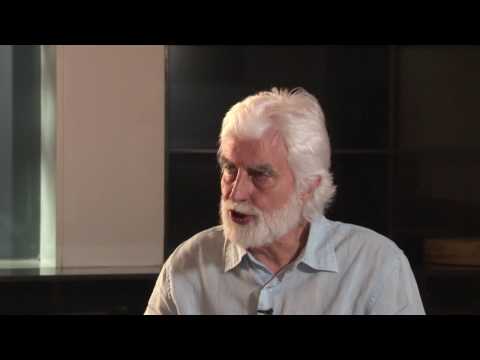
Dr. John Andrews
OSHO Dynamic Meditation A Closer Look The Second Stage
Ok, the second stage.
Now, the reason the second stage gets misunderstood is because it tends to be presented, say,
so the first stage is you’ve got this kettle of water, which you fill with water,
you put the kettle on the stove, you turn the gas up to the max for 10 minutes and at the end of
10 minutes, the water is now boiling, and then at the end of that 10 minutes you take
the cap off the spout, and now all the steam can come pouring out of the kettle,
and the whole idea is to empty the kettle.
That tends to be how this is understood.
Which of course when you think about that, that cannot make sense.
Just think of it, let’s say it is 10 past 7, and you are feeling amazing.
You’ve survived Dynamic, and you’re on your way to the canteen, you get to the canteen,
and you’re all ready to pour yourself a nice cup of coffee, and someone pours yogurt
all over your nice new gear.
I mean, you’re pissed right?
I mean, look at this, look, I mean, you want to whack up one?
You know, I mean look at this.
But, of course you’re very nice meditative people, you wouldn’t dream of doing anything
like that.
No, no, you would much more likely to say, “Oops, it’s OK, not a problem, it’s OK”, right?
And, what are you now experiencing ?
You’re experiencing what we’ve all been taught, since forever that, when you’re angry for example,
there are two possibilities.
One is you express the anger, and you hurt the other person.
Or, you repress the anger.
It’s OK.
And you hurt yourself.
And that is a very, very, dumb situation to find ourselves in.
Because, if that is how we’re going to live, think of how many times someone is going to
pour yogurt all over your ego between now and tomorrow morning at 6 o’clock.
So, never mind at 6 o’clock your going to empty the kettle.
So now, if that what this is all about, then you basically decided that you have to turn up
for dynamic for the rest of your life, because you’ve made dynamic into a sort of
garbage disposal operation.
Every morning you empty the garbage.
But that cannot be right.
That’s not what Osho is explaining at all.
So what’s wrong with understanding.
So, yes you’re going to put the kettle full of water on the stove and turn the gas up,
and at the end of the 10 minutes, yup, you’re going to take the cap off the spout,
so that in the second stage now all the stream can come pouring out of the kettle, absolutely right,
but the whole point is not to empty the kettle, which we can’t do anyway,
the whole point is to learn to watch the steam coming OUT of the kettle.
Remain a witness.
That’s the whole point.
Because now, with each passing day, someone pours yogurt all over your nice new gear,
you’re now discovering that you have an alternative way of dealing with this.
So instead of being trapped in this option of either expressing your anger or repressing it,
you’re now discovering that there is a third possibility.
Which is to simply watch it, remain a witness.
Allow it.
And that is the magic of this meditation.
Because now you’re not building up stuff to get rid of every day, what you’re doing is discovering
day after day, how to learn to watch, how to learn to watch the emotions,
which is what the second stage is all about.
So then, if you are learning to watch the emotions and you’re not repressing them
then you’re not just building up new garbage everyday that has to be disposed of
you’re actually learning not to repress, and actually have no garbage at all.
And one of the important reasons for really examining what Osho is saying about it, is
because then you can discover when you’ve done Dynamic enough.
And he is clear.
When you are no longer repressing anything, then when you get to the second stage,
there isn’t anything there.
But you need to be incredibly honest with yourself.
We humans, we’re geniuses at self deception.
Right?
And if you were a jolly nice English person standing there in the second stage, you might well say
“Well, I’m fine, I’m not angry, I’m not upset, nothing wrong with me, no emotions here to express”,
and then someone treads on your toe and you go completely bananas.
We’re very good at deceiving ourselves.
You have to be very, very honest.
Is there anything left ?
To express ?
Am I repressing anything during the day ?
So that’s what this is all about.
Which completely changes the whole gestalt.
So just for a moment, let’s look at what Osho is saying about how long you need to do Dynamic.
Because this is really a critical point.
So as far as the first stage goes, you know, you meet people who say they have been doing Dynamic
for 17 years?
You guarantee they must have found a way to make it completely ineffective.
Otherwise they would be enlightened half a dozen times.
And the way to make it ineffective, breath regularly.
Then you can be absolutely certain, nothing will happen.
Key doorway to what we’re talking about.
OK, so, Osho sometimes talks about – how long does it take to be expressing these emotions
every morning, and learning how to watch them, and not get lost in them, and not get completely
drowned in them – which is what I normally do.
And he talks about it – maybe it takes three weeks.
So, that gives you a sort of an indication.
I remember someone sitting in front of Osho, saying, uh, they said they had been doing
Dynamic for three years.
I mean Osho has pretty wide eyes to start with.
“Three years?”
Was clearly off the charts.
Sometimes, he would give it for a month, maybe give it for three months – everybody is
different, it’s absolutely individual.
But not year in, year out.
So, start to look at this as a project where it’s got a beginning, and a middle,
and an end.
It’s not that you sort of get brownie points in heaven the more often you do it.
It really is a project to start with, and Osho explains – you may feel all kinds of
aches and pains, stuff coming to the surface, and it’s a very unusual physical activity.
And then as you relax and become more familiar with the whole meditation, what you are really doing is
discovering how to learn to watch the emotions.
So that during your everyday life, instead of being forced into this situation of either expressing
or repressing, you are learning to simply watch.
So, what do we actually mean by that?
So, let’s say if I ask, if I ask you, “Is it OK if in a moment, I ask these guys whether
they notice me scratch my head while I’m talking to you?”
Which always gaps everybody out.
So I now ask you, “Do you notice me scratch my head while I was talking to him?”
You did?
Yes?
Is that a yes?
A real yes?!
OK.
So,
When I am talking to him and scratching my head, are you saying to yourself,
“I’ve got some shampoo I should tell him about because that would fix…”
Nothing?
You just let him scratch his head?
If he want to scratch his head, he can scratch his head, right?
It’s not your head, it’s his head.
Nothing to do with you, right?
You can just allow the head to be scratched.
You are completely aware of the head being scratched, but you are not involved –
no engagement, no involvement at all.
That’s all we are talking about.
That is the whole game.
Strangely, I mean as Osho says – everyone is already a Buddha.
You can kind of understand what he means because everyone already knows what we are
talking about.
With the proviso of course that it’s really easy for her to be completely indifferent
about what is going on with my head.
It’s a little harder for her to be equally indifferent
about what is going on with her head.
But that is the game.
So, what are we specifically talking about?
If something is coming to the surface in the second stage of Dynamic, something is there,
is it possible for me to simply see it, just as she watched my hand scratch the head,
just able to see whatever it is that actually goes by – without getting involved.
That’s the knack.
In English, we have uninterested, interested, and disinterested.
So, whatever word you have in your language which conveys complete unbiased, uninvolved,
neutrality, no judgment, no comment, absolutely neither for nor against.
That’s the space you are looking for.
Tricky, because this machine is guaranteed, has an opinion about everything.
Yes, good, bad, I like it, I don’t like it, yakety yakety yak, all day long.
So, how are we going to a point where actually we don’t need to get involved.
And in a way it’s sort of obvious, I mean if there is a hand going past the face,
you’re perfectly aware there’s a hand going past the face, you don’t have to go
“Ooh, look at a hand.”
Of course not.
All day long we are conscious and aware of things that are happening around us without
getting engaged and involved with any intellectual kind of chuk chuk at all.
It’s just that we never even consider applying that same skill, that same knack
that we all have to our own thought and feelings.
That is the essence of the game of witnessing.
It’s the starting point.
And that’s what the second stage of OSHO Dynamic Meditation is all about.
Can I start to use the second stage to be able to express whatever emotions need
to come to the surface in a nice safe environment, and use that time to discover how to become
a witness of those emotions.
So that’s the first really most important point about the second stage.
The second thing about the second stage is that you often hear people express the opinion
“Oh you shouldn’t be doing that catharsis” especially many therapists have this view
that “catharsis is not a good idea”, they say.
Well, if they are saying that about OSHO Dynamic Meditation it just means they don’t understand
the meditation, because what they’re concerned about is re-traumatization.
Which is a good point.
You know, the rape was pretty awful first time, you want me go over it again?
You got any other good ideas how I could feel better?
Good point.
But that’s not what we’re doing.
There is no re-traumatization here.
This is watching, witnessing, not getting involved.
Exactly the opposite of what they are concerned about.
And what’s really interesting to understand is, when Osho talks about the process of watching,
he explains that whatever we get to see, as in seer, as in this completely neutral form.
If we get to see something 100%, it’s gone 100%, forever.
Permanently.
Curative.
And if there is something that is not going 100%, it’s because that we kind of really don’t
want to look at it.
So if it’s only gone 50% its because we’ve only seen it 50%.
And if we really get to look at it, it’s gone.
So now this you start to see, OSHO Dynamic Meditation is an incredibly powerful process
where you have the possibility of whatever is in the unconscious, coming to the surface,
being seen, without any identification or involvement, and being released forever.
So let’s just look at what that means.
So, you could take, in terms of the first and second stage, you could take, say the
animal model, is like, if I’m a rabbit and I look over there, and there’s a fox, and
I see the fox has seen the rabbit, then I have this theoretical fight or flight option,
but I’m not stupid, I’m a smart rabbit, and I run like hell.
And if it turns out that I’m not going to get away, I’ve got this third alternative.
This third option is I keel over and pretend to be dead, hoping that the fox, comes, arrives,
wow, lunch is ready already, not a problem, I’ll just pop this guy behind the tree, and
come and pick up lunch later, at which point the rabbit opens one eye, I’m still alive,
what a surprise, gets to its feet, does a kind of Kundalini shake out.
Where it shakes every bit of frozen fear from every cell in the body.
And when it’s all gone, the rabbit’s gone.
Because the rabbit cannot be holding anything from that experience, the rabbit cannot be
walking around saying “Oh geez, you won’t believe what happened to me this morning”.
Otherwise the next fox gets it.
It has to be finished completely.
Now you take, say, the kind of situations that we as children may easily have to face,
probably most children, but for sure millions and millions and millions of children
have to face some traumatic experience.
So let’s just take any example you like, there you are, a little toddler, on the floor
at home, playing very happily, everything is totally fine, mum is there, you’re having
a wonderful evening, it’s really great, and in comes dad, and he’s a little bit drunk,
and then they get into an argument, and then he smack her around the chops.
And you’re this age?
And here’s your mum lying on the floor?
Blood all coming down her face.
What are you going to do?
Even if you were an adult, this would be a difficult situation to deal with.
You’re this big, and these are your two care givers?
This is shocking, this is like \{aahh\}, and if that little child determines I can’t handle this,
whatever the hell’s going on, forget it.
I don’t know what going on, I can’t manage this.
And, what is the kid going to do?
Drop it in the unconscious.
So that the kid can process this later.
Naturally.
And remember, if that little kid makes the decision to drop that experience,
whatever this is, into the unconscious, that little kid is the world’s leading authority
on being that little kid.
There’s never been another one, and there’s never going to be another one.
So you can implicitly trust that decision.
So now it’s next morning, and there you are in your high chair, and it’s breakfast time,
and you look at mum, and she’s go this huge black eye, and it’s like, and now you’re looking
for dad who’s kind of in his phone, or behind a newspaper, or wherever he is, you know.
And eventually he looks at you. Right?
“It didn’t happen, son”.
“It didn’t happen.”
“It didn’t happen.”
It’s still down there.
Years and years and years and decades later.
So the possibility, and it’s long past it’s shelf life.
Mum and dad may be dead, you’re an adult, you’re not a child, the whole situation is
no longer relevant to your life, but that energy is trapped.
Locked.
Just energy.
But it’s locked up in a little parcel called anger, fear, frustration, terror, whatever
it is.
And there it is sitting there.
Which why we kind of feel like that a lot of the time, because there’s stuff there,
and in this meditation, now we have this wonderful opportunity to let whatever that is, come
to the surface.
And we’re not engage in it, and re-traumatize ourselves and go through it, we’re just going
to let it GO.
Finished, forever.
So that’s a pretty dramatic possibility.
The last part about the point about the second stage, which Osho specifically addresses,
when the instructions are: Go completely crazy for 10 minutes.
So naturally we all have, because of that stuff, some uncertainty about how normal
and sane we really are.
I mean of course I put on a very nice show, and do my best to convince you I’m completely normal,
but inside I’m not that convinced, you know there is always a little bit of doubt
that I may not be completely sane, or as sane as everyone thinks I am, or sane as I want them all
to think I am, you know,
all that stuff. Right?
So naturally someone says you go completely crazy for 10 minutes, you kind of go
“Well, I don’t want to get too close to the edge, you know, I don’t want them to take me off
to the nearest hospital wrapped up in a straight jacket”,
so I just sort of be a little cautious here.
And Osho makes this wonderful point, that it is not possible to go insane consciously
or intentionally.
So here you are, it’s 10 past 6, you are making the conscious intentional choice –
I am going nuts for 10 minutes.
As he explains, going crazy intentionally – You may go sane, but you cannot go insane.
So don’t hold anything back, go for broke, to the max.
Give this stage, as the first stage, your absolute totality.
So now we’ll just watch a demonstration of just the second stage.
The second stage: 10 minutes, Explode, let go of everything that needs to be thrown out.
Follow your body.
Give your body freedom to express whatever is there.
Go totally mad.
Scream, shout, cry, jump, kick, shake, dance, sing, laugh.
Throw yourself around.
Hold nothing back.
Keep your whole body moving.
A little acting often helps to get you started.
Never allow your mind to interfere with what is happening.
Consciously go mad.
Be total.
And the people you just saw in that demo, they’re some of the nicest people
you will ever meet.
And that’s them expressing whatever anger they have.
Now you just wonder about all the crazies out there.
All the people who are doing really weird, mad, violent things.
Would it be a good idea if they actually had a chance to express all that anger, and frustration
and whatever is going on in a completely safe environment?
Let alone cure them of the incentive to do all that.
So now you see the potential of this, and probably your best example is something like
road rage.
Here’s this apparently, perfectly normal, sane person, driving down the freeway,
gets into a traffic jam.
And he decides that the smart thing to do is to get out, I mean there’s a car in front
of me, blocking me, clear, that’s logically true.
So he decides to get out of his car and shoot the driver of the car in front.
I mean logical, at a certain level, and completely nuts at another level.
Now what’s going on in somebody like that?
Here he is in this, you know, frustrating situation, and something is triggered in him,
and, he just goes completely crazy and does something he’ll probably spends the rest of his life
regretting.
What is happening?
Something down there went BANG.
Would it be a good idea if everyone had an opportunity to empty this?
All that stuff, permanently, and no longer go around shooting, and killing, and raping,
and murdering people?
That’s the possibility here.
The Third, Fourth & Fifth Stage Continues
For more information including details of webinars on meditation and other OSHO-related topics, please contact: johnandrews@osho.com
John Andrews was Osho’s personal physician, taking care of his body for many years including his final days.
As a meditator and scientist for many decade, John Andrews enjoyed following, and writing about, the gradual acceptance of meditation by the scientific community turn into the current flood of interest.
He now writes about the final step into an individual journey without end.
As Osho explains, it is “an open experiment”, where, “Any truth that may come later on can be absorbed by this system without any conflict”.
Now we can move easily from what is often confusing plethora of different approaches to the simple, clear and practical approach to meditation by Osho –
the first major upgrade in discovering how to be conscious in twenty-five centuries !
Copyright©2016 OSHO International Foundation OSHO is registered trademark of OSHO International Foundation
Dr. John Andrews
OSHO Dynamic Meditation A Closer Look The Second Stage
Ok, the second stage.
Now, the reason the second stage gets misunderstood is because it tends to be presented, say,
so the first stage is you’ve got this kettle of water, which you fill with water,
you put the kettle on the stove, you turn the gas up to the max for 10 minutes and at the end of
10 minutes, the water is now boiling, and then at the end of that 10 minutes you take
the cap off the spout, and now all the steam can come pouring out of the kettle,
and the whole idea is to empty the kettle.
That tends to be how this is understood.
Which of course when you think about that, that cannot make sense.
Just think of it, let’s say it is 10 past 7, and you are feeling amazing.
You’ve survived Dynamic, and you’re on your way to the canteen, you get to the canteen,
and you’re all ready to pour yourself a nice cup of coffee, and someone pours yogurt
all over your nice new gear.
I mean, you’re pissed right?
I mean, look at this, look, I mean, you want to whack up one?
You know, I mean look at this.
But, of course you’re very nice meditative people, you wouldn’t dream of doing anything
like that.
No, no, you would much more likely to say, “Oops, it’s OK, not a problem, it’s OK”, right?
And, what are you now experiencing ?
You’re experiencing what we’ve all been taught, since forever that, when you’re angry for example,
there are two possibilities.
One is you express the anger, and you hurt the other person.
Or, you repress the anger.
It’s OK.
And you hurt yourself.
And that is a very, very, dumb situation to find ourselves in.
Because, if that is how we’re going to live, think of how many times someone is going to
pour yogurt all over your ego between now and tomorrow morning at 6 o’clock.
So, never mind at 6 o’clock your going to empty the kettle.
So now, if that what this is all about, then you basically decided that you have to turn up
for dynamic for the rest of your life, because you’ve made dynamic into a sort of
garbage disposal operation.
Every morning you empty the garbage.
But that cannot be right.
That’s not what Osho is explaining at all.
So what’s wrong with understanding.
So, yes you’re going to put the kettle full of water on the stove and turn the gas up,
and at the end of the 10 minutes, yup, you’re going to take the cap off the spout,
so that in the second stage now all the stream can come pouring out of the kettle, absolutely right,
but the whole point is not to empty the kettle, which we can’t do anyway,
the whole point is to learn to watch the steam coming OUT of the kettle.
Remain a witness.
That’s the whole point.
Because now, with each passing day, someone pours yogurt all over your nice new gear,
you’re now discovering that you have an alternative way of dealing with this.
So instead of being trapped in this option of either expressing your anger or repressing it,
you’re now discovering that there is a third possibility.
Which is to simply watch it, remain a witness.
Allow it.
And that is the magic of this meditation.
Because now you’re not building up stuff to get rid of every day, what you’re doing is discovering
day after day, how to learn to watch, how to learn to watch the emotions,
which is what the second stage is all about.
So then, if you are learning to watch the emotions and you’re not repressing them
then you’re not just building up new garbage everyday that has to be disposed of
you’re actually learning not to repress, and actually have no garbage at all.
And one of the important reasons for really examining what Osho is saying about it, is
because then you can discover when you’ve done Dynamic enough.
And he is clear.
When you are no longer repressing anything, then when you get to the second stage,
there isn’t anything there.
But you need to be incredibly honest with yourself.
We humans, we’re geniuses at self deception.
Right?
And if you were a jolly nice English person standing there in the second stage, you might well say
“Well, I’m fine, I’m not angry, I’m not upset, nothing wrong with me, no emotions here to express”,
and then someone treads on your toe and you go completely bananas.
We’re very good at deceiving ourselves.
You have to be very, very honest.
Is there anything left ?
To express ?
Am I repressing anything during the day ?
So that’s what this is all about.
Which completely changes the whole gestalt.
So just for a moment, let’s look at what Osho is saying about how long you need to do Dynamic.
Because this is really a critical point.
So as far as the first stage goes, you know, you meet people who say they have been doing Dynamic
for 17 years?
You guarantee they must have found a way to make it completely ineffective.
Otherwise they would be enlightened half a dozen times.
And the way to make it ineffective, breath regularly.
Then you can be absolutely certain, nothing will happen.
Key doorway to what we’re talking about.
OK, so, Osho sometimes talks about – how long does it take to be expressing these emotions
every morning, and learning how to watch them, and not get lost in them, and not get completely
drowned in them – which is what I normally do.
And he talks about it – maybe it takes three weeks.
So, that gives you a sort of an indication.
I remember someone sitting in front of Osho, saying, uh, they said they had been doing
Dynamic for three years.
I mean Osho has pretty wide eyes to start with.
“Three years?”
Was clearly off the charts.
Sometimes, he would give it for a month, maybe give it for three months – everybody is
different, it’s absolutely individual.
But not year in, year out.
So, start to look at this as a project where it’s got a beginning, and a middle,
and an end.
It’s not that you sort of get brownie points in heaven the more often you do it.
It really is a project to start with, and Osho explains – you may feel all kinds of
aches and pains, stuff coming to the surface, and it’s a very unusual physical activity.
And then as you relax and become more familiar with the whole meditation, what you are really doing is
discovering how to learn to watch the emotions.
So that during your everyday life, instead of being forced into this situation of either expressing
or repressing, you are learning to simply watch.
So, what do we actually mean by that?
So, let’s say if I ask, if I ask you, “Is it OK if in a moment, I ask these guys whether
they notice me scratch my head while I’m talking to you?”
Which always gaps everybody out.
So I now ask you, “Do you notice me scratch my head while I was talking to him?”
You did?
Yes?
Is that a yes?
A real yes?!
OK.
So,
When I am talking to him and scratching my head, are you saying to yourself,
“I’ve got some shampoo I should tell him about because that would fix…”
Nothing?
You just let him scratch his head?
If he want to scratch his head, he can scratch his head, right?
It’s not your head, it’s his head.
Nothing to do with you, right?
You can just allow the head to be scratched.
You are completely aware of the head being scratched, but you are not involved –
no engagement, no involvement at all.
That’s all we are talking about.
That is the whole game.
Strangely, I mean as Osho says – everyone is already a Buddha.
You can kind of understand what he means because everyone already knows what we are
talking about.
With the proviso of course that it’s really easy for her to be completely indifferent
about what is going on with my head.
It’s a little harder for her to be equally indifferent
about what is going on with her head.
But that is the game.
So, what are we specifically talking about?
If something is coming to the surface in the second stage of Dynamic, something is there,
is it possible for me to simply see it, just as she watched my hand scratch the head,
just able to see whatever it is that actually goes by – without getting involved.
That’s the knack.
In English, we have uninterested, interested, and disinterested.
So, whatever word you have in your language which conveys complete unbiased, uninvolved,
neutrality, no judgment, no comment, absolutely neither for nor against.
That’s the space you are looking for.
Tricky, because this machine is guaranteed, has an opinion about everything.
Yes, good, bad, I like it, I don’t like it, yakety yakety yak, all day long.
So, how are we going to a point where actually we don’t need to get involved.
And in a way it’s sort of obvious, I mean if there is a hand going past the face,
you’re perfectly aware there’s a hand going past the face, you don’t have to go
“Ooh, look at a hand.”
Of course not.
All day long we are conscious and aware of things that are happening around us without
getting engaged and involved with any intellectual kind of chuk chuk at all.
It’s just that we never even consider applying that same skill, that same knack
that we all have to our own thought and feelings.
That is the essence of the game of witnessing.
It’s the starting point.
And that’s what the second stage of OSHO Dynamic Meditation is all about.
Can I start to use the second stage to be able to express whatever emotions need
to come to the surface in a nice safe environment, and use that time to discover how to become
a witness of those emotions.
So that’s the first really most important point about the second stage.
The second thing about the second stage is that you often hear people express the opinion
“Oh you shouldn’t be doing that catharsis” especially many therapists have this view
that “catharsis is not a good idea”, they say.
Well, if they are saying that about OSHO Dynamic Meditation it just means they don’t understand
the meditation, because what they’re concerned about is re-traumatization.
Which is a good point.
You know, the rape was pretty awful first time, you want me go over it again?
You got any other good ideas how I could feel better?
Good point.
But that’s not what we’re doing.
There is no re-traumatization here.
This is watching, witnessing, not getting involved.
Exactly the opposite of what they are concerned about.
And what’s really interesting to understand is, when Osho talks about the process of watching,
he explains that whatever we get to see, as in seer, as in this completely neutral form.
If we get to see something 100%, it’s gone 100%, forever.
Permanently.
Curative.
And if there is something that is not going 100%, it’s because that we kind of really don’t
want to look at it.
So if it’s only gone 50% its because we’ve only seen it 50%.
And if we really get to look at it, it’s gone.
So now this you start to see, OSHO Dynamic Meditation is an incredibly powerful process
where you have the possibility of whatever is in the unconscious, coming to the surface,
being seen, without any identification or involvement, and being released forever.
So let’s just look at what that means.
So, you could take, in terms of the first and second stage, you could take, say the
animal model, is like, if I’m a rabbit and I look over there, and there’s a fox, and
I see the fox has seen the rabbit, then I have this theoretical fight or flight option,
but I’m not stupid, I’m a smart rabbit, and I run like hell.
And if it turns out that I’m not going to get away, I’ve got this third alternative.
This third option is I keel over and pretend to be dead, hoping that the fox, comes, arrives,
wow, lunch is ready already, not a problem, I’ll just pop this guy behind the tree, and
come and pick up lunch later, at which point the rabbit opens one eye, I’m still alive,
what a surprise, gets to its feet, does a kind of Kundalini shake out.
Where it shakes every bit of frozen fear from every cell in the body.
And when it’s all gone, the rabbit’s gone.
Because the rabbit cannot be holding anything from that experience, the rabbit cannot be
walking around saying “Oh geez, you won’t believe what happened to me this morning”.
Otherwise the next fox gets it.
It has to be finished completely.
Now you take, say, the kind of situations that we as children may easily have to face,
probably most children, but for sure millions and millions and millions of children
have to face some traumatic experience.
So let’s just take any example you like, there you are, a little toddler, on the floor
at home, playing very happily, everything is totally fine, mum is there, you’re having
a wonderful evening, it’s really great, and in comes dad, and he’s a little bit drunk,
and then they get into an argument, and then he smack her around the chops.
And you’re this age?
And here’s your mum lying on the floor?
Blood all coming down her face.
What are you going to do?
Even if you were an adult, this would be a difficult situation to deal with.
You’re this big, and these are your two care givers?
This is shocking, this is like \{aahh\}, and if that little child determines I can’t handle this,
whatever the hell’s going on, forget it.
I don’t know what going on, I can’t manage this.
And, what is the kid going to do?
Drop it in the unconscious.
So that the kid can process this later.
Naturally.
And remember, if that little kid makes the decision to drop that experience,
whatever this is, into the unconscious, that little kid is the world’s leading authority
on being that little kid.
There’s never been another one, and there’s never going to be another one.
So you can implicitly trust that decision.
So now it’s next morning, and there you are in your high chair, and it’s breakfast time,
and you look at mum, and she’s go this huge black eye, and it’s like, and now you’re looking
for dad who’s kind of in his phone, or behind a newspaper, or wherever he is, you know.
And eventually he looks at you. Right?
“It didn’t happen, son”.
“It didn’t happen.”
“It didn’t happen.”
It’s still down there.
Years and years and years and decades later.
So the possibility, and it’s long past it’s shelf life.
Mum and dad may be dead, you’re an adult, you’re not a child, the whole situation is
no longer relevant to your life, but that energy is trapped.
Locked.
Just energy.
But it’s locked up in a little parcel called anger, fear, frustration, terror, whatever
it is.
And there it is sitting there.
Which why we kind of feel like that a lot of the time, because there’s stuff there,
and in this meditation, now we have this wonderful opportunity to let whatever that is, come
to the surface.
And we’re not engage in it, and re-traumatize ourselves and go through it, we’re just going
to let it GO.
Finished, forever.
So that’s a pretty dramatic possibility.
The last part about the point about the second stage, which Osho specifically addresses,
when the instructions are: Go completely crazy for 10 minutes.
So naturally we all have, because of that stuff, some uncertainty about how normal
and sane we really are.
I mean of course I put on a very nice show, and do my best to convince you I’m completely normal,
but inside I’m not that convinced, you know there is always a little bit of doubt
that I may not be completely sane, or as sane as everyone thinks I am, or sane as I want them all
to think I am, you know,
all that stuff. Right?
So naturally someone says you go completely crazy for 10 minutes, you kind of go
“Well, I don’t want to get too close to the edge, you know, I don’t want them to take me off
to the nearest hospital wrapped up in a straight jacket”,
so I just sort of be a little cautious here.
And Osho makes this wonderful point, that it is not possible to go insane consciously
or intentionally.
So here you are, it’s 10 past 6, you are making the conscious intentional choice –
I am going nuts for 10 minutes.
As he explains, going crazy intentionally – You may go sane, but you cannot go insane.
So don’t hold anything back, go for broke, to the max.
Give this stage, as the first stage, your absolute totality.
So now we’ll just watch a demonstration of just the second stage.
The second stage: 10 minutes, Explode, let go of everything that needs to be thrown out.
Follow your body.
Give your body freedom to express whatever is there.
Go totally mad.
Scream, shout, cry, jump, kick, shake, dance, sing, laugh.
Throw yourself around.
Hold nothing back.
Keep your whole body moving.
A little acting often helps to get you started.
Never allow your mind to interfere with what is happening.
Consciously go mad.
Be total.
And the people you just saw in that demo, they’re some of the nicest people
you will ever meet.
And that’s them expressing whatever anger they have.
Now you just wonder about all the crazies out there.
All the people who are doing really weird, mad, violent things.
Would it be a good idea if they actually had a chance to express all that anger, and frustration
and whatever is going on in a completely safe environment?
Let alone cure them of the incentive to do all that.
So now you see the potential of this, and probably your best example is something like
road rage.
Here’s this apparently, perfectly normal, sane person, driving down the freeway,
gets into a traffic jam.
And he decides that the smart thing to do is to get out, I mean there’s a car in front
of me, blocking me, clear, that’s logically true.
So he decides to get out of his car and shoot the driver of the car in front.
I mean logical, at a certain level, and completely nuts at another level.
Now what’s going on in somebody like that?
Here he is in this, you know, frustrating situation, and something is triggered in him,
and, he just goes completely crazy and does something he’ll probably spends the rest of his life
regretting.
What is happening?
Something down there went BANG.
Would it be a good idea if everyone had an opportunity to empty this?
All that stuff, permanently, and no longer go around shooting, and killing, and raping,
and murdering people?
That’s the possibility here.
The Third, Fourth & Fifth Stage Continues
For more information including details of webinars on meditation and other OSHO-related topics, please contact: johnandrews@osho.com
John Andrews was Osho’s personal physician, taking care of his body for many years including his final days.
As a meditator and scientist for many decade, John Andrews enjoyed following, and writing about, the gradual acceptance of meditation by the scientific community turn into the current flood of interest.
He now writes about the final step into an individual journey without end.
As Osho explains, it is “an open experiment”, where, “Any truth that may come later on can be absorbed by this system without any conflict”.
Now we can move easily from what is often confusing plethora of different approaches to the simple, clear and practical approach to meditation by Osho –
the first major upgrade in discovering how to be conscious in twenty-five centuries !
Copyright©2016 OSHO International Foundation OSHO is registered trademark of OSHO International Foundation
Please follow and like us: