
welcome back to case studies this week
you’re gonna learn how to think broadly
about your company because the future
comes fast and you need to be prepared
for it and I’m gonna show you how second
how’d it be opportunistic as the market
around you changes because in a fast
moving world being opportunistic and
thinking broadly about your company even
if it’s a small thing that you have
started yourself is really important
that’s coming this week on case studies
with the biz doc the subject this week
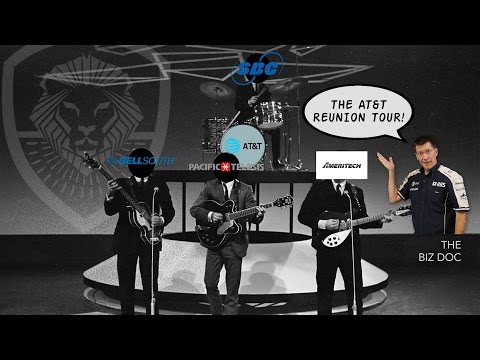
to help you learn all that is AT&T and
we’re gonna dive into AT&T and
understand where it comes from many of
you asked for a case study on AT&T said
weren’t they a one company at one time
then there was a breakup and a bunch of
mergers and acquisitions and then
they’re back together again well guess
what
that’s correct and I’m gonna show you
exactly what happened in the beginning
AT&T was a phone company and they
emerged that the you know a hundred
years ago
and after that phone service took off in
America and along with it long-distance
phone service and you may remember when
you BC like old movies or something
where you see I really have to cut this
call short it’s long distance and then
it’s expensive
well now shoot long distance is on your
on your cell phone it doesn’t matter you
can call short you can call long it’s
all built into your rate plan but there
was a day were you worried about whether
calling across town or calling across
the country and across the country cost
money well that was the dawn of AT&T
putting phones everywhere and as a
single company merged as America grew it
became what was called the natural
monopolies it kept expanding it kept
offering more phone service and more
cities to more people and they ended up
being a monopoly because no other
companies came in to compete well along
about 1949 it got the attention of what
was called the antitrust regulators who
were worried that there were a lot of
companies in America that were
monopolies and they worried that there
wouldn’t be price competition or
innovation for the American consumer you
and me and the government said now you
know we may want some of these to break
up and if they don’t break up naturally
on their own we’re gonna help them break
up with what’s called
antitrust legislation and sure enough
1949 right after World War two the US
government stepped in and AT&T which was
called Ma Bell back when phones had a
bell and the phones would ring ring ring
you hear those old-fashioned ringtones
as a matter fact you can still get that
old-fashioned ringtone it’s actually one
of the choices on your iPhone anyway Ma
Bell is out there providing service to
everybody and here comes the government
saying you know what we need to break
you up so it started in 1949 that led to
a final judgment in 1956 whereupon
basically nothing happened and two wars
six presidents later finally an even
bigger AT&T was in fact broken up and
they broke it up across regions of the
United States and if you’re living
internationally and you’re saying gosh
I’d understand the regions the United
States just think of the United States
instead of 50 states cut up into six
areas there was 9x which is basically
back in New York Bell Atlantic near
Washington DC Bell South from Atlanta
through Florida Southwest Bell through
Texas in the great Southwest Ameritech
which was up in Chicago and finally
Pacific Telus basically California and
then us West basically Washington Oregon
and the Northwest United States
obviously and then they left AT&T it had
long distance it had Yellow Pages a few
other businesses that were in there but
they broke it all up into these seven
sisters and that’s what that’s what they
were called by the way the Seven Sisters
and AT&T so here you’ve got it all
broken up and and now capitalism takes
over and there’s a little bonus this
week that you need to understand and
that is never bet against capitalism
when you’re talking about growth because
companies grow they want to keep growing
they want to do more and if they’re on
the stock market people that buy the
stock and want to see the price go up
and they want to make more money off
their investment and so what does a good
company look around to do they want to
offer more products they want to offer
in more markets so should be no surprise
that from the beginning
these seven sisters got an itch
grow and wanted to move places and this
bizarre little chart here I’m going to
show you what happened so you let’s step
aside for a second the first thing that
was happening here is they were mostly
voice meaning long distance phone
service a fax line at your house
they were delving into other things but
they were mostly voice companies and
people called them Bell operating
companies I mean they did Ma Bell on a
small scale in your town and then there
was AT&T offering long distance and
other services
you know if they thought of themselves
more broadly they probably would have
done some conquering on the early
internet but they didn’t they just
thought well people are gonna dial up to
the Internet and do that whereas when
you think about internet service
providers or access providers like the
early Earth link and Yahoo and AOL it
probably could have easily come out out
of one of the seven sisters that they
were thinking more innovatively but they
weren’t they just thought about voice
and that’s where it started but they
were still hungry to grow you know AT&T
itself it was thinking deeper over the
years they bought a company called NCR
computer company they delved into a
variety of different things and they
they really kept going and tried and at
times stock analysts would say oh I was
a dumb decision look what they’ve done
there but then we’d look back and see
well but they tried and they’re out
there swinging at the ball and building
up the big issue coming for all of them
would be Wireless Wireless would be one
of the catalysts that bring them all
back together and the catalyst that did
it was the overwhelming opportunity to
not just have a home phone but to so you
and me a wireless line as well back in
the day it was called cellular that was
chapter 1 and then digital cellular came
out sometimes called pcs and finally
just called Wireless and that second
chapter digital wireless what we know
today is really where it started to
happen so SBC Southwest Bell they really
got the ball rolling they acquired
Pacific Telesis so now these two are
together
in 1996 and I was working on a digital
television project at Pacific Telesis at
that time and they decided they weren’t
going to do digital television anymore
it was kind of funny and they said well
they were back thinking about dial tone
and here I thought that I was working
with them at a time where maybe they
were thinking more innovatively then
they bought you know Ameritech which was
basically in Chicago and now you’ve got
three of these together and then a
little bit later they in year 2000
BellSouth and Southwest Bell did a
partnership called singular and I’m
trying to build the singular logo there
those of you around the world probably
won’t recognize it but it was another
wireless company in the United States it
became pretty big finally you had Bell
Atlantic and 9x in 97 they get together
a little company called GTE was involved
and ultimately it led to the creation of
Verizon so now these two get together as
Verizon and eventually they bought Yahoo
and AOL as well as they started buying
more media companies so it just shows
you they’re looking for growth and
looking places now it bears pointing out
that Verizon bought AOL for 4.4 billion
dollars long after the peak of AOL and
then just this past year they closed the
deal on Yahoo for 4.4 billion dollars
and so I guess if Verizon is buying
something I guess that has to cost four
point four billion dollars so if you
want to sell your company you just send
an offer sheet to Verizon and and put
4.4 billion dollars on it and see if you
get a phone call because that’s what we
paid for both of these and a lot of
people are wondering you know what the
hell did they buy but nonetheless that’s
the story of this side so two of the
seven sisters are together and now
you’ve got you know four of the seven
sisters here and then guess what
SBC actually buys original AT&T changes
the branding back to AT&T and it’s all
put back together again so now you’ve
got these four of the seven sisters plus
mama Bell together back as AT&T with us
west merging with the company called
quest and ultimately called CenturyLink
and if you watch American football or
your
in the Northwest CenturyLink UC century
league stadium where the Seattle
Seahawks play and so that’s what that’s
all about
so finally we get over here and I’m
gonna turn around what happens next is
very very interesting you have now got
basically the old joke is you know
Humpty Dumpty fell off the wall well
listen capitalism was putting Humpty
Dumpty back together here after the
government wanted to take it apart
AT&T the next step is they made this
offer to buy t-mobile
so t-mobile USA they’re offering to buy
t-mobile in 2011 for 39 billion dollars
and t-mobile is like well what if the
government won’t let you what if the
government steps in they said no problem
oh I’m so confident this is going
through I’ll pay you six billion dollars
if the deal doesn’t go through in other
words I’m offering to buy you for 39 and
if the US government or something says I
can’t I’m gonna pay you six sounds like
AT&T the new consolidated rebuilt AT&T
was pretty confident well guess what
despite the fact that 26 governors
supported it the technology companies
came together and they didn’t want it
believe in out it was Google and
Microsoft and Yahoo and eBay they all
said no no we don’t want this because if
it’s just down to Verizon and AT&T and
Wireless and then t-mobile is in there
man you know we’re technology companies
and we sell technology and we do things
on the internet and the Internet’s
coming through phones uh uh American
consumer is gonna pay more for data on
wireless phones and that means that our
services all those companies I mentioned
are not going to be used as much on
phones would be expensive so we’re
against it for that and a bunch of other
reasons well the federal government
listened and they blocked it so AT&T
went and they had to write a check to
t-mobile
well they negotiated it down a little
bit but they wrote a check for three
billion dollars for t-mobile to go away
and no deal to be done when you want to
do a deal and then you promised six
billion if it doesn’t happen and then it
doesn’t happen you’re like oh sorry
didn’t happen here’s three billion
dollars
three billion dollars to get nothing you
know there’s a technical term for that
damn that’s a lot of money to not buy
something so I’ll tell you yeah it’s
pretty amazing however not to be undone
there was still gold in those hills and
DirecTV was gonna find it in May of 2014
they bought DirecTV for sixty 7.1
billion dollars that’s a lot of change
at the time DirecTV had a lot of debt
and so they were buying the debt too –
they were gonna pay that off but
nonetheless now they’re in all this
Wireless without t-mobile but then they
add to that DirecTV then the next thing
they step up and they buy Time Warner
four hundred and eight billion dollars
and it was just recently approved
so Time Warner DirecTV AT&T AT&T now has
in the United States 135 million
wireless subscribers making them number
one and 26 million cable and satellite
survivors as survivors and huh can’t
even speak today
subscribers making them number two and
at the end of all this this DirecTV Time
Warner behemoth is worth almost 300
billion dollars with it’s kind of funny
you compare that to other people
Verizon AOL is worth about 200 billion
and NBC Comcast is it worth about 180
you know you sit back and you look at
all this and a couple things come to
mind and the first thing I think we
should talk about is you should think
broadly about your company when they
were thinking here about voice one of
those companies here at Southwest Bell
that would become SBC they were thinking
about transport I’m gonna transport
voice I’m a transport fax I’m gonna
transport Wireless calls I’m gonna make
you know a national plan Wireless made a
joint venture that created singular that
later got rolled in as AT&T Wireless but
I’m thinking transport and I’m thinking
transporting media and I’m thinking
transporting as much as possible for the
American
so let’s take a look at something let’s
say you’re a subscriber to HBO to go you
know I got that HBO go product you can
get on your phone you’re gonna be paying
AT&T for data then you’re paying either
DirecTV or Time Warner for your basic
cable and for HBO and at the top of it
AT&T is collecting profit on you in two
or three places so it shows you that a
big company has a play around all of us
but you know what you wonder is there
gonna be enough competition out there
for to get pricing because right now you
really only have three sources in most
of the you know the country if you look
at it for your service you know what if
you’re a person that’s got Time Warner
Cable at the curb and DirecTV and those
are your two choices well that’s both
AT&T and they’re not necessarily going
to compete with each other real heavy on
price so you don’t have a lot of choice
there so some of that is is not as good
as you would you would think but getting
back to the core point thinking more
broadly about yourself is important and
I’ll give you an example
once upon a time Kodak actually had the
people that would create Xerox come to
them and they showed them the technology
to basically make a copy on paper from
one to the other they showed him how it
worked and Kodak said that’s not a
photograph mistake big mistake what if
they had thought hey that’s an image we
saw images on paper color images
black-and-white images photos and that’s
an image of text that people could make
a copy of and then share it read it
together if they had thought of it as an
image they probably would have bought
that technology instead that technology
became Xerox and one of the things
that’s interesting about Southwest Bell
who was really responsible for putting
18t back together is they had a vision
and even though there is a vision from
the government about breaking a monopoly
companies want to grow and they want to
go farther and they think
opportunistically and along the way one
step at a time
Southwest Bell opportunistically rebuilt
most of AT&T leaving CenturyLink out
and the Verizon consolidation in the
east the moral of the story is
capitalism will usually beat the
government in the long term unless the
government just make something
completely illegal and just regulates it
out of existence if they just put up
little walls here and there
elections will come and go elected
officials will come and go and
opportunistic businesspeople under the
power of capitalism will rebuild things
like AT&T so as you go forward
think broadly about your company think
about what you do be focused on your
individual products and build strong
winning plans but also be opportunistic
along the way to learn more and succeed
in your business there are more case
studies here on value taemin and please
subscribe to the channel with the best
content on the internet for the
entrepreneur until next time I’m Tom
Mills Ruth and I hope I left you better
than I found [Music]
Please follow and like us: