
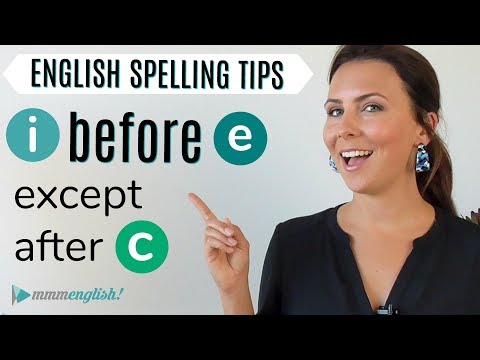
hello I’m Emma from English spelling
mistakes can be anything from a minor
embarrassment to a failed exam and
actually spelling is one area where
native English speakers commonly make
mistakes too they can definitely make
improvements since English is not
phonetic it takes years and years for
native English speakers to learn how to
spell words correctly and even when we
finish school there are often a few
words that keep confusing us all the way
through adulthood in this lesson we’ll
look carefully at the spelling of words
that include I II and II I but before we
do I want to introduce you to the
English imitation technique lessons
designed to improve your English
pronunciation and expression to help you
build your confidence as an English
speaker lesson packs are available right
here so if you want to improve your
spoken English with me you can do it
just by clicking that button okay let’s
take a look at these words achieve
believe and peace now these words are
sometimes misspelled like this with E
before I and it’s an easy mistake to
make
in fact phonetically it kind of makes
more sense words with I and E or E and I
often cause spelling headaches still to
this day I remember the little rhyme
that my grade two teacher taught me I
before E except after C which is a
really handy way of remembering the
spelling of these words the letter
combination ie is more common than E
it just appears more in fact II I is
quite rare really but there are so very
common everyday words that use E I and
many of them follow a C like the verb
receive it’s a perfect example of I
before E except after C receipt is
another sealing deceive preconceive so
that little rhyme it’s useful sometimes
but if you live your life by this rule
you’ll make spelling mistakes for sure
so as always there are exceptions
I feel like english is the language of
exceptions in actual fact the rule I
before E except after C usually is only
relevant when the vowel sound
represented by the IE is the long e
sealing sealing deceive deceive pre
conceived pre conceived okay now are you
ready for the exceptions words like
ancient efficient and science and
sufficient are exceptions to the rule I
before E except after C doesn’t work
here and that’s because the vowel sound
represented by ie is not e ancient
ancient efficient efficient
science science sufficient sufficient
and the e.i combination can follow other
continents not just see their foreign
weird leisure height neighbor way vain
and feisty how is it possible that this
little combination of letters is so
difficult
ie or II I it’s the source of confusion
for English learners and many many
native English speakers too so if you’re
having trouble with these spelling rules
keep this lesson in mind the I before E
except after C rule is a really really
helpful rule to remember but it only
really applies when the ie is pronounced
as e well I hope that you got some handy
tips out of this lesson I expect no more
spelling mistakes on my facebook page or
here in the comments below this video
don’t forget to check out the room
English imitation lessons right up here
you can definitely try out a free one by
clicking that link right there as well
or keep working on some grammar skills
with this lesson
right here thanks for watching and I
will see you next week for another lesson bye for now