
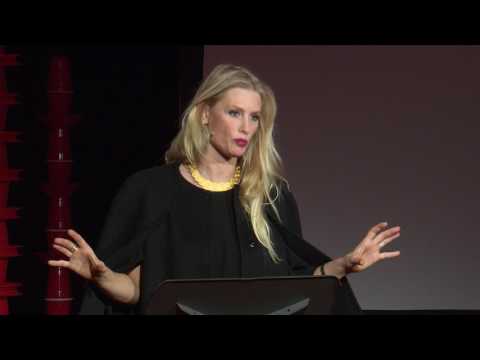
Columbia University trained public
health specialist focusing on mental
health but what a lot of people don’t
know is that for me life was not always
so easy up until about three years ago I
sometimes struggled to even get out of
bed I had been the victim of a violent
crime and refusing to come to terms with
it I quickly saw it enveloped me slowly
but imperceptibly dropping a veil of
sadness and fear over everything from
the outside it wasn’t noticeable
I don’t did not speak of what occurred
and did a pretty good job at least in
the beginning of putting on a brave
poker face but I really started to
suffer and the first year especially was
where not just my behavior but my person
me started to change on the inside it
was horrible
but on the outside I actually looked
great try not eating for a year and yeah
you look pretty good you get all sorts
of compliments but keeping a secret like
that changes person and it changed me it
was like the best of times in the worst
of times and that is why I’m here to you
today to talk about the very thing that
people usually avoid talking about and
and the question I would like to post
today is what if most of what we knew
about mental health was wrong when I
think of mental health I think about
three things that I think are going to
change the face of mental health of
Public Health actually blindspots
neuroplasticity and psychedelic science
and strange as it sounds
these things are intimately correlated
let’s first start with blind spots many
years ago I read a story that’s stuck
with me it was a book by one of my
heroes Oliver Sacks
and it was a collection of case studies
on strange neurological conditions in
particular in one particular story was a
woman called mrs. s who’s in her 60s and
suffered a massive stroke which impacted
the functioning of her right cerebral
hemisphere she is or seems for the most
part seemed for the most part unaffected
she was intelligent humorous and a
hundred percent still there but yet she
suffered from a strange condition that
would make it so that she could only see
things that happened to be on her left
field of vision so for example she would
complain she wanted more food because
the stewards hadn’t given her enough and
yet half of her plate the left half of
course was untouched and Undine another
one of my favorite examples was that if
you took her to look at something 60
degrees to your left she would revolve
around her wheelchair 300 degrees which
is why they call it eyes right
she could only go write this behavior
was unusual to say the least but mrs. s
didn’t know she continued on happily
unaware that she was seeing really only
fifty percent of the world her mind
protected her from what she did not know
by pretending to know this is what I
call blind spots and the truth is that
we all to varying degrees have these
blind spots and science does too I would
even go as far as to say that some of
the blind spots in the medical industry
could be more appropriately called
blinders like what they put on
racehorses so that they can see only
what they’re shown and no more but we’ll
get back to that later
so getting back to the question what if
most of what we knew was about mental
health was wrong what if we are all
stuck with working with 50% of the facts
and we’re told that that was the whole
picture I mean think about it wasn’t it
only 30 years ago that we were told the
dietary fat was bad in the Nate to 1980s
it was like a revelation and everyone
jumped on the bandwagon doctors and
laypeople alike and this idea persisted
as issues as heart like heart disease
diabetes and obesity rose to epidemic
levels and non communicable diseases
rose to be some of the biggest killers
worldwide as they are today
great ideas can spread but so too
sometimes can bad ideas hang around and
hang around so long that you forget that
you have the option of questioning them
last year the Journal of the American
Medical Association produced a paper in
which one of the authors said and I
quote placing limits on fat intake has
no basis in science no basis in science
what else have we believed that in fact
has no basis in science with food they
say that we are able to disprove the
prevailing theory that fat was bad by
accumulating an enormous burden of proof
in the form of people that despite
following the appropriate folk protocols
were in fact getting sicker dying even
looking back at a critical juncture in
time it had been decided that
eliminating fat was the answer to our
health problem or at least various
lobbyists fiscal problems
and the road was chosen but what if they
had chosen another road and what if this
kind of wrong turn happened elsewhere in
science a wrong turn that we are only
now beginning to understand is a wrong
choice because we again see a pattern of
disease that makes it impossible to
ignore if we had taken the right choice
humanity would be better off correct so
it follows that if we are doing
everything in line with a theory and
everything is getting worse not better
wouldn’t it be safe to say perhaps that
we had taken the wrong road such as I
believe is the mistake we made with
mental health and a mistake I would like
us to take a look at today so let’s take
a look at it what is mental health in a
nutshell mental health is the absence of
mental illness just as being healthy is
the opposite of being stick but in
physical health there is not just sick
and not sick you can be injured you can
be healing there aren’t really words
like that in mental health so today I
would like to introduce a new term and
that term is mental injury to explain
what mental injury is I would like you
to think of a woman in your life someone
you love a mother a daughter a child
picture this person next think of
somebody that you know is a veteran of
war maybe you don’t know one maybe
imagine your friends friend picture them
in your mind now picture this one out of
every three to five women will be the
victim of violence or sexual assault in
their lifetime we are talking about more
than one woman per minute and in the US
alone one out of four veterans of war
suffer from post-traumatic stress
syndrome and every new day 22 of them
commit suicide now I ask you are these
people mentally ill were they before or
did they become so and if they became so
that is there a way that we can fix it I
by calling a mental distress mental
illness we imply that these people are
broken and that it is partially because
many of the tools that we are using
simply didn’t work but because but
mental injury carries within it as a
term the seed of hope I hope that we
will finally be able to use tools that
do work so now that we have a working
definition let’s see who else is
mentally injured well statistically
mental illness mental injury affects one
in four people over the courses of their
lives and is projected to account for
more than half of the global burden of
disease and these numbers are growing
rapidly particularly among youth because
mental injury is not just PTSD
it is also depression anxiety most
people when they think of mental health
and the tools that the psychiatric
industry has made available think of
SSRIs they think a prozac Zoloft
paxil selective serotonin reuptake
inhibitors that are often reused in
these instances they also think of
benzodiazepines valium ativan ambien
klonopin used to reduce anxiety and help
people sleep there’s also the
neuroleptics Ripper doll zyprexa
seroquel these are the antipsychotics so
you see there are a lot of things out
there and I think judging from some of
the eyes out there many of you have
heard of these these avenues all work to
change the chemistry of the brain and to
make certain substances of the brain
more or less available which produces
outcomes along the lines of the desired
response but most of these drugs were
developed in the 50s 60s and 70s and
began spreading into more widespread use
in the 80s and 90s until now along with
psychology these are the tools that we
had been and that we still have but
while these drugs all work on changing
the levels of neurotransmitters
none of them impact neuroplasticity and
this is key now you may ask what is
neuro plasticity neural plasticity is
the brain’s ability to reorganize itself
by forming new neural connections
throughout life neuroplasticity is in
the brain’s ability to reorganize itself
to compensate for injury or loss brain
reorganization takes place by way by way
of axonal sprouting where undamaged
neurons grow new nerve endings to
current connect with the other undamaged
nerve cells forming new neural pathways
to accomplish a needed function so for
example miss s from Oliver Sacks book
was able to function despite her injury
by rerouting signals around the damaged
tissue and an easy example to yourself
of neuroplasticity is to dry try to
your teeth with their non-dominant hand
for a week in the beginning it will be
hard but then suddenly it will get easy
because neurons that fire together wire
together or the more you encourage
axonal sprouting around an activity the
more your brain will create pathways
that create make that activity faster
and easier originally it was thought
that our brains were the most plastic at
birth and decreased in neuroplasticity
over time natural ways to increase
neuroplasticity are things like learning
an instrument and exercise but one of
the best way that these pathways are
built is through repetition with age it
was thought that our blant brains were
less plastic but we are starting to
rethink that hypothesis what if it was
not so much that the brain was less
plastic but that as an adult you had
trained your brain so well at certain
things that it was hard to fight getting
off of the most-used pathways pathways
neural pathways are there as learned
patterns to help us get through life
more easily and also to help us with
survival for example in PTSD neural
pathways are also altered your survival
mechanism is triggered and it goes into
fight-or-flight bypassing the prefrontal
cortex and going straight into the
primitive zone of the brain where the
amygdala is this is the limbic system
and the problem with this is that it’s
very hard to undo it is after all the
mechanism that was put in place to keep
you alive and one of the ones that gets
the most hardwired the most quickly
attempts through the years to address
this have been largely unsuccessful
cognitive behavioral therapy exposure
therapy and SSRIs but these tools are
woefully inadequate to their task what
we need in this case as in the case of
more mental injuries is to harness the
power of neuroplasticity and to harness
the brain
zone power to heal psychiatric
medications for the most part shackle
the brain and control the level of
neurotransmitters but don’t necessarily
create a change in behavior and don’t
necessarily create a change in the
person neuroplasticity changes that
which takes me to my third point
psychedelic science no psychedelic
science is not a misnomer it is a real
science with real tools in fact when you
look at the path not taken when we look
at the fork in the road that led to the
current tragic state of mental health
and it is indeed tragic I think about
the idea that perhaps we have spent the
last 50 years solving for only half of
the equation keeping the mentally ill
alive but not healing them so when I
asked the question what if most of what
we understand about mental health is is
not true I was also inferring what if we
are not admitting to what we don’t know
what if we have been forced to wear
blinders to not see the other half of
the mental health equation the very side
for the answers to these cries of
suffering may be found psychedelics are
characterized by generating
hallucinations distortions of perception
alters that altered altered states of
awareness and some examples of
psychedelics are LSD MDMA and ayahuasca
some of these are also known as
entheogens chemical substance is
typically a plant origin that are
ingested to produce a non-ordinary state
of consciousness for spiritual or
religious purposes many of these plants
and substances have been used over
millenia to help people understand the
world and their place in it even wine is
considered an entheogen
because it was used by the Greeks and
Egyptians in the work in the worship of
Dionysus what entheogens on the whole
really do particularly in the case of
LSD MDMA and ayahuasca is to help create
new neural pathways by increasing
rapidly and often in sort of challenging
ways neuroplasticity two levels commonly
seen only in children when LSD was
discovered for example so potent were
its effects that the CIA immediately
started doing large-scale experiments
thinking that they had found a tool for
mind-control and the public at large
also started doing large-scale DIY
experiments with mixed results now just
to be clear I am NOT promoting the use
of psychedelics I am however promoting
the use of science for example if I told
you that there was a drug currently in
trials that in severely depressed
treatment-resistant patients healed the
patient in three to four sessions in
sessions with a 72 percent success rate
you would say that’s crazy that can’t
possibly be true but it is true and this
is just one of the psychedelic drugs
that is currently in trials and it is
one of the many that show real promise
specifically in treating depression and
PTSD but for a number of other things
involving the element of pin
neuroplasticity these other trials have
been taking place all in the last few
years that’s why you haven’t heard of it
when the ban which has been 50 years now
on psychedelics was lifted for certain
specific research streams major
institutions such as John Hopkins NYU
and Imperial College London have
persisted in the in the face of huge
obstacles to progress this science and
groups such as the multidisciplinary
Association for psychedelic studies the
Berkeley Foundation and the Hefner
Institute are in my opinion heroes for
keeping the
of this research alive for more than 30
years waiting for the moment when the
scientific community and the public at
large would lift up its head and
acknowledge its own blind spots
acknowledge what it doesn’t know and
acknowledge what the rest of the brain
health and mental health practice has
been ignored for far too has been
ignoring for far too long
it took me years to get over my own
mental injury years of suffering that
could have been avoided in years of
suffering that men and women of the
world vets who have served our country
victims of violence and perhaps even the
10% of you who were out there in the
audience now on SSRIs who could and
should be leading fuller clearer happier
life free of blinders and free of blind
spots together we can solve the mental
health crisis together we can push to
bring this science back into the
mainstream mental health is a human
right in these people the mentally
injured they deserve to heal to [Applause]