
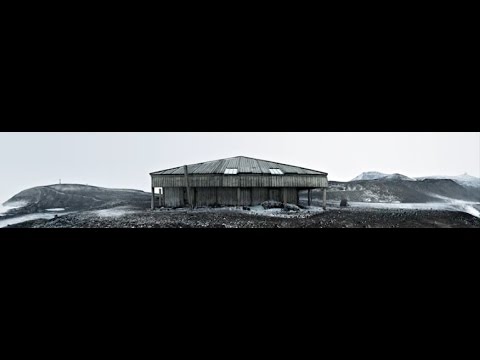
Robert Falcon Scott and 45 others set
off from England on an epic journey to
the Antarctic that expedition lasted
three years it was the first of over a
decade and a half of expeditions that
lead to these two men being heralded as
legends of what is now known as the
while they were on the ice they built
hats that they lived in for months on
end through sunless winters and
nightless summers they have remained
virtually uninhabited and untouched
since Shackleton’s Transantarctic
expedition in 1917 the huts are time
over Central Asia and 2008 I was given
the extraordinary opportunity of
photographing these huts this is what
I’d like to share with you even on an
overcast day Antarctica in midsummer
there’s a bright and shadowless place
when I disembarked from the plane onto
the ice the food things that struck me
were the glare of the snow and the
vastness of the landscape my preferred
photography conditions a soft low light
the huts by contrast were dark and
oppressive I knew how I wanted to
approach the assignment but was dismayed
at how difficult it was going to be my
technique is to use long exposures
multiple frames per image in a lot of
macro work my end goal was to photograph
the huts in more detail than the human
eye could see I was apprehensive that
this might not be achievable as the
lighting conditions inside the huts were
either very dark or lit by brilliant
strikes of window
light I realized that each section of
the huts would have to be looked
separately by bouncing and available
light I felt completely overwhelmed by
to accomplish what I proposed would
for what seemed like an eternity I stood
behind my camera mounted on a pivot head
tripod and meticulously moved around the
walls metre by metre recording each
section of the three huts
these images were later stitched
discovery was the hut but by the first
expedition and 1901 and used by all
subsequent parties it is also the most
desolate its design was so unsuited to
the Antarctic conditions that the men
preferred to sleep on this ship rather
than stay in the heart by 1916 the last
time the hut was used snowed pushed
through an opening and the interior had
stranded the men had to hack into the
scythe to form a shelter there they
remained for two months on a diet of
seal meat they had no idea that hidden
in the ice only metres away were tons of
biscuits and food
the food is still there and so are the
scrum and second covered dividers they
used to make this sanctum stained with
the dark greasy such from the seal
blubber stove and marking the tiny area
of their refuge within the much larger
heart the beauty of these war wooden
walls and hence touch paedon means that
Shackleton’s hat was built in 1908 at
Cape Royds and it could not be more
different
to discovery it’s neither foreboding nor
filled for the net nice fear of tragedy
when you walk into this hat you feel
that you could put down your net set lay
down your sleeping bag and comfortable
affair
that’s how utterly charming and
hospitable it feels surprise of coal and
gas meant that blubber wasn’t burned
here so the interior of this wooden hat
glows Cape Royds as the home of the
southernmost colony of Adelie penguins
and summer surrounded by the endless
shafts of light falling through the
north-facing windows it’s not lifting
the last heart was built in 1911 at Cape
I remember walking through the door of
Scott’s hat for the first time a sense
of history as overwhelming Sir David
Attenborough called it a time warp
without parallel I felt like nothing had
changed it was eerie
beautiful and moving a spiritual place
the heavy wooden doll with its leather
straps was familiar from many
photographs but the overpowering smell
of blubber and hay was unexpected
inside were hundreds upon hundreds of
while the building itself was impressive
the layers of detail that began to
emerge from these objects captured my
imagination
the longer I spent in the huts
surrounded by the items the explorers
that live behind the more they became
the focus of my photography they were
roughly down socks and handmade boots
stuffed with straw
personal items left behind combs
cufflinks Fisher’s I had a lot of time
to wonder why these items have been
chosen as necessities for the trope
what could they possibly make Trish
shoes for
seemed incredibly poignant that the
reality of life on the ice would be so
different from that imagined and England
these items just reinforce the
difference between a somewhat romantic
expectation in the grim reality of life
and the Antarctic my aim had been to
photograph the interiors and an
informative documentary style but my eye
was drawn to these objects to take
photographs are reflected by an easy
each hat has its own stories of tragedy
and bravery but none more so than
Scott’s hatch in 1911 ten years after
the Memphis set foot on the ice
Scott bunted over in the Antarctic while
planning has ill-fated attempt to be the
first to reach the geographic South Pole
on that journey struggling to use their
dog-and-pony teams effectively the
expedition was reduced to man haulin the
cumbersome sleds themselves for hundreds
of kilometres in appalling conditions
with meager supplies and temperatures as
low as minus 40 degrees centigrade when
Scott and has four companions finally
reached the South Pole
it was to learn that there are Norwegian
Roald Amundsen had beaten them by 34
Scotland has men all tragically perished
on the return journey
the knowledge of the tragic outcome of
Scott’s expedition and the extreme
levels of bravery and sacrifice they
needed to survive I ever present in the
and all their gloom bit intimacy and
their stillness
I offer my photographs as a record of
something special and lasting that took
place over a hundred years ago and the Antarctic