
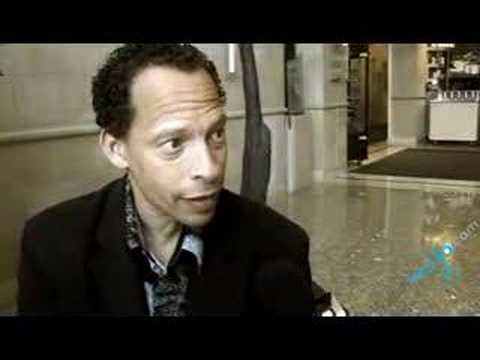
when you pick up a book by Lawrence Hill
you can’t help but think about questions
of identity i’m your host leila today on
watchmojo.com i sat down with him to
talk about this and much more you write
about belonging and identity how has
your experience with those issues
changed over your years as a writer well
I think that every person fundamentally
it wants to find out where he or she
belonged to the planet but I think it’s
also a changing target I mean the way
you think at the age of 15 isn’t
necessarily the way you think at the age
of 25 north of the way necessarily think
at the age of 45 or 50 I think that all
people of all racial and cultural
linguistic backgrounds can identify with
a quest to see who they are to put
themselves in the context of the world
where do I belong where do I fit in Who
am I and how do I relate how has writing
helped you answer those questions well I
think writing leila is a process of
discovery people who haven’t written
books who haven’t tried creative writing
might assume that you have a book and it
just builds out your fingers because
it’s already been formulated in your
mind but actually you don’t really know
what you want to say what you’re truly
feeling and that’s why you’re right you
write to make sense of the world the
book of Negroes explores the plight of a
young woman through slavery Hills tells
us a bit about the impact of his parents
experience with this kind of danger how
did your upbringing and your parents
involvement in the human rights movement
influence or help shape your voice as a
writer well my parents were pioneers and
Katherine’s human rights movement black
father white mother moved to Canada when
they married it was a dangerous and
really illegal thing to marry
interracially in the early 1950s in the
deep south in the United States so they
brought into our household consciousness
of racial equality a consciousness of
black history and a consciousness of
social justice issues and that’s really
informed all of my writing initially a
journalist Hill discovered his niche as
a best-selling author in nonfiction and
fiction alike finding truth in both I’ve
been writing stories and one of the
right book since I was 14 or so
so writing is friction is my first and I
think permanent passion I hope to write
until the day I die I do love to write
nonfiction as well I find it sharpens my
mind and it makes me sort of accountable
the facts and just direction holding up
holding a reader in a really kind of
argumentative persuasive way but the
writing that speaks to me most is
writing fiction because I feel that in
making up stories and inventing
basically wonderful lies is the best way
fundamentally to get at the truth you’ve
gotten a lot of really excellent
critical acclaim when did you realize
that it wasn’t just your passion but
that you’re writing could be of a lot of
use to a large audience I guess it was
around my early 20s finishing university
that I’ve realized that it might be
possible if I really busted my backside
to become a writer of fiction that make
a go at it but writing and expressing
myself creatively is what I really have
to do it wasn’t an intellectual
discussion decision that was a call from
the gut I don’t feel that I’m sort of
well constituted I don’t feel that my
days are unfolding as they should if i’m
not writing and reading makes me feel
good i need to do it to feel alive thank
you very much mr. her Thank You Lana
Please follow and like us: