
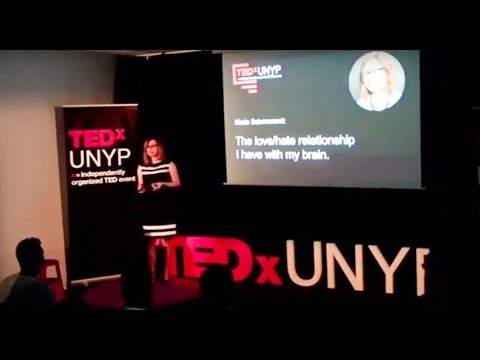
good morning ladies and gentlemen so
when I was first invited to talk a telex
UNEP I was really excited I thought okay
so somebody is recognizing my efforts
somebody can see the work I did in the
last few months and years actually
because for the last 12 years I’ve been
aware of having mental health and of the
importance of caring about it and for
the last seven years I’ve been trying to
remind others that they have their
mental health and they should take care
of it so that was about June July when I
was first contacted by unep asked to
talk here and that was all the
excitement that I described and I
because I love my job and love what I do
I was I started thinking of all the
things I can say here and all the things
I can talk about and how I’m gonna tell
you about the idea we had with my my
friends and how studying in the UK
really helped me to recognize that there
is still some stuff that we don’t talk
about here in the Czech Republic and in
the Western world it’s very common to
talk about it and that’s mental health
but also mental illness and this is the
brain I laugh that’s actually mine brain
and that’s the brain that came up with
all the ideas of what I can do about
changing the language changing the
situation here in the Czech Republic and
how we talk about mental health so that
was June and was very excited and then
several months later an email came and
it asked me to write my bio for TEDx
unep it asked me to write a short draft
of the speech and suddenly I realized
well why did they invite me I have
nothing to say I am a failure nothing in
my life is going well and I can’t even
get out of bed in the morning let alone
write some draft of his piece and I
should have got a gif and that should be
very inspirational because after seven
years of taking care of my mental health
being really aware of it and sticking to
my medication schedule my depression was
back and I wasn’t prepared for it I’ve
been going around Czech Republic for the
past two years talking about how
important it is to talk about your
mental health and how important it is to
share the stories if you’re mentally
unwell and then I found myself in the
situation after seven years actually
relapsing into depression and anxiety
and suddenly I wanted to write an email
saying I’m not feeling physically well
and I can’t attend TEDx because you know
I came down with this horrible flu and
I’m in the hospital and they’re taking
care of me and I can’t brief and
everything and and I I didn’t want to
mention that I was actually lying in my
bed and couldn’t wash my hair and
started using the dry shampoo a little
bit too much because I was much easier
and the same brain that I loved just two
months before that I ended up hating I
felt like a hypocrite because you know
two years spending talking to people
about how important it is to talk about
mental health and I was the one telling
my story I wasn’t even able to write an
email saying sincerely sorry I’m down
and terrible depression and anxiety and
I can’t write this speech and I don’t
even know if I’m gonna let it be able to
come and talk
here that’s when I realized that Atlas
it is probably hard for people to talk
about their stories once there are in
the midst of experiencing their mental
health problems and even though I spent
two years talking about how hard it is
but how important it is I realized it’s
probably much harder and that we still
don’t have the right language here at
least here in the Czech Republic to talk
about mental health we still use a lot
of words I mad man psych ward nutcase
and and several others that are the
thing that actually creates the stigma
around mental health and I wasn’t even
sure that I that I would be the right
person to change the language but then I
looked at all the different campaigns
that they have in in the UK and in the
US and in Denmark and all around the
world actually and I thought well we can
start sharing those pictures and those
those stories with with young people in
the Czech Republic and because they
understand English and it’s going to be
a right if we just share them and then I
thought okay but that’s still not
changing the language and it’s still
something coming them from the outside
and English is often the language that
they use to work and not to relax and
not to take care of themselves so what
can we do about that I thought it would
be good to start developing a language a
dictionary a way of talking about mental
health and well-being but also mental
illness that could help people not feel
ashamed of when they have problems and
we started this project
and people start people actually started
sharing our materials they started
sharing our small infographics and in
about a month
we had enough fans that tens of
thousands of people have seen our
materials but what was very important
for us was that it was not only shared
by young people that have nothing that
it didn’t have anything to do with
mental health before but it was also
shared by professionals by psychologists
by psychiatrists and they were coming to
us saying whoa I didn’t have this kind
of language I couldn’t even explain to
my family what I was doing in a way that
would it wouldn’t seem scary and they
started sharing at hospitals mental
health facilities started sharing our
materials they started sharing the
stories of people we collected and it
was very it was very encouraging for us
so right now when I was supposed to
write an email about how I was lying in
my bed and I couldn’t get up and I
couldn’t write this bio that they wanted
me to write and this draft of the speech
I already had some sort of idea how I
could write it and I wrote it and I was
just praying really that in several
months I’ll be ok and I’ll be able to
stand here and talk to you well because
I already had my ways and I had my
psychiatrist on on the phone and I had
my mats I was able to and two months I
was able to recover which was much much
faster than I was used to before and
even though I’m not sure I can still say
that I love my brain I don’t really hate
it I think the relationship now it’s
it’s complicated
that’s my relationship status with my
brain
right now but I think that that’s
alright I I still think it’s very very
important to acknowledge it and to not
be ashamed of it and to talk about it
and these are the 22 people that we
trained over the past year to go around
check a public to go around high schools
to talk to teenagers to develop their
diction mental health dictionaries the
language that they talk about their
mental health and well-being and I’m
really proud of them because they come
from the environment of the Czech system
none of them except of about two of them
studied abroad none of them ever seen
the campaign’s that are going on there
and they still are able after some
training to go around and to spread the
world and if there is one thing I would
like to leave with today is that even if
you can’t love your brain at the moment
it’s all right and I would like to
encourage you to think about your mental
health to talk about it
and to think about the language you use
when talking about it thank you
[Applause]
Please follow and like us: