
[Music]
when our taxis started refusing to take
us to our first pilot site I knew we
were doing something very new I was in
the heart of a ten million person mega
city just ten minutes walk from major
tourist attractions embarking on our
first implementation project as you
enter one of the main slum districts of
Manila the roads get tighter visibly so
much more deprived phone signal just
cuts to nothing zero just nothing at all
we worked with 300 vulnerable young
mothers that day and I came to a
startling realization not about their
health care but that I was at the center
of a community being truly left behind
that was right in the house of one that
was rapidly advancing now I never
planned to be an entrepreneur and it
just wasn’t my thing right I wanted to
earn more money and buy a nice house in
the UK but in 2016 just 18 months ago I
set up her health care organization to
try and help the poorest people on this
planet access basic health care services
now working in emerging markets health
care is really hard I’ve been drugged
mugged and abducted in the past 12
months but what keeps me up at night and
now keeps my team up at night isn’t that
communities with exceptionally high
maternal mortality rates destabilizing
young families and ruining lives
tuberculosis still massively prevalent
basic vaccines not available
cases of leprosy people that just
actively choose to die from cancer
seeking no treatment at all because they
don’t want to inflict that burden on
their cash-strapped overworked family my
first apartment in Manila was vacant
purely because a mother got cancer
through her three children had to drop
out of university or college to pay for
her treatment obviously impact in their
future careers and coming from the UK
when we look to the global perspective
we are facing an unprecedented
healthcare challenge the world’s
population is getting bigger by 2030
eight point five billion people will
live on this planet by 2050 nine point
seven billion people with over 20% over
60 that’s a 20% in 20 year almost
increase in population and when we
compare that to 1950 where there was 2
billion people on the planet
that’s a 500% increase over just a
hundred years and the way in which we’re
living our lives seventy percent of all
deaths are now due to non communicable
disease that is cancer cardiovascular
disease diabetes and respiratory illness
six out of ten deaths are now linked to
pollution we are creating a man-made
burden on ourselves and struggling to
pick up the pieces but I’m not here to
talk about this right it’s a very very
well understood problem and we all hear
it on the news everyday but I do believe
that we have to be very very innovative
to get the basics right both in
developed countries healthcare systems
and of course for people that have
nothing now when I was in the UK I found
myself
hugely frustrated frustrated at a
government that was so powerless to
change unwavering consumer trends and
lifestyle the frustrated of the sheer
wastage that one of the best known best
loved publicly funded healthcare systems
had frustrated at political cries for
more and more funding that was of course
needed but ultimately left by this
staggering level met with sorry this
staggering level of wastage and
ultimately frustrated at my fellow
Britons
what I saw was ungratefulness for a
system that would constantly pick up the
pieces when they made so little effort
to look after themselves in so many
cases and in 2015 I left for Singapore
to try and help people that had nothing
access basic health care services
now the original concept was can you
crowdsource a health care service with
the multiple organizations each giving
some clinical services technology
medicines to our organization pulls
together into a
piece of hull but no you can’t it’s just
too hard it was just an impossible
problem and we tried this for a few
months it didn’t work we did start
speaking to people though and from this
initial exercise we did get some really
interested technology organizations and
with them we set about designing a basic
technology platform of healthcare
profiling symptom checking information
education a range of other basic support
services and we look to get that funded
we applied for grants again and got
nowhere
just not nothing no no funding came in
and it was then that I sort of realized
the model was broken anyway because if
we did get the funding offsetting that
sort of himbut investment against the
poorest communities on the planet is
going to be impossible so we decided
that the organization should become a
community we managed to get a range of
academic organizations and companies
here in Singapore to give us free time
and we started building our platform
from here I just kept speaking to people
people better than me and smarter than
me that knew something that I did and
trying to build this community focus of
the organization I managed to get in
front of some influential global
organizations and they said this is good
and it you might get people to the point
of diagnosis but what’s the point
because you’ll tell people they have a
disease or a condition but they can’t
access or afford the medicines or
treatments that they might need which
was of course hugely valid and as we all
know pharmaceutical companies do have
essential products so we evolved our
thinking some more that we would use
technology to deliver basic services
where traditional services don’t reach
will aggregate up the demand for
medicines and we will buy in bulk in
return for significant discounts
allowing pharmaceutical companies in a
range of other businesses to enable an
emerging market strategy if you will but
also enabling access to very affordable
discounted products from here we just
kept speaking to people and it was no
harder than putting together a few pitch
slides relentless
cold-calling networking going on
LinkedIn lying my way on to a few big
conferences and a few just to get some
big coverage and a few months later we
did sign our first contract one of the
world’s biggest pharmaceutical companies
willing to discount their products for
the poorest people on the planet we were
going to launch in the Philippines and I
set off for Manila from Singapore
shortly after not knowing that I was
going to get drugged and mugged on my
fourth day I’m now really pleased to
report that we’re delivering our service
throughout the Philippines and growing
rapidly it’s a really simple solution
fundamentally we take our technology
platform to profile a community and
understand their needs we then train
local community access managers who are
people from the community that we give a
tablet to to provide a local level of
healthcare support and cover and also
install community access points that are
kiosks in schools and shops and churches
to help people sort to help them be
empowered to provide a level of
healthcare support most importantly
though we’re not employing any doctors
we just take the existing local public
health care services train them and help
them stretch their services further and
farther into underserved communities and
most importantly help them become a
digital first low-cost Community Health
model that so many developed health
systems are struggling to work backwards
to as we change the way we live our
lives and of course through both of our
services we look to make available
access to products essential products
bought in bulk through aggregation of
demand to make them more affordable but
as we’re in Singapore I can hear so many
people saying what does this mean for a
world-class world-ranked health care
system and how do you apply this sort of
basics knowledge to places like here and
of course the UK our recent project is
funded by one of the leading
telecommunications networks here and a
leading homecare charity and it’s
looking to do exactly that we’re looking
to take vulnerable low-income seniors in
Singapore and help
remain comfortable and loved and age
with dignity and respect at home through
simple well coordinated technology now
the principles aren’t hard here we know
that health care services are too
expensive and often people like to be
cared for in the community so we’re
looking to build a new community of
health care providers volunteers and a
range of non-traditional healthcare
organizations such as food stalls and so
on and so forth to create a new low-cost
integrated care plan there’s more
friendly improves patient experience but
also cuts the total cost of care now the
technology solution itself is is simple
is stuff that we have already a web form
to assess senior citizens needs income
levels and so on and so forth a
marketplace to have match them to
services and a care plan where you can
coordinate a simple calendar like way
and a group chat to coordinate this new
model of care and working across both of
these projects people keep saying you
know what’s the difference what have you
learned from having one project in
Singapore best healthcare system in the
world most would say or many would say
and working in places where there’s no
healthcare at all and the biggest
learning of it all has been that we are
causing our health care systems on
sustainability as I started this talk
with we have to realize there are
rapidly urban centric lifestyles are
causing this massive disease burden that
we’re faced with and causing our health
systems and services to struggle this
has become so apparent where in
Singapore UK and the Philippines as a
whole for example the average rate of
diabetes is 10 percent when we go to
very rural underserved communities it
drops to naught point 5 percent so it
really is apparent how as we shift
towards this urban centric model of
living we are causing many diseases
through our lifestyle secondly it is
that the second realization I guess is
that we do need to support our
institutions and they do need help and
we do need to adapt our behavior in how
we interact with them when I walked my
father through this talk and talked him
through what I wanted to say he asked me
to tell a story and that is that my
stepsister tragically passed away just
two years ago through after a lengthy
legal inquest it was proven to be
completely the fault of the UK Health
Service there were seven interruptions
or eight interactions seven of them were
completely false
they just weren’t right incorrect
clinical decisions the first point here
is that on one on the night of one of
her emergency admissions the doctor was
clearly very distracted not doing any of
the proper tests and missed so many
things that he should have done the
doctor now says that all he did say that
it was because a very very drunk patient
was completely distracting him being
sick everywhere and so on and so forth
and ultimately yeah the right tests
weren’t done because he was paying his
attention elsewhere after somebody was
drunk butter real micro micro level this
guy will never know what he might have
caused and by adapting his behavior he
might have stopped a 16-year old girl’s
life support being switched off just two
days later but at a macro level he
really does represent so many people in
modern society that knowingly hurt their
bodies and expect society to pay the
price and the last learning really has
been that as much as we can completely
dismantle our institutions and grow them
for the future we are buy it by working
together and looking to more basic
systems we really can outline where the
opportunities for sustainability and
innovation lie at the moment we seem to
be digitized digitizing and applying
advanced technology to the processes of
yesterday as I’ve said throughout though
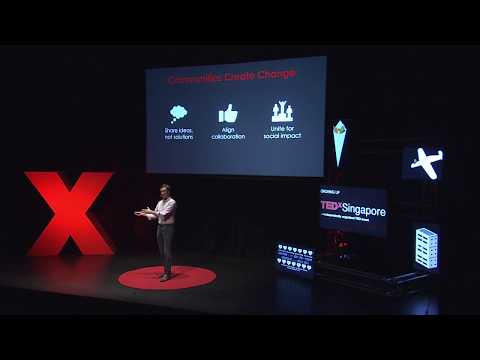
we are about communities communities
build our technology we support
communities and communities support
themselves one of the fundamental
principle
that we’ve come across is that we have
to share solutions not ideas in
healthcare technology and healthcare
processes we’ll never really be
transferable across national boundaries
for so many reasons
laws governance and so on and so forth
but by looking abstractly and sharing
concepts we can outline where these
opportunities lie secondly again we look
to really rationally analyze
collaboration that is students and
interns give us so much free support we
have 12 interns here in Singapore today
but in return they get a great
credential on their CV companies host
our platforms for free software hosting
in return they get a great CSR
credential corporate leaders coach us
and give us support but in a in return
they get a break from their day job and
get to do something different and of
course pharmaceutical companies and big
businesses here discount their products
but in turn access emerging markets in
turn financing basic public services and
really realigning how models can work
lastly there’s so many different people
that work with us and have supported our
mission as we look to embark on this
journey and they have all different
perspectives and all different
prerogatives but we are all united for a
different social impact and that’s been
something truly great that we’ve seen
over the past year or so the biggest
learning though is the in the 21st and
indeed 22nd century in healthcare reform
has to go so much beyond innovation
medical breakthroughs advanced increases
in funding because the way in which
we’re growing just won’t sustain that we
fundamentally have to rethink how our
communities work in healthcare how we
deliver solutions through communities
and how communities support themselves
and we can learn that from sharing
internationally to get the very basics
right and as I stand here of course I do
ask everybody in this for him to think
what they could do to support somebody
more vulnerable in our society
it doesn’t matter if they’re in the same
countries and we have to not think
within national boundaries anymore given
the crisis that we face there’s enough
technology goodwill knowledge in the
world to solve so many problems that we
have especially in communities where
there’s nothing we just have to apply
what we have and know very differently
we have to rethink what our communities
are and we have to rethink who we are
within them and I am Edward booty human
not British thank you
[Applause]
you
Please follow and like us: