
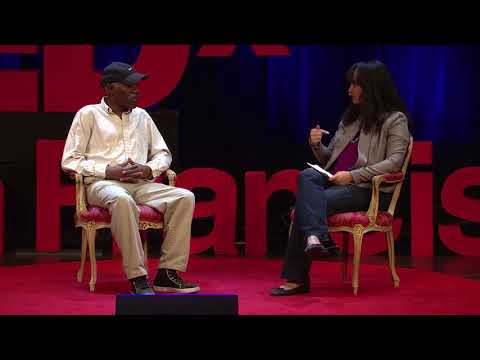
definitely in for a treat we have a
really special man here who has touched
the lives of thousands of San
Franciscans
and tourists alike so the first question
I have for you today is tell us a little
bit about your life from the 1980s
through the year to 2010 well what I’ve
been here in the city on figures and my
whole life was about it’s been where the
action is so if you’ve walked between
Alma new Montgomery between 1980 and
2010 then you probably walk by my office
although my office was on the street but
I’m here to explain that homelessness is
not identity it’s an experience that’s
big that’s big thank you
so tell us a bit about how you ended up
on the streets
what happened well before I was a
musician I had a good job as a
journeyman painter and also had a family
bruh due to severe trauma substance
abuses and health issues that were not
properly addressed my life began to
spiral down which many other homeless
have these same experiences so yes what
was it like on the streets for people
well being on the streets being homeless
can be very painful and very lonely
that’s basically what I get it’s for the
overwhelming consensus is that that is
the main case is people get disconnected
get alienated yeah you said something
about the day to day just waking up oh
yeah that people someone to that
homeless people they will have the
attitude and the view is that just the
wake up is just another day to die so
that really impacted me that a lot of
people see the homeless as a category
not as real people and some homeless
feel that they are considered you know
invisible you wrote a song called
peekaboo that you performed earlier this
great song right 40 years ago you
composed that song and played it for the
first time tonight tell us a little bit
about the lyrics cuz the lyrics are
interesting yes I wrote this song about
40 years ago I wrote it first for my
daughter but it’s amazing that I had no
idea that it would foreshadow some of
the homeless experiences but it is
peek-a-boo I see you peeping around the
bin where have you really been because
we’ve been watching you and we see
everything you do so peekaboo that was
that’s the first first yes so we may not
see the homeless day-to-day but you see
us yes exactly so what changed well what
changed you were on the street what
changed in terms of well it’s like I had
a Eureka moment to where I thought well
in order to survive on the streets and
also to try to connect again is that I
would go where the action is again in
middle of the financial district and in
the middle of new Montgomery Street and
that’s where I showed up every day and
which I ended up calling it the office
in you had office hours right pardon
you had office hours yes I did I
understood and and that people when they
first go to work it’s like oh I don’t
you know I’m trying to focus to go to
work you know and I like to connect with
people in a two-way conversation so in
doing lunch everybody’s got to get to
lunch and go back to work
so my office hours was like 4:30 to 6:00
that’s where that’s when everybody gets
off work you’re happy you’re going home
so you able to pause – in order for us
to have a two-way conversation in order
to engage and eventually those two-way
conversations became real relationships
yes and helped get you off the street
yes that was that was the thing on new
Montgomery and the time I was there over
20 years is that I built some really
special relationships and together we
worked in order to keep me off the
street and also form some really good
health insurance and just just being
able to take care of myself it was very
important and you’ve been clean and
sober for how long yes I’ve been clean
and sober for four years now
[Music]
[Applause]
[Music]
I also I also work as a house manager at
a clean and sober house and I deal with
homeless I’m a homeless advocate I deal
with addicted and like I said I’d do
that every day and I know how much they
need our empathy our communication and
I’ll support I know this thank you
mm-hmm so please let’s think Moses for
sharing a bit of his soul with us
[Music]
Please follow and like us: