
I’m here to make a
illusion tonight anyone got wrong with
these one of these devices can you just
hold it up in the air and this is
everyone on the livestream as well I
thought it’d be quite fitting to
actually do a declaration of digital
independence bringing all the different
part of people are watching at home
across the globe together as one digital
citizenship one global superpower that
gives us the opportunity to change the
world and what I’m so excited about and
I’m going to be talking about today is
around cognitive learning I think it’s
such an exciting opportunity where we’re
going into a new era a new era of
intelligence and I’m gonna start off
with a bit of history obviously that
mentioned just before was the 1776 and I
was I was lucky enough to have a bit of
a tour as a journey to my TEDx
experience to go and see where the
Declaration of Independence was signed
and also go to Washington DC and see the
big man himself Abraham Lincoln so you
know part of it is he started on this
path for the first revolution the
industrial steam powered industry now
what I wanted to do is I wanted to take
your back a little bit further into
history and if you’ve not noticed
already I’ve come from the other side of
the pond and I live just a few miles
away from a tiny place called Bletchley
Park so you may have noticed this it’s
one of the the last five working enigmas
and they were big agenda we do I know
because I’ve done some work for in the
UK government opened it up and managed
to turn it over to Ted now I think as
human beings and obviously were talking
about cheering here for a second with
fantastic and solving complex problems
what Turing did and how many years he
took off the war and how many people he
saved just kind of shows the compassion
what they humans can do and this is
where I think together with technology
we can do comes with great things
I just spent the last year out in
Silicon Valley working with some large
organizations that manufacture mobile
phones on their machine learning
platforms I’ve been helping them predict
where potential failures are when people
they’ll be coming in to get their the
screens changed air changed or you know
some other issue problems with recent
releases and you know this kind of
technology isn’t just limited to the
valley but you know part of it where it
was born back in Silicon Valley you know
Hewlett and Packard in the garage behind
as in 1939 looks at actually starting to
build out engineering in this case
hardware and they were going through a
very sequential design build test and
then deliver the product at the end this
is kind of known within the industry is
as waterfall sequential design and you
know Hewlett and Packard then got to the
point where they released they were
going to iterate mark one mark to get
better at what they were doing and what
they did is they started iterating
around the build and test build and test
and this is back in 1939 way before the
agile manifesto and you know to me what
the significance of this is is that
there’s none of this is new and we move
on back to you to Bletchley on my just
last week before my flight out I was
looking up to see our insurance first
works on artificial intelligence in 1950
we just you know that’s the same time
around the singularity and and sort of
the papers that were published around
there there’s a huge movement around
artificial intelligence what I’m so
excited about now is you know some of
you have probably already seen that as
the first ever robot citizen was was
made in Saudi Arabia and you know what’s
fantastic about this little clip was
going through is that she’s actually now
she’s got a passport she’s flown over to
Germany sat with another AI BAE
system and she’s critiquing the
autonomous car as she as it drives so I
think this is just absolutely fun
fascinating and how we’re going to get
into that point where we’re learning so
what I wanted to quickly do is I wanted
to kind of put a bit of a proposal
towards how I think we’re going to
interact with AI to help us harmonize or
even transcendence between our skills
and what makes us very unique as humans
around how we deal with problems I’m
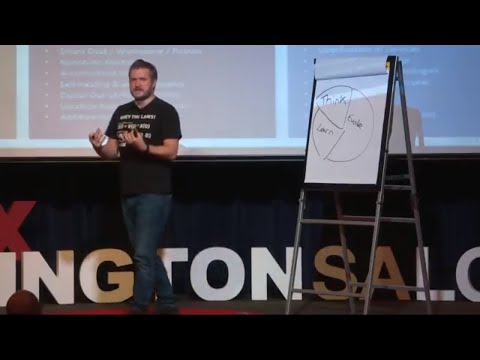
going to start off with the think aspect
this seems like a perfectly great
candidate for for AI and for those guys
who have had experience with the first
wave this was kind of programmable logic
this was people teaching the system to
be able to play say for instance chess
big blue and I think the other aspect
which she’ll have probably heard quite a
lot also in this kind of innovation and
technology area is the learning aspect
and this seemed like a fantastic
opportunity to apply some of that
machine learning neural nets
applying huge amounts of data to look at
patterns make predictions predictions
around what could possibly happen so
we’ve just found two perfect candidates
to take some of the heavy lifting of the
design and the learning aspects of both
ends of that development cycle where do
we come in well I think we come into
this area here where we have to evolve
the the logic this could be put models
this could be data this could be
creating stuff what we’re very good at
but I’m gonna actually be talking to you
at the end about how we play a part in
this new future and that we shouldn’t be
worried about the fact that robots are
going to take 50% of our jobs as Oxford
University mentioned but actually more
around the opportunity for us to start
will learn some of these great digital
skills that are helpers go through now I
might have mentioned already that my
role day to day is helping and traveling
around the world talking as a digital
therapist so some of the technology
behind here is things that I work with
on a daily basis and
think is incredibly exciting I’ve had
the pleasure of being able to do work
across the globe for things like smart
city projects I did I helped with the a
Copenhagen smart city project to help
them become carbon neutral by 2020
I had the pleasure of going over to
Brisbane in Australia and their new
super campus biggest health campus on
the planet you know in a new virtual
city that’s going to then become a huge
metropolis called
Springfield I also had the opportunity
to go over and work on some of
predictive crime technology across
Washington DC State which is one of the
reasons that’s brought me back over here
but also for GCHQ in the UK and some
other estate establishments across the
globe
predicting when crimes going to happen
so this is taking huge amounts of data
applying algorithms and machine learning
to and then video analytics to kind of
say well actually these people are
loitering or they are maybe they stopped
in the car or they’re seeing some kind
of pattern or they’re looking over in a
restricted area we’re detecting that
area and actually bill to understand
historical information to predict where
the best location for emergency services
and police you know this is a technology
that’s already here today it does very
much sound like Minority Report and as
things grow and these IOT these new
technologies come through and
cryptocurrency and blockchain it seems
like the opportunities are endless but
how do we apply this this new technology
and part of what I’m trying to say with
this this particular session is that I
don’t believe it is a revolution I
actually think it’s more of an evolution
and this it’s harmonizing with the
technologies that are available today
and understanding ourselves and our
digital blueprint so that could be our
DNA what makes us unique and understand
how and what we have to give and what
skills and what opportunities we have
that can move us into different areas
and at the end i’m going to actually
show a slide what came up quite recently
around where they predict that most of
the jobs will disappear and it’s quite
interesting to see
because as you’d expect some of the more
painful industries such as legal will
that will be a prime candidate for this
kind of stuff so part of it is I don’t
think we have to fear this I actually
think we need to embrace this kind of
technology and it may seem like this
technology that’s going on behind me is
something that’s set in the future and
can no way possibly be real but you know
I have I’ve had opportunities to do
things like car to X so this is the
ability for cars to talk to
infrastructure infrastructure to X which
is the is traffic systems talking to
bits smart buildings to car parks to
smart toll roads connecting all that
info information becomes a massive
opportunity so this is whole smart city
data exchanges where people can put
information to share information to make
their city a better place you’ll have
heard of things like the new autonomous
watch which you can get an autonomous
vehicle vehicle to come and pick you up
you know part of it is these
technologies here I was actually in on
the in Singapore on that exact same
building and the technology that the
Singapore government are using is
unbelievable they’re really embracing
their five-year plan or that 2020 plan
of what the city of the future should
look like I think we all have a part to
play in this new digital you know life
and become a digital citizen which
doesn’t mean that we have to be based by
location we know that took most of 60%
of the population are going to live in
those big super cities you know we need
to start preparing for how do we
actually work and live in these kind of
environments so I’m extremely excited
about this and I think you’ve got to ask
yourself now is you know do you think
this your jobs at threat or do you think
this is your opportunity to understand
and become a digital native in
comparison to being digitally disengaged
or even you know frightened of what
potentially could happen if you start
moving in a direction that could
potentially mean that that repetition
that you do that digital
grind which takes so much of your time
every day checking phone making sure
there is your notifications responding
to email all that will go my prediction
is that by 2020 there’ll be no more apps
software is dead but I don’t think the
software ever was alive in the first
place it’s not self-aware it doesn’t
learn and the technology that’s now on
these devices you has now actually got
machine learning built into these
devices so we need to make our
experience because we’re unique not just
everyone in this entire or to using the
same applications in the same way I
think our digital experiences are unique
and that’s why we have a place in this
future and at the same time you may be
looking at this future thinking how on
earth am I going to interact with it all
this new flood of information all these
endpoints or that I’m going to have to
interaction interact with traffic
management systems that are telling me
not to crowd across the road you’ve got
people interactions where you’re
building relationships with people maybe
digitally and never physically you know
these are new changes in our the whole
the way that we interact with technology
now do we fear this or do we see it for
what it is is that actually it is that
evolution and it’s the next iteration
where we’re actually going to become
more involved we’re going to get things
are going to be better for us I remember
being in in in Japan and sitting there
waiting for the tube and you could scan
what you wanted to buy from the shops
there was no shop there was no store it
was just a screen but by the time you
got to your own location they delivered
the fresh produce so there was no
expensive retail outlet you know you
didn’t have to go out of your way to get
that you could do that on your journey
back multi reality AR VR is going to be
this opportunity to actually not have to
do some of those painful things that eat
into our time so like I said I’m going
to go back from two to the last slider
and I’m going to say you know where do
you find yourself in this new future do
you think you’re going to be
these people that potentially going to
be replaceable or are you gonna take it
on yourself to become a digital pioneer
thank you
[Applause]
Please follow and like us: