
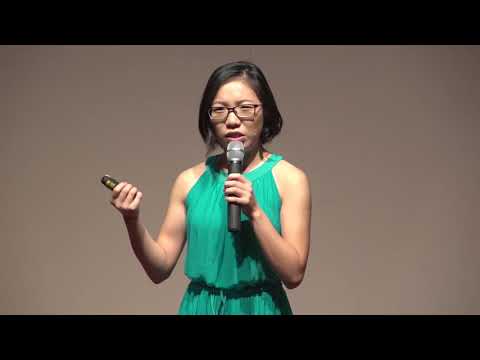
hi everyone so as Angela said I’m
watching lung and if you don’t know me I
am from chaton College this school and
the thing that I want to talk about
today is something that has really been
pressing on my mind lately it’s really
been a prominent concern for me and
hopefully you in this day and age and
I’m sure that once I mentioned the topic
your little brains will all light up
with your own individual opinions so
what I wanted to talk about today was
the fear of or harsh rejection of
different minorities and social
communities in our society and how we
could accept and tolerate them in the
future
so after this talk I hope that we could
stride into the future stocked up with a
real sense of unification and tolerance
so I’m not sure if it’s just me getting
older and older and wiser and wiser and
realizing how discrimination can come
into play in society or is it the fact
that it’s actually getting more
prominent in our modern society this I
don’t know but I assume that it may be
getting more prominent due to recent
events um I’m sure that you guys have
all realized that the last presidential
u.s. u.s. presidential campaign has been
a heck of a roller coaster for not only
people in the United States but also
spectators watching in other countries
so I’m sure you’ve all heard that in his
early days of being in office he has he
one of his first moves was to ban people
coming into the u.s. from a
predominantly Muslim countries so this
not only caused problems in airport or
immigration or rights but also to me it
really demonstrated that deep rooted
problem that not only Trump but the
capability in all of us to have a sense
of prejudice
so um up here on the screen you can see
um trump travel ban court questions if
it is anti-muslim so that was what I was
talking about before but I don’t think
that trumps um discrimination or a sense
of that us-versus-them mentality is
isolated to the Islamic community alone
I think that it’s also prominent with
his views towards other communities as
you can see through these other articles
so here it says report Trump preparing
to license to discriminate order and the
third one says draft order exposes
Trump’s plan to license anti-lgbt
discrimination so to me this really
shows how we all have the capability to
be prejudiced and to discriminate and
what I wanted to focus on today was how
we could use these certain psychological
theories to really manipulate that and
see how we can hear our minds towards a
more accepting attitude so in this
picture I would like you to raise your
hand the minute you notice that
something is different
all right that’s pretty quick and can
you do it again for this slide
all right faster than I expected but
what I wanted to demonstrate through
this quick activity was the fact that
because an object is different in color
or shape or size you your eyes will
immediately gravitate towards that
position because it really grabs your
attention so that’s what I wanted to
show through this and now I want to do
an activity for you guys we’re on the
next slide that flashes up on the screen
I would like you to just follow the
instructions
all right yeah you guys did that really
well that was actually also faster than
I expected but basically when I wanted
to demonstrate through that is how we
could fall into certain patterns of
thinking whether or not it is from a
position of authority or not so for
example this could be a position of
authority telling you to do something or
it could be a certain trend of thinking
that’s brewing from society itself and
maybe it can come out of that but
regardless of where it comes from I just
wanted to show how people could conform
to just what other people around them
were doing so this could result in on
certain paradigm shifts or trends in
thinking which could also contribute to
how we discriminate against other people
so the psychological theory that one of
them that I would like to focus on today
are the gestalt laws and basically these
are a set of rules a set of perceptual
rules that help us categorize our visual
stimuli so when you look around it’s
very chaotic there are all kinds of
shapes and colors and sizes all around
you and these rules are what our brain
uses to be able to tell objects apart
and turn chaos into order so that is
what I wanted to focus on and I will use
these rules to try and show how we
categorize humans instead of
categorizing visual shapes so the first
rule that I would like to take a look at
is continuity and here you see a series
of dots right but you may also see two
lines this is because we want certain
shapes and patterns to be in a
predictable pattern because we feel that
there is an order and there is no chaos
and there’s no diversity you know what I
mean
so that is the law of continuity the
next law is the law of proximity and
this is where in figure a you may see a
square but in Figure B you might see a
series of columns yeah so again it’s
just a series of dots but because in
column in figure B some of the dots are
closer to each other we tend to
associate those things together when
they’re close to each other
so this is how we can start to
categorize things and again make sense
of the chaos so the next rule is the
rule of closure and um here is where we
seem to see a shape but it’s not really
there because for example with the
figure over here you may see a triangle
but in reality there is no triangle um
instead there is a series of pac-man
looking things and on this side you see
a panda which is the WWF logo but there
is no Panda this is because our brain
likes to fill in the gaps so that we can
make sense of it so that we can
understand it and so that the chaos is
no longer there so this is how we can
try and fill in the gaps and how our
brain manipulates our visual stimuli to
make it make sense
all right so the next one is similarity
and this is where things that have
similar characteristics we tend to group
together and assume that they are
associated with each other so here again
is just a series of dots and squares but
you might also perceive vertical lines
going downwards this is because um those
vertical lines are those circles which
are which look the same as each other
and the squares that look the same as
each other
and the last rule is figure-ground now
this is a very famous optical illusion
I’m sure you’ve all seen it before but
the reason why it works is because we
cannot tell what is the figure and what
is the ground so the figure is usually
smaller and more symmetrical and more
complex than the ground and the ground
would be bigger and less complex and
less symmetrical than the figure so this
is how we can perceive depth for example
I can tell my hand is apart from you
guys in the audience I can tell that a
flower is different from a hill and this
is how we can tell what we’re supposed
to be focusing on and what our attention
immediately draws to
so another theory that I would like to
link in with this another psychological
theory is the social identity theory
this is where um we have a sense of
identity by having group memberships
what I mean by group memberships is the
fact that I may be a student and I’m a
member of the school I may be a member
of my family as a daughter and I may be
a member of my friendship group as a
friend so as you can see I start to form
different identities it’s as if there
are three different voicings because I
act differently I talk differently I
dress differently in all of these three
categories so you start to form
different identities so because we’ve
got on the sense of identity which is
dictated by our group memberships we
start to form this thing called
in-groups and out-groups and an in-group
is basically your own group and an out
group is whoever’s outside so here we
start to draw the line around ourselves
saying you are different from me you
don’t belong to my group and this is
what protects our sense of self-esteem
so that we feel a sense of belonging to
a certain group so as you can see this
kind of develops that us-versus-them
mentality that can start to lead to
prejudice and separation
so as you can see there are a couple
names up on the board and I don’t know
if you know these people are not most of
them have been to shot in college and
these are people who I would consider my
close friends now recently um I’ve begun
to realize a very very strange
phenomenon in my life and I’m not sure
if it’s supposed to worry me or if it’s
just quite interesting so they all have
a common characteristic that I realized
and here it is so if you don’t know our
school is split into four houses and we
use these four houses to kind of compete
against each other and to try and get
house points again house cup at the end
and so I found out that all my close
friends are in my house Griffin which
was quite strange to me and I began to
realize is this due to convenience the
fact that oh they’re just in my class or
we go to the same activities but on the
other hand some people haven’t been at
shot in college for a number of years
and so that was strange to me too so I
wanted to try and see whether this was
due to convenience or was it due to
something else maybe something else
within me that I didn’t know about so I
wanted to blow this up onto a much
larger scale that’s probably more
applicable to Hong Kong and you guys
which is local Hong Kong people’s
attitude towards people coming down from
mainland China so in the first article
it says mainland Chinese students face
discrimination in Hong Kong so quite
straightforward but in the article it
details a study where they took focus
groups of fifteen mainland students from
four universities and in these focus
groups they kind of talked about their
experience as a mainland student who was
studying in Hong Kong and all of them
reported discrimination so for example
one of the girls um who was studying in
Hong Kong as a mainland student had her
mom come down from China and since her
mum doesn’t speak Cantonese she speaks
Bhutan quoi they conversed in Bhutan
quoi and when the girl turned to a
shopkeeper and started to be speaking to
the shopkeeper in Bhutan quoi the
shopkeeper just turned around and
started walking away
so this sense of discrimination is
prominent in Hong Kong but on the other
hand you have the second article which
says xenophobia in Hong Kong we are far
from it thankfully and in this study it
actually says that 26.5% of mainland
students and only 26.5% of mainland
students feel discriminate feel a sense
of discrimination or have been
discriminated in Hong Kong so what this
is basically saying is that in the
article and I quote this it says it
suggests that Hong Kong is a true
paradise for immigrants compared to
Europe and North America so that was
quite interesting to me how in this
whole mess and chaos of different
opinions and how we categorize people
these kinds of different opinions can
occur even if they’re completely
opposing one another and in the last one
it says one country two identities Hong
Kong navigates an uncertain future and
in this article it was quite interesting
because this was talking about how when
people when local Hong Kong people
introduce themselves they say oh I’m
from Hong Kong they never say I’m from
China and if they did say I’m from China
they would never say I’m from mainland
China so that was kind of prominent to
me because it was drawing that line
again that circle that us-versus-them
mentality where some people think that
some people have really established that
line where we are not a part of you and
you have nothing to do with us so I
would like to go through how you could
apply the Gestalt laws to the
relationship between mainland Chinese
students mainland Chinese people in
general and Hong Kong and local Hong
Kong people and check out their
interaction through these Gestalt laws
so with figure ground as I said the
figure is usually a lot smaller than the
ground right so in this whole sea of
Hong Kong people mainland Chinese people
are minority well there’s just less of
them since we are in Hong Kong so since
there are less of them imagine you’re in
a field and you’ve got lots and lots of
Hong Kong people but only a small
portion of mainland Chinese people now
because it’s smaller than the ground
would immediately point our eyes to that
position and once we grab our tent once
that kind of group has grabbed our
attention we can start to say you’re
obviously different from us so that’s
one of the ways in which we can
categorize humans and the next one
proximity usually when you’re coming
down from a different place maybe for
recreational reasons in Hong Kong you
would bring family and friends
so when imagine you’re in a shopping
mall and you see these groups of
mainland Chinese people and obviously
they’re standing closer together because
they know each other whereas two Hong
Kong people who are complete strangers
would not stand as close to each other
because they they don’t know each other
so this was really interesting because
because mainland Chinese people would
stand closer together what I thought was
that our eyes would directly shoot their
position because there we assumed that
they’re associated with each other and
that’s how the law of proximity could
work in categorizing humans
now onto similarity now because mainland
Chinese people are coming down from a
different place obviously you are going
to take a suitcase with you so local
Hong Kong people have built up the
stereotype that oh oh mainland Chinese
people are gonna bring suitcases with
them or Oh when when they when they’re
off on tourist groups sometimes they
would have a flag to identify that
they’re tourists or they would have like
those little stickers to identify that
they are indeed tourists from mainland
China and with these visual
characteristics with these similar
characteristics we can start to
associate them with a certain group
creating a stereotype and because of
this sense of similarity where their
characteristics can be classified
together we can start to group them
together and again have that
us-versus-them mentality so um
throughout this presentation I really
hope that I’ve shown you how we can use
these psychological theories to
categorize not only visual stimuli but
also categorize humans which might be
quite a strange realization but when I
figured this out I just thought oh I
have to share this so I hope that
together we can start into the future
with a sense of tolerance acceptance and
open eyes thank you
[Applause]
watching lung and if you don’t know me I
am from chaton College this school and
the thing that I want to talk about
today is something that has really been
pressing on my mind lately it’s really
been a prominent concern for me and
hopefully you in this day and age and
I’m sure that once I mentioned the topic
your little brains will all light up
with your own individual opinions so
what I wanted to talk about today was
the fear of or harsh rejection of
different minorities and social
communities in our society and how we
could accept and tolerate them in the
future
so after this talk I hope that we could
stride into the future stocked up with a
real sense of unification and tolerance
so I’m not sure if it’s just me getting
older and older and wiser and wiser and
realizing how discrimination can come
into play in society or is it the fact
that it’s actually getting more
prominent in our modern society this I
don’t know but I assume that it may be
getting more prominent due to recent
events um I’m sure that you guys have
all realized that the last presidential
u.s. u.s. presidential campaign has been
a heck of a roller coaster for not only
people in the United States but also
spectators watching in other countries
so I’m sure you’ve all heard that in his
early days of being in office he has he
one of his first moves was to ban people
coming into the u.s. from a
predominantly Muslim countries so this
not only caused problems in airport or
immigration or rights but also to me it
really demonstrated that deep rooted
problem that not only Trump but the
capability in all of us to have a sense
of prejudice
so um up here on the screen you can see
um trump travel ban court questions if
it is anti-muslim so that was what I was
talking about before but I don’t think
that trumps um discrimination or a sense
of that us-versus-them mentality is
isolated to the Islamic community alone
I think that it’s also prominent with
his views towards other communities as
you can see through these other articles
so here it says report Trump preparing
to license to discriminate order and the
third one says draft order exposes
Trump’s plan to license anti-lgbt
discrimination so to me this really
shows how we all have the capability to
be prejudiced and to discriminate and
what I wanted to focus on today was how
we could use these certain psychological
theories to really manipulate that and
see how we can hear our minds towards a
more accepting attitude so in this
picture I would like you to raise your
hand the minute you notice that
something is different
all right that’s pretty quick and can
you do it again for this slide
all right faster than I expected but
what I wanted to demonstrate through
this quick activity was the fact that
because an object is different in color
or shape or size you your eyes will
immediately gravitate towards that
position because it really grabs your
attention so that’s what I wanted to
show through this and now I want to do
an activity for you guys we’re on the
next slide that flashes up on the screen
I would like you to just follow the
instructions
all right yeah you guys did that really
well that was actually also faster than
I expected but basically when I wanted
to demonstrate through that is how we
could fall into certain patterns of
thinking whether or not it is from a
position of authority or not so for
example this could be a position of
authority telling you to do something or
it could be a certain trend of thinking
that’s brewing from society itself and
maybe it can come out of that but
regardless of where it comes from I just
wanted to show how people could conform
to just what other people around them
were doing so this could result in on
certain paradigm shifts or trends in
thinking which could also contribute to
how we discriminate against other people
so the psychological theory that one of
them that I would like to focus on today
are the gestalt laws and basically these
are a set of rules a set of perceptual
rules that help us categorize our visual
stimuli so when you look around it’s
very chaotic there are all kinds of
shapes and colors and sizes all around
you and these rules are what our brain
uses to be able to tell objects apart
and turn chaos into order so that is
what I wanted to focus on and I will use
these rules to try and show how we
categorize humans instead of
categorizing visual shapes so the first
rule that I would like to take a look at
is continuity and here you see a series
of dots right but you may also see two
lines this is because we want certain
shapes and patterns to be in a
predictable pattern because we feel that
there is an order and there is no chaos
and there’s no diversity you know what I
mean
so that is the law of continuity the
next law is the law of proximity and
this is where in figure a you may see a
square but in Figure B you might see a
series of columns yeah so again it’s
just a series of dots but because in
column in figure B some of the dots are
closer to each other we tend to
associate those things together when
they’re close to each other
so this is how we can start to
categorize things and again make sense
of the chaos so the next rule is the
rule of closure and um here is where we
seem to see a shape but it’s not really
there because for example with the
figure over here you may see a triangle
but in reality there is no triangle um
instead there is a series of pac-man
looking things and on this side you see
a panda which is the WWF logo but there
is no Panda this is because our brain
likes to fill in the gaps so that we can
make sense of it so that we can
understand it and so that the chaos is
no longer there so this is how we can
try and fill in the gaps and how our
brain manipulates our visual stimuli to
make it make sense
all right so the next one is similarity
and this is where things that have
similar characteristics we tend to group
together and assume that they are
associated with each other so here again
is just a series of dots and squares but
you might also perceive vertical lines
going downwards this is because um those
vertical lines are those circles which
are which look the same as each other
and the squares that look the same as
each other
and the last rule is figure-ground now
this is a very famous optical illusion
I’m sure you’ve all seen it before but
the reason why it works is because we
cannot tell what is the figure and what
is the ground so the figure is usually
smaller and more symmetrical and more
complex than the ground and the ground
would be bigger and less complex and
less symmetrical than the figure so this
is how we can perceive depth for example
I can tell my hand is apart from you
guys in the audience I can tell that a
flower is different from a hill and this
is how we can tell what we’re supposed
to be focusing on and what our attention
immediately draws to
so another theory that I would like to
link in with this another psychological
theory is the social identity theory
this is where um we have a sense of
identity by having group memberships
what I mean by group memberships is the
fact that I may be a student and I’m a
member of the school I may be a member
of my family as a daughter and I may be
a member of my friendship group as a
friend so as you can see I start to form
different identities it’s as if there
are three different voicings because I
act differently I talk differently I
dress differently in all of these three
categories so you start to form
different identities so because we’ve
got on the sense of identity which is
dictated by our group memberships we
start to form this thing called
in-groups and out-groups and an in-group
is basically your own group and an out
group is whoever’s outside so here we
start to draw the line around ourselves
saying you are different from me you
don’t belong to my group and this is
what protects our sense of self-esteem
so that we feel a sense of belonging to
a certain group so as you can see this
kind of develops that us-versus-them
mentality that can start to lead to
prejudice and separation
so as you can see there are a couple
names up on the board and I don’t know
if you know these people are not most of
them have been to shot in college and
these are people who I would consider my
close friends now recently um I’ve begun
to realize a very very strange
phenomenon in my life and I’m not sure
if it’s supposed to worry me or if it’s
just quite interesting so they all have
a common characteristic that I realized
and here it is so if you don’t know our
school is split into four houses and we
use these four houses to kind of compete
against each other and to try and get
house points again house cup at the end
and so I found out that all my close
friends are in my house Griffin which
was quite strange to me and I began to
realize is this due to convenience the
fact that oh they’re just in my class or
we go to the same activities but on the
other hand some people haven’t been at
shot in college for a number of years
and so that was strange to me too so I
wanted to try and see whether this was
due to convenience or was it due to
something else maybe something else
within me that I didn’t know about so I
wanted to blow this up onto a much
larger scale that’s probably more
applicable to Hong Kong and you guys
which is local Hong Kong people’s
attitude towards people coming down from
mainland China so in the first article
it says mainland Chinese students face
discrimination in Hong Kong so quite
straightforward but in the article it
details a study where they took focus
groups of fifteen mainland students from
four universities and in these focus
groups they kind of talked about their
experience as a mainland student who was
studying in Hong Kong and all of them
reported discrimination so for example
one of the girls um who was studying in
Hong Kong as a mainland student had her
mom come down from China and since her
mum doesn’t speak Cantonese she speaks
Bhutan quoi they conversed in Bhutan
quoi and when the girl turned to a
shopkeeper and started to be speaking to
the shopkeeper in Bhutan quoi the
shopkeeper just turned around and
started walking away
so this sense of discrimination is
prominent in Hong Kong but on the other
hand you have the second article which
says xenophobia in Hong Kong we are far
from it thankfully and in this study it
actually says that 26.5% of mainland
students and only 26.5% of mainland
students feel discriminate feel a sense
of discrimination or have been
discriminated in Hong Kong so what this
is basically saying is that in the
article and I quote this it says it
suggests that Hong Kong is a true
paradise for immigrants compared to
Europe and North America so that was
quite interesting to me how in this
whole mess and chaos of different
opinions and how we categorize people
these kinds of different opinions can
occur even if they’re completely
opposing one another and in the last one
it says one country two identities Hong
Kong navigates an uncertain future and
in this article it was quite interesting
because this was talking about how when
people when local Hong Kong people
introduce themselves they say oh I’m
from Hong Kong they never say I’m from
China and if they did say I’m from China
they would never say I’m from mainland
China so that was kind of prominent to
me because it was drawing that line
again that circle that us-versus-them
mentality where some people think that
some people have really established that
line where we are not a part of you and
you have nothing to do with us so I
would like to go through how you could
apply the Gestalt laws to the
relationship between mainland Chinese
students mainland Chinese people in
general and Hong Kong and local Hong
Kong people and check out their
interaction through these Gestalt laws
so with figure ground as I said the
figure is usually a lot smaller than the
ground right so in this whole sea of
Hong Kong people mainland Chinese people
are minority well there’s just less of
them since we are in Hong Kong so since
there are less of them imagine you’re in
a field and you’ve got lots and lots of
Hong Kong people but only a small
portion of mainland Chinese people now
because it’s smaller than the ground
would immediately point our eyes to that
position and once we grab our tent once
that kind of group has grabbed our
attention we can start to say you’re
obviously different from us so that’s
one of the ways in which we can
categorize humans and the next one
proximity usually when you’re coming
down from a different place maybe for
recreational reasons in Hong Kong you
would bring family and friends
so when imagine you’re in a shopping
mall and you see these groups of
mainland Chinese people and obviously
they’re standing closer together because
they know each other whereas two Hong
Kong people who are complete strangers
would not stand as close to each other
because they they don’t know each other
so this was really interesting because
because mainland Chinese people would
stand closer together what I thought was
that our eyes would directly shoot their
position because there we assumed that
they’re associated with each other and
that’s how the law of proximity could
work in categorizing humans
now onto similarity now because mainland
Chinese people are coming down from a
different place obviously you are going
to take a suitcase with you so local
Hong Kong people have built up the
stereotype that oh oh mainland Chinese
people are gonna bring suitcases with
them or Oh when when they when they’re
off on tourist groups sometimes they
would have a flag to identify that
they’re tourists or they would have like
those little stickers to identify that
they are indeed tourists from mainland
China and with these visual
characteristics with these similar
characteristics we can start to
associate them with a certain group
creating a stereotype and because of
this sense of similarity where their
characteristics can be classified
together we can start to group them
together and again have that
us-versus-them mentality so um
throughout this presentation I really
hope that I’ve shown you how we can use
these psychological theories to
categorize not only visual stimuli but
also categorize humans which might be
quite a strange realization but when I
figured this out I just thought oh I
have to share this so I hope that
together we can start into the future
with a sense of tolerance acceptance and
open eyes thank you
[Applause]
Please follow and like us: