
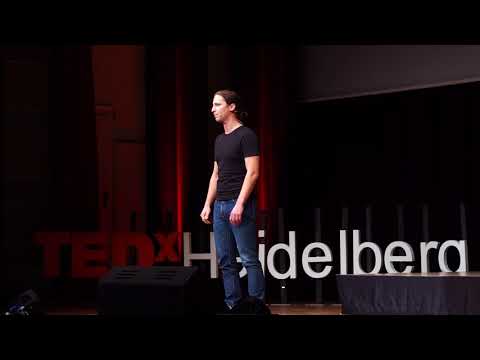
thank you I’d like to welcome you and
thank you that you’re here today and
especially because I think you are here
by choice at least I hope so that nobody
forced you to be here today okay if
you’re here against your will please
point your right index finger at your
nose nobody okay
so you hid by choice and my question is
why why are you here and I I guess I
hope you are here out of curiosity
curiosity if you think about it is what
makes such an event possible is what
brings you here and makes you hopefully
actively listening right now to me and
if you think about it a little bit more
curiosity is not just the reason we all
are here today it’s also the reason or
the driving force behind basically every
scientific or technological discovery
the human race has ever made okay and
coincidence place also a role but
curiosity is a very important factor in
this I mean from the day our ancestors
discovered how to make fire to the first
man landing on the moon to the fact that
today I can send not 140 but 280
character messages to all my Twitter
followers around the globe in an instant
all made possible by curiosity and
that’s what I want to talk about today
and curiosity is not only important for
the development of mankind it’s also
important for the development of
each and every human individual I don’t
really remember but I imagine that my
first years as a child were basically
driven by curiosity from I mean from the
day you open your eyes the world around
you wants to be discovered and is full
of secrets and mysteries and things you
want to learn about and be able to do
and understand and that’s basically how
children learn how they learn to walk
how they learn to talk how they learn to
use a spoon how they they learn to tie
their shoelaces ride a bike whatever
children learn they learn out of
curiosity that’s their main driver
because nobody forces them to do
anything it’s all about curiosity until
you’re old enough to go to school and
then everything changes from a learning
perspective you enter a different world
because from that moment on nobody is
really interested in what you are
curious about anymore because there are
experts who came up with the curriculum
and teachers who look at the curriculum
to know what to teach you and for every
hour of every day of your whole school
career there is someone telling you what
to learn and when to learn it and it’s
not about curiosity anymore
and that’s a problem because if it’s not
about curiosity what is it about what’s
the reason for us to learn things
well we then need a carrot and a stick
or in school terms we need tests and
grades and of course your teachers will
tell you and told me that you’re not
just learning for school because in your
future you will truly be able to put
this knowledge to good use because as we
all know non scholar said we tear this
chemos but really do we
I mean I want you to take a moment and
try to remember the three most important
aspects of the last year’s of math class
you had in school just think about it
there is most of the time nothing left
and there were researchers doing studies
about that and they asked students they
tested students two years after they’ve
received their a level or Abitur or high
school diploma they tested how much of
that knowledge they had to gather in
order to get their diploma was still
there and the answer was devastating it
was between 20 and 25 percent think
about that everything else is just gone
because the reason to remember it isn’t
there anymore
because you’ve learned it not because
you were curious about it but because
you wanted to pass a test and now this
test is gone it’s not there anymore
though so the reason to remember these
things is also gone and your brain is a
very efficient organ just gets rid of it
you learned it not just in school you
learned it for school so as an
interesting sidenote Seneca 2,000 years
ago he didn’t write about non scoreless
a treated Eskimos it was exactly the
opposite he wrote about non Vitesse that
score lady schemas and was in his way of
criticizing the philosophical schools of
his time so you see the problem it’s
pretty old so what can we do about it
and you might have guessed already that
the answer at least for me has something
to do with curiosity and I would like to
introduce you to this idea of curiosity
an education an education where the
driving force behind every learning
experience is curiosity
well how would that look how could that
be possible if you try to to realize
such a solution there are some
fundamental differences to the way we
teach today or we create schools and
learning environments today and the
first and most important difference is
it’s all student-centered everything has
to be centered around the student so not
like today where you have experts and
curricula and this idea of telling
students when to learn what that doesn’t
work with the curiosity driven
educational approach because it’s just
not working that way that students are
curious about math every Monday morning
at 10 a.m. for exactly 45 minutes and
then within a five minute break
switch their curiosity towards biology
that’s not the way curiosity works so
you have to get rid of this curriculum
and have to focus on each and every
student and ask them what are you
curious about what are you interested in
and then you have to help them create a
learning project out of this question
this interest they have and then they
start learning by themselves and then a
lot of interesting things happen because
as these students are learning
self-directed and curious about the
topic they chose the teachers stand next
to it and say what is our job now
because we are not there to actually
teach something they have to come up
with a new role for themselves with a
new responsibility and this
responsibility for the teachers it’s
always thinking about how can I support
this learning experience of my students
how can i empower them or encourage them
to be curious how can I inspire their
curiosity and how can I make sure that
they have what it takes to take on this
responsibility for their own learning in
experience because this last step taking
on the responsibility for your own
learning experience that’s pretty hard
to do if you compare it with the normal
system in the normal educational system
you don’t have to make a lot of
decisions as a student everything is
basically presented to you the stuff you
have to learn the duration but the
timeframe in which you have to learn it
the way you have to apply it to solve
certain problems the way it is tested to
find out if you’ve actually learned it
everything is decided for you presented
to you and you have to just react to it
in an curiosity driven approach where
the student is the center of his own
learning journey they the students have
to make these decisions they have not
only to decide what am i curious about
what do I want to learn but also what is
my goal how can I describe it what is
the deadline for me and then they have
to learn to stick to their own deadlines
to take their own goals seriously to
choose their own learning resources all
of that is something students have to
learn as well and they learn a lot by
doing that so they are in this
environment not just learning about the
content the topic they chose but also
how to make all these decisions and take
on the responsibility for their own
experience and then learning happens but
of course if you are in an educational
institution you cannot just let learning
happen there you have to have some way
of
during learning outcome because in the
end you have to decide whether or not
someone gets a high school diploma or a
bachelor’s degree or someone else or
something else and that’s where you need
a clever solution that is not tests and
grades but gives you the chance to
document learning outcomes of your
students and that’s a competence
framework a competence framework is
basically a tool where you sit down and
you think about which competences are
the students focused on what areas
should they be learning things about and
it’s about knowledge it’s about skills
it’s about social skills and competences
it’s about personal competences
everything goes into this competence
framework and then students by defining
projects and goals can decide which
competences they want to evolve in which
where they want to gain new proficiency
levels in competences so you put all
these things together student-centered
approach curiosity driven learning
teachers that are mentors and supporters
and a competence framework and you have
everything you need to build a new kind
of learning institution a learning
institution like the one I am building
right now and again the approach is
curiosity driven learning and the
University
I’m founding right now we called it code
and code it’s not just my idea we were a
team of three it Oprah nurse coming up
with the concept of code code started
basically eight weeks ago with the first
88 students and what they’re doing right
now these students is exactly what I
described they are thinking about what
do I want to learn and then they create
project
out of these ideas and gather other
students who are interested in the same
topics and then they apply for different
roles in these project teams and by
picking a role they also decide what to
learn which competence to take on and
then they start learning and you can
stand next to them and you see them
learning and you have to don’t have to
apply pressure you don’t have to tell
them about tests and grades because
they’re learning out of curiosity for
the topics they chose themselves and our
professors of course we have professors
they are looking around and trying to
find out how to best support their
students on their individual learning
journey and of course we have a
competence framework describing the
different competences our students can
choose from and they have to connect the
projects with the competences so for
each project there are teams and in the
team’s there are different roles for
students and for each role there is a
competence or few competences connected
to this role so the students know when I
choose this role in a team I will be
working on these competences and in the
end after the project students and
professors together decide whether a
student has achieved a new proficiency
level in this field of competence and
that’s how they learn and that’s how we
document the learning and that gives
them the freedom to really sit down and
again and again ask themselves what am i
curious about what am i interested in
what should be the driving force behind
my learning and the result is amazing
it’s really inspiring to see these
students learn just because they want to
learn to see them present the results
and they’re really proud of what they’ve
done and what they accomplished as a
team and they organize it all by
themselves and they ask for input they
approach our professors and tell them
teach me something give me a hint give
me a good learning resource I want to
understand this concept I want to be
able to do that so there is teaching of
course but it always starts with the
curiosity of a student that’s the main
starting point for every learning that
happens at code and I wonder how would
our world look like if we would be able
to implement more of this curiosity
driven learning into our schools and
universities and our whole educational
system and I want you to think about
that as well because my vision is a
total new way of learning where students
children young men and women are really
fascinated by the way they be learning
thank you
[Applause]
Please follow and like us: