
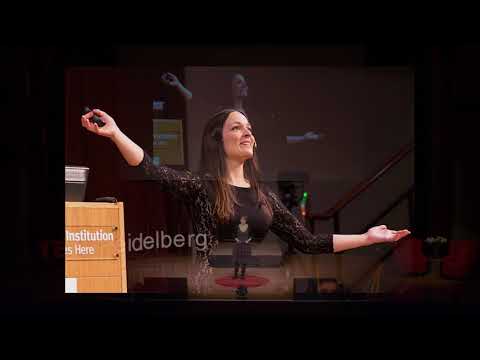
[Applause]
Wow crazy so there’s a Buddhist nun Pema
Chodron she’s an American lady and she
often speaks to large groups like this
and she has a talk she calls
unconditional confidence and she begins
that talk by comparing the beginning of
a talk to the situation of an artist
standing in front of her empty canvas or
a writer sitting in front of an empty
piece of paper the situations she says
is wide open
it’s just unknown even the artist the
writer or the speaker doesn’t really
know what’s going to happen next and
then a word happens and then another
word happens
and somehow the piece or the talk just
unfolds from there and it’s an
interesting situation we’re in you and I
when we come to see a talk in no other
situation do we have the focused
attention of so many people gathered
into one place as it is now between you
listening and me speaking even if we go
to see a theatrical performance or
musical performance there’s the added
elements of the instruments or the story
or the set things which take our
attention and make it more diffuse and
actors the way I see it when they’re
standing on a stage they’re not
interacting directly with people seeing
and being seen just for who they are in
the way that’s happening now and it does
not surprise me that the majority of
people feel nervous about being
in this spot here because it’s unusual
when do we stand and receive the focused
attention of so many people we might
well ask ourselves whether we can relax
and enjoy doing this thing and get our
message across in the way that we would
most enjoy you know with the most
elegance and width that we would like
but there is this sense of possibility
there is this possibility that if we
stay open and in connection in this
wide-open space that it might be
possible for us to have a truly
meaningful conversation it’s not
actually my first time standing on a
Heidelberg stage I know I have a British
accent but I studied in Heidelberg and I
was much cooler when I was younger and I
was in a band I played bass guitar I
wasn’t actually very good to be honest I
couldn’t read music and I kind of just
made it up as I went along but it was
good enough and we we played gigs in
this area one gig we played was at the
Karl’s tour bahnhof for those of you who
know that and I can remember standing on
the stage with my bass in my hand and
just freezing as I looked at the
audience and realized they were paying
attention to what we were doing up on
the stage it was just overwhelming
so I intelligently came up with a really
good strategy I played with the entire
gig like this my favorite gig was in
Mannheim where there wasn’t enough space
for the band to play in the main hall so
they put us in a room on our own heaven
I just I sat and play invisible to
everyone i sat and played and enjoyed
the music the thing that was a bit
strange about that was at the time I
considered myself to be a really
confident person I didn’t have shyness
as part of my self-identity at all I
thought I was out go
extrovert dynamic I can do this so what
I did with the experience of shyness was
I just denied it to myself I just didn’t
look I didn’t take it in I just
pretended that I wasn’t shy but when I
looked back at that time and in fact
when I look back over my whole life I
can see periods of anxiety that have
kind of just happened to me for various
reasons public speaking among them and
it was at that moment when I started to
admit to myself that I was actually
feeling nervousness in perhaps a
situation like this that I was able to
start looking for answers on how to
build actual confidence and I found some
I found some answers and when I found
them I just experienced the kind of a
natural motivation to want to share
those answers with people that might
also sometimes feel that the ground was
missing underneath their feet and that’s
the story of how I became a trainer and
a coach in confident and present public
speaking and I’d like to share a little
bit more with you about the things I’ve
learnt in that and to point out that
confidence is not something that we can
think our way into we don’t tell
ourselves be confident and it works but
what we can do is to develop more
sensitivity to the body to what we’re
feeling and when we have more
understanding of what’s taking place in
the body the ground begins to firm up
underneath our feet and we can feel more
solid and that’s true even if we are
feeling nervous so one of the main kind
of insights that I’ve had around this is
an understanding of the way the nervous
system works in particular the autonomic
nervous system so for those of you who
know that’s the sympathetic and the
parasympathetic branches of the nervous
system and commonly these are known as
fight and flight on the one hand and
what I’ll call rest and I
just on the other so you know the way it
is if we’re feeling that there’s a
threat in the environment something
which is scary or possibly even just by
imagining a potential threat we get
triggered into this fight-or-flight
response and then we get full of energy
we tense up we do all kinds of things
that will enable us to fight a potential
threat or possibly run away from it when
we’re in the rest and digest states then
we feel safe and we can do things like
eat sleep heal wounds process
information and relevant for our topic
today when the rest and digest state is
dominant in the system we can socially
engage and so there’s a term which a
researcher called Stephen Porges has
coined which is the social engagement
system and that is simply the way that
our body organizes around being in
connection with people when we feel safe
so I’d like to share a couple of
pictures with you to demonstrate these
things this is me when I was little and
you may be able to tell from my body
language here that I’m not entirely
happy so my shoulders are coming up my
neck and my back muscles are tensing
which is pushing my head forwards very
slightly and my fingers are curling like
this I’m old enough to think I should be
smiling at the camera so I’m really
doing my best but it’s tough and so we
kind of got this mixture of like so this
is would be what a demonstration of how
fight and flight is actually operating
physically in the body this on the other
hand was a photograph taken by my
beloved uncle Clive and I loved him I
loved hanging out with him I loved our
connection and so I felt very safe with
him and you can see my body soft my face
is relaxed and I’m socially engaged
I have the main parasympathetic resin
digest activity in the body and
therefore I’m able to enter into the
social engagement with my uncle seeing
him being seen by him and really
enjoying it this is an example of a
public speaker a professional speaker in
this case who seems to me to feel
incredibly comfortable on stage she’s
using the full range of her body
language she’s relaxing her face she’s
smiling she’s expressing herself and
most importantly I think she’s
expressing social engagement to such a
high degree because she’s clearly
enjoying being seen she’s kind of
soaking up for the attention of the
audience so the question becomes it can
be quite easy to get triggered into
fight and flight we’re human we respond
to things all the time consciously or
unconsciously that’s okay it’s normal we
can manage that but what matters is
being able to support ourselves to move
into social engagement so that we’re in
when we’re in situations like this we
can relax and connect so the one of the
main pathways that I’ve found for
supporting myself to enter into social
engagement is something that I learnt
with a training organization called
speaking circles in speaking circles
they train what’s called relational
presence and that simply means the
ability to stay present and in
relationship with the people with
sweetie that matters because often when
we see an audience of instinctive
response is to somehow find it too
distracting as me with the bass guitar
and to disconnect and so speakers will
often find anywhere to look except the
audience they’ll address the air the
heavens they may just address the front
row
or possibly they kind of just stare into
the middle distance and just kind of
address the audience as a group as a
whole but what relational presence does
which is different is it encourages a
connection between individuals so that
in this moment I’m seeing somebody and
I’m allowing them to see me and then I’m
moving on to the next person what
happens when we allow ourselves to
connect with individuals rather than
seeing a mass or avoiding is that we
support the message internally that
we’re safe because we can manage
one-to-one so we get that message I’m
safe and that supports us then to move
more into social engagement now that’s
all very well but sometimes when we look
at the people we’re speaking to they
look like this now these are classified
neutral expressions we don’t know what’s
really going on in these people’s face
minds and hearts but if we were nervous
especially then it would be very easy
for us to read in or project criticism
and judgment onto those faces that’s
when it’s easy sometimes we look into an
audience and the expression we see is
this it’s a cat we have no idea what
that cat is thinking and feeling it
might be feeling like this but the thing
that matters is that we need to
recognize we have this mechanism to
project just because the cat has a
certain expression a certain tilt of the
head a certain lowering of the eyelids
that’s something we interpret as
judgment or possibly anger and if that’s
what we see in the audience what will
happen each time is that we’ll get a
slight injection of fight and flight
that will make us feel slightly nervous
and it would only take one or two people
in the audience to look like this for us
to feel ah it’s not okay I’m not doing a
good job they don’t like it
I’m going to come back to that I wonder
if you’ve been able to guess what these
are
I don’t was that a yes what is it you
know the pictures are amazing so often
people think of ice cream bacteria in
fact they are the inside of golf balls
this is a piece by an artist called
James Friedman it’s called interior
design who would have known how
multicolored and vibrant and various
these interiors could be when we look at
the exterior we receive such little
information but what’s really going on
on the inside so the advice is when you
are addressing your audiences whether
that’s in a big event or whether you’re
just contributing in a meeting or you
may even simply be with friends at
dinner
don’t assume you know how people are
receiving you just because they have on
a particular expression
it’s much too easy to get it wrong
instead what’s wise is to bring a little
bit more trust but everything’s okay
bringing in a bit more trust can help
the nervous system just feel like we’re
good we’re good
so a couple of days ago I tried to go
swimming I went to the dumpster Hoff
swimming pool here in Heidelberg and it
was a bit strange because the ticket
machines had closed but the gate was
open so I kind of walked in and then
other people were walking in but what I
saw
every time somebody passed me by they
smiled at me really warmly and I thought
how friendly that’s lovely why are they
doing that and then I suddenly worked
out as I’d walked towards the pool that
actually it was a private club night not
open to the public so I turned around
left the building and everyone I passed
just smiled at me really warmly and then
it dawned
me they thought I was part of the club
they’d never seen me before but they
just assumed I was one of them and don’t
we have this natural capacity to bring
more trust and openness into situations
with other people as long as we feel
some kind of kinship but what would it
be like if we brought that trust and
openness into more of our communication
when the situation is perhaps more
challenging for example if you would be
standing on this stage now as I am with
you because I suspect that you didn’t
just come here tonight to hear new ideas
and be entertained although that may
also be true but there’s also something
very enjoyable about coming together
about building a community and about
having a sense of shared purpose and I
suspect that that sense of shared
purpose may be essential when we have a
sense of shared difficulty we need to
bring more trust and openness into our
communication because there is no doubt
that the challenges we’re facing whether
they’re individual or collective are
significant but if we can bring a bit
more trust into our communication and we
can allow ourselves to be seen for who
we actually are rather than the person
we think we should be we may be able to
find a bit more ground beneath our feet
so that we can step forwards and make
our contribution
[Applause]
Please follow and like us: