
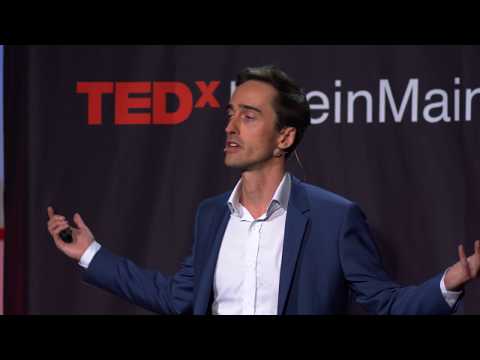
ladies and gentlemen good evening
pleasure to be with you tonight and I’m
gonna take you all on a journey across
an around planet ocean now my father
captain jacques-yves cousteau invented
scuba diving and Myriad’s of other
inventions to further his explorations
and to continue sharing with all of us
and with all of you perhaps in your
childhood images of another world now
this made him very conscious of the
damage that we are doing to the
environment and he dedicated his life to
conservation he inspired me to become a
diver and a conservationist and to seek
always new ways innovative ways of
protecting our planet of protecting that
pale blue dot for future generations for
several reasons as well that going
through the philosophy of conservation
but that would make another topic in
itself I believe so let’s go on this
journey the first stop on this journey
is Raja Ampat in Indonesia here there
are over a thousand species of fish over
a thousand islands and more than 97% of
the coral diversity in the world this is
the throbbing heart of the ocean when it
comes to diversity it’s a protected area
this area among others marine protected
areas are what conservation is
considered to be the last sanctuaries of
life on our planet because we are
reaching a point where everything else
that hasn’t been protected consciously
is being destroyed the next step on our
journey takes us to another of these
sanctuaries now if you can guess from
the image this is the Galapagos
the Galapagos Islands which I visited
last year to make a film about free
diving and breath-hold diving and
shedding the equipment of scuba and our
fears some animals in order to reconnect
with nature and to find what is that
missing link that we’ve lost so long ago
that disconnects us from nature and
creates all the global issues that we
see today let’s talk about free diving
well the microorganisms that are in the
surface layers of the ocean here in the
Galapagos but also everywhere else in
the world the plankton produces more
than half of the oxygen that we’re
breathing right now so I’d like to do a
little experiment with you if you don’t
mind I’d like to show you some imagery
of a free dive a breath-hold dive lasts
about 37 seconds and I’d like to ask you
if you feel confident in your skill to
hold your breath during the time of the
next video please don’t pass out here we
go
so this is free diving in the Galapagos
every time we put our face underwater
this is the kind of thing we would see
hundreds sometimes thousands of sharks
the apogee ghost is known to have the
highest biomass of sharks in the world I
don’t hear anything I guess that means
you’re all holding your breath I see a
lot of pale blue dots are you guys all
turning blue okay we’re almost done and
you can breathe four months after making
this film I’m not the one you saw but
the one about free diving which came out
actually this week the Ecuadorian
authorities intercepted a poaching
fishing vessel inside the Galapagos
marine protected area that had on board
and I apologize for the graphic image
but had on board over a thousand sharks
all finned
they are destined to produce shark fin
soup in Asia and the shark liver extract
is used in cosmetics and for food
supplements so when you come home
tonight please check your cosmetics for
squalene because most of the squalene
used today comes from shark liver so
let’s leave this bittersweet Galapagos
behind us and I hope you’ve had a sense
right now that conservation is both
effective and fragile doesn’t take much
to go from having the highest biomass of
sharks in the world to having nothing
but a plain Rock the next step in our
journey takes us to Greenland this is
the Greenland ice sheet it’s about two
and a half kilometers thick of ice
it holds the historical records and the
future of the ocean here at the east
grip research station a team of
international scientists is actively
researching how the climate has changed
by drilling course through the ice
understanding climate change and I’m
gonna share with you that their their
main messages that they shared with me
last year
the first main message from dr. Jim
white here is that we’ve already baked
into the ocean system by the energy
we’ve released through the burning of
fossil fuels
we’ve already baked in a 13 meter
sea-level rise even if we stopped
emitting co2 today the sea level would
rise by 13 meters but we don’t know how
long this will take and the ice records
although they show that these changes
can be very abrupt don’t have the
resolution to tell us on a scale of how
many years they happen in other words
brace yourselves because water is coming
your way so become a scuba diver today
is not a bad choice
oh sorry got a little ahead of myself
there we are going to the oops to the
next destination on our journey which is
Papua New Guinea staying on the topic of
climate change here in Papua New Guinea
a mysterious volcano a sunken volcano
releases pure co2 bubbles acidifying the
seawater at a seal at a pH level
expected for the end of this century and
a team of researchers from the French
Institute for development research have
a message of hope based on their
research there it seems that these
corals of Papua New Guinea were able to
adapt to acclimate in one lifetime to
the acid conditions not only is this a
message of hope for climate change
because it seems that these corals are
able to survive at least the acidity
component of it because obviously the
temperature is what’s really getting
into the corals but it also lifts a
corner of the veil and the very
mechanisms of evolution and how changes
can occur within one lifetime and that’s
something that to go back to Darwin
Darwin has anchored us through the
philosophy that came after his work has
anchored us in the belief that we cannot
change things in our lifetimes we’d have
to keep going as usual and maybe our
descendants and their descendants will
change something well I hope he was
wrong because and epigenetics seems to
show today that there are other pathways
of evolution but in any case we need to
change our role in nature today in order
to avoid these global issues the last
step of our journey takes us to Hawaii
where the World Conservation Congress
took place last year and of course I
couldn’t help myself that show you
sharks more sharks a lot of people are
afraid of sharks these beautiful
creatures but I’ll tell you what scares
me more than than sharks it’s what we’re
doing to the ocean
climate change overfishing and plastic
pollutions are devastating marine life
worldwide and specifically on plastic
pollutions today we know that a third of
commercially sold fish contained plastic
and about 80% and 90% noise 80% of tap
water sample tap water worldwide
contains micro plastic as well so this
pervasive problem of plastic is not
dissimilar to some kind of invisible oil
spill where the plastic we throw into
the environment breaks down into smaller
pieces that we then end up eating last
note on that topic of plastic pollution
today unfortunately if you take plastic
and you recycle it into textile the
first time you wash those clothes the
microfibers are being released into the
environment so the recycling process
today actually accelerates the uptake of
plastic into the natural environment
under its microscopic form but surely
these sharks these beautiful animals who
have been around for 400 million years
deserve better than extinction than
becoming a bowl of soup a face cream so
what can we do about these global issues
well conservationists really like the
tool of using marine protected areas
they really work these are areas that
you set aside you decide we’re not going
to destroy this place we’re gonna leave
it we’re not going to fish when I can
extract anything and we can derive some
economic activity from it from tourism
and from the benefit brought by the
added fish inside the protected area but
as you’ve seen this cherished tool like
conservationists is very fragile the
greed of one ship captain will come in
and poach everything that’s in the air
protected area pollutions be there of
air or water or trans boundary because
they’re trans boundary by nature cannot
be stopped at the borders of a marine
protected area hopefully this is
something
the remote sensing can help us with the
enforcement of rain protected areas but
also the monitoring of pollutions in the
ocean now I’ve been trying to find ways
to involve scuba divers in conservation
and research for the past eight years
and this is one of the most recent
projects which is to try to use the
divers to collect temperature data from
the ocean a missing piece of the data
puzzle today even though we have the
bulk temperatures from the high seas we
don’t have the granularity at the
coastal level where most of life is of
course the sea surface temperatures
provide some level of information but we
don’t know how the thermal clients
behave we don’t know how the energy
stores and releases energy in these
areas and how that affects the weather
the climate and biodiversity so together
with a project partner Danny Europe
we’re putting together a first
deployment phase for this to deploy high
precision temperature instruments
through the diving community to help
them be part of the data collection
strategy and this is the kind of product
that we’d like to get out of this
research which is three-dimensional
real-time temperature of the ocean four
dimensional I should I’d say actually so
that’s it I hope you enjoyed this
journey and we need to know more about
the ocean we know so little about it and
we need to use that information to
protect it better the Copernicus program
and the Sentinel satellites are
collecting information about the ocean
and hopefully this information can help
to study and to protect the ocean for
future generations but also for life
because we tend to see conservation as
it being for us why do we conserve
nature is it just for our benefit what
about just conserving nature because
it’s there because it’s beautiful and
because it’s diverse
thank you very much for your attention
anyway was a pleasure of speaking here
with you tonight
[Applause]
Please follow and like us: