
[Applause]
[Music]
[Applause]
[Music]
[Music]
hi guys
I’ll start with a brief introduction of
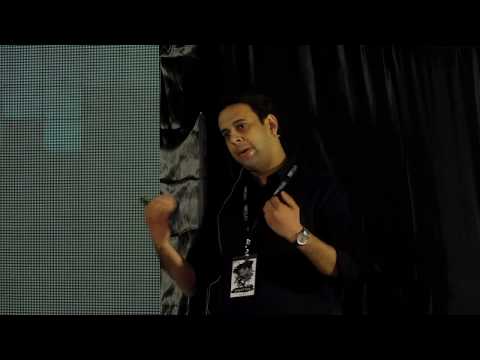
myself I am sunset Jen I am a computer
engineer by degree and I work for a tech
startup of my own but today I’m here to
talk about what I call my second startup
which is the Robin Hood army now what is
the Robin Hood army so what we do is
extremely simple but very very effective
we collect excess or leftover food but
food which is absolutely edible
absolutely fresh from restaurants and
caterers and we give it to the people
who need it the most
the idea is to fight hunger by
preventing food wastage now to describe
how we work and how we do what we do I
am just going to play a small video
which is prepared by our head robot I am
a risk manager and I am a Robin I’m a
yoga teacher
I’m a software engineer and I’m a robber
I’m in this fabulous and I’m an interior
designer and I’m a Robin
[Applause]
[Music]
[Music]
[Music]
[Music]
[Music]
[Music]
[Music]
[Music]
[Music]
[Music]
[Music]
[Music]
so pretty simple right not that tough to
do now we say that we don’t just
distribute food we like to say that we
distribute meals now what I mean by that
is our volunteers who we call Robins are
encouraged not to just serve food to the
people that they are interacting with
but talk to them hear them out or as you
saw click photographs with them dance
with them right the idea behind that is
the idea behind that being I might not
be able to solve all their problems but
sometimes just having a friendly Y to
hear you out that helps right and the
second part is that the people that we
saw they are so marginalized they are so
so as to say cut off from the society
that you and me live in that you know
being a part of it for just half an hour
means a lot to them like when we go to
these clusters where we solve this this
food these kids come running to us and
if I would just take a photograph with
them if I just click a selfie with them
they go bonkers their day is made so
just by putting in 2 minutes or a little
bit of effort I can do so much for
somebody right now I would want to share
a personal incident regarding this this
is about an year back I had collected
food from one of our regular food
partners I had some Reds biryani this is
around 10:00 10:30 in the night and I
was driving down the road looking for
somebody who I could give this food to
and I saw this gentleman on the extreme
right his name is Lakshmi and he’s a
ragpicker
by profession so while I was driving
down the road I saw him on the side of
the road next to a trash can and he was
segregating trash so I just went up to
him and I said mechanically Amir was
biryani up hanging and he was completely
taken aback he was short and for some
time I could not understand what
happened I thought I’d said something
that offended him I don’t know what
happened and he comes up to me and he
says Mirko to look DK beyond the
Haggadah they pop Nagari ahkamaat sabaki
or Avner
Dakara we offer Kia so that is the level
that that their marginal marginalization
is and that is how disconnected they are
from us so we like to say that we are in
the business of spreading smiles now who
here who here believes that this problem
of hunger is only in remote villages or
places in the interior of our country I
know I used to before I became a Robin
but I’ll I would want to show you a
small clip half of all families in
India’s urban slum struggle to find food
and experience chronic hunger not only
this but also many wage laborers consume
gutka and beanie to kill their appetite
I think it
you the parents
because of all Korean dance economy this
time it will give it some out there
WEP can move without a doubt
now this is a rickshaw puller from the
capital city of India’s biggest state so
the point I’m trying to make is if this
is the situation in Lucknow just imagine
what the condition would be in those
remote villages and those interior areas
so what I’m trying to say is hunger is
much much more than just missing a meal
what we need is a nutritious meal we
need three wholesome meals wholesome
being the key word there now yes a food
distribution is our core competency that
is what we do the best because we
believe that food is the most basic
human necessity and if we are not able
to provide that to our fellow citizens I
think we failed as a society right but
in the Raj we like to say that the Raj
can be anything that a Robin wants it to
be so under that principle yes we have
food distribution drives but we have
clothes drives we have blanket drives in
the winter we have hygiene drives etc
etcetera now I think the best example of
that would be the lot or water drive now
as all of you must be knowing last year
the district of la tour suffered severe
drought so what our Pune Robbins did was
they asked people to donate water now
people either bought water and donated
or they collected empty bottles fill
them up at their homes and they donated
it to our Robbins and the Robbins would
load these water bottles on to trains
that’s a picture of them actually
carrying that water and and they they
would load it on the trains every three
days and they would send it to those
drought affected areas and a few of our
Robbins would also travel along with
that water at the end of all of this we
were able to distribute 75,000 liters of
water to those drought affected areas
that
[Applause]
and you I would like to remind you that
this is all voluntary they’re not being
paid for it but the point I’m trying to
make is that this is the power of
community and this is what the RHA is
about this is the bigger picture of Raj
yes we started with food but what we
stand for is that we are a medium where
like-minded people from the community
come together and they try to bring
about a change it is probably as simple
as that now I get asked a lot of times
of how can I be a Robin or can I be a
Robin and we say anybody can be a Robin
all you need is a little bit of intent
and a little bit of compassion and age
is most definitely just the number for
us yes majority of our volunteers are
working professionals but we also have
examples like Muskaan she’s 15 years old
last week she kicked off for uganda
chapter 15 years old and she set up that
chapter at the other end of the spectrum
we have somebody like a ratty uncle he’s
a senior citizen but in terms of energy
in terms of dedication he can any day
beat any teenager and I cannot tell you
how many people he has inspired in the
Army through his work and he’s sort of a
legend in the in the Robin Hood army
that we want to work under ROTC uncle so
that’s that’s the kind of volunteer base
that we have now another theory that we
work with is think less do more means we
do not want to overthink our ideas if we
think that an idea is going to be
disruptive we just go with it
so I think the best example of that
would be the Robin Hood Academy what we
do in this is that we try to bridge the
gap first for kids who are who are not
attended school because of their
circumstances the kids that we meet in
the slums that we saw we try to bridge
the gap between their education level
and kids of their age so basically we
get them school ready or we give we
impart basic education to them and then
get them at my
to the nearest government school now
again this started with our Robbins from
different cities having a discussion
that you know whenever we go to these
slums these kids come to us and they
have so many questions about school
about education about job and we must do
something about it and the first thought
was yeah this is such a big problem how
do we even go about solving it and then
we thought Nayyar Cousteau karna have we
made a team we started setting up
curriculums this was one and a half
years back as on date we have twelve
hundred and fifty students in our
academies across all our chapters and
the second number which I am really
really proud of is four hundred and
fifty students have graduated from our
Academy to government schools and they
are attending schools on a regular basis
this I say is sustainable change this is
the power of community now human beings
are selfish right so I find myself
asking me that
yeah I do this in my free time I don’t
get paid for it I’ve been doing it for
three years whatever I gained so yes I
get to feel really good about myself I
get a chance to make a difference at my
level I get to work with some amazing
self-motivated people my team mates but
I think the biggest thing that I’ve
gained is perspective I mean I’ve been
born and brought up in India I’ve seen
poverty I know what circumstances our
fellow citizens live under but when I
interact with them so regularly and so
closely what I’ve realized is was my
problems are not problems at all a
patrol the price per gal Kate estimate
number Katanga yes take a percentage go
problem my problem yours diagram it was
the Harini milli mera teen batti chronic
as a gang or how will my infant get milk
those are problems and so I have
realized that I need to be much more
thankful for whatever I have now in the
rhf you’re not very big about rules
because it is of course a voluntary
organization
except for one non-negotiable rule we do
not collect any money we do not accept
any money and I am extremely proud to
say that we’ve solved over 4 million
meals in the last three years
and we have not raised even one single
rupee to do that what we’ve gotten in
return is a lot of blessings lot of
smiles and we like to say that we are
always 1% done the logic behind that is
how we walk is that we don’t want to
spend too much time congratulating
ourselves patting our own backs we say
haha this was good but get back to work
that is the attitude that we work with
because the problem that we are trying
to solve is so deep-rooted it is so huge
that we will always be 1% done I mean
next year this 4 million might become 10
million but in India alone 196 million
people are suffering because of shortage
of food so we like to believe that will
always be 1% done so we consider
ourselves to be like a start-up right
and how our startups evaluated it is
they are evaluated on the basis of how
fast and how effectively can you scale
up right so you take a small idea you
execute it at a small level and if you
can execute it at a higher level with
the same efficiency you’re a successful
startup so 3 years back we were 6
Robbins who solved 150 people in one
city since then we have 12,000 + Robbins
we are present in 52 cities and like I
told you we’ve solved over 4 million
meals so that is how fast we have been
able to scale up this is a very very
sustainable model and we are definitely
here to stay and over the last three
years what we realized is that this
might have started as a passion as a
hobby but I think now this has become a
very very big responsibility for all of
us Robbins most definitely towards the
people that we saw because there are a
lot of day
and they wait for us to come they say
that you know we won’t even bothered
about looking for food today because you
knew we knew that you’re going to come
so after the start that we’ve had I
realized that this is a big big
responsibility for us and on behalf of
the team I would like to promise you
that we are not going to stop and this
is just the beginning thank you so much
[Applause]
[Music]
[Applause]
[Music]
[Music]
hi guys
I’ll start with a brief introduction of
myself I am sunset Jen I am a computer
engineer by degree and I work for a tech
startup of my own but today I’m here to
talk about what I call my second startup
which is the Robin Hood army now what is
the Robin Hood army so what we do is
extremely simple but very very effective
we collect excess or leftover food but
food which is absolutely edible
absolutely fresh from restaurants and
caterers and we give it to the people
who need it the most
the idea is to fight hunger by
preventing food wastage now to describe
how we work and how we do what we do I
am just going to play a small video
which is prepared by our head robot I am
a risk manager and I am a Robin I’m a
yoga teacher
I’m a software engineer and I’m a robber
I’m in this fabulous and I’m an interior
designer and I’m a Robin
[Applause]
[Music]
[Music]
[Music]
[Music]
[Music]
[Music]
[Music]
[Music]
[Music]
[Music]
[Music]
[Music]
so pretty simple right not that tough to
do now we say that we don’t just
distribute food we like to say that we
distribute meals now what I mean by that
is our volunteers who we call Robins are
encouraged not to just serve food to the
people that they are interacting with
but talk to them hear them out or as you
saw click photographs with them dance
with them right the idea behind that is
the idea behind that being I might not
be able to solve all their problems but
sometimes just having a friendly Y to
hear you out that helps right and the
second part is that the people that we
saw they are so marginalized they are so
so as to say cut off from the society
that you and me live in that you know
being a part of it for just half an hour
means a lot to them like when we go to
these clusters where we solve this this
food these kids come running to us and
if I would just take a photograph with
them if I just click a selfie with them
they go bonkers their day is made so
just by putting in 2 minutes or a little
bit of effort I can do so much for
somebody right now I would want to share
a personal incident regarding this this
is about an year back I had collected
food from one of our regular food
partners I had some Reds biryani this is
around 10:00 10:30 in the night and I
was driving down the road looking for
somebody who I could give this food to
and I saw this gentleman on the extreme
right his name is Lakshmi and he’s a
ragpicker
by profession so while I was driving
down the road I saw him on the side of
the road next to a trash can and he was
segregating trash so I just went up to
him and I said mechanically Amir was
biryani up hanging and he was completely
taken aback he was short and for some
time I could not understand what
happened I thought I’d said something
that offended him I don’t know what
happened and he comes up to me and he
says Mirko to look DK beyond the
Haggadah they pop Nagari ahkamaat sabaki
or Avner
Dakara we offer Kia so that is the level
that that their marginal marginalization
is and that is how disconnected they are
from us so we like to say that we are in
the business of spreading smiles now who
here who here believes that this problem
of hunger is only in remote villages or
places in the interior of our country I
know I used to before I became a Robin
but I’ll I would want to show you a
small clip half of all families in
India’s urban slum struggle to find food
and experience chronic hunger not only
this but also many wage laborers consume
gutka and beanie to kill their appetite
I think it
you the parents
because of all Korean dance economy this
time it will give it some out there
WEP can move without a doubt
now this is a rickshaw puller from the
capital city of India’s biggest state so
the point I’m trying to make is if this
is the situation in Lucknow just imagine
what the condition would be in those
remote villages and those interior areas
so what I’m trying to say is hunger is
much much more than just missing a meal
what we need is a nutritious meal we
need three wholesome meals wholesome
being the key word there now yes a food
distribution is our core competency that
is what we do the best because we
believe that food is the most basic
human necessity and if we are not able
to provide that to our fellow citizens I
think we failed as a society right but
in the Raj we like to say that the Raj
can be anything that a Robin wants it to
be so under that principle yes we have
food distribution drives but we have
clothes drives we have blanket drives in
the winter we have hygiene drives etc
etcetera now I think the best example of
that would be the lot or water drive now
as all of you must be knowing last year
the district of la tour suffered severe
drought so what our Pune Robbins did was
they asked people to donate water now
people either bought water and donated
or they collected empty bottles fill
them up at their homes and they donated
it to our Robbins and the Robbins would
load these water bottles on to trains
that’s a picture of them actually
carrying that water and and they they
would load it on the trains every three
days and they would send it to those
drought affected areas and a few of our
Robbins would also travel along with
that water at the end of all of this we
were able to distribute 75,000 liters of
water to those drought affected areas
that
[Applause]
and you I would like to remind you that
this is all voluntary they’re not being
paid for it but the point I’m trying to
make is that this is the power of
community and this is what the RHA is
about this is the bigger picture of Raj
yes we started with food but what we
stand for is that we are a medium where
like-minded people from the community
come together and they try to bring
about a change it is probably as simple
as that now I get asked a lot of times
of how can I be a Robin or can I be a
Robin and we say anybody can be a Robin
all you need is a little bit of intent
and a little bit of compassion and age
is most definitely just the number for
us yes majority of our volunteers are
working professionals but we also have
examples like Muskaan she’s 15 years old
last week she kicked off for uganda
chapter 15 years old and she set up that
chapter at the other end of the spectrum
we have somebody like a ratty uncle he’s
a senior citizen but in terms of energy
in terms of dedication he can any day
beat any teenager and I cannot tell you
how many people he has inspired in the
Army through his work and he’s sort of a
legend in the in the Robin Hood army
that we want to work under ROTC uncle so
that’s that’s the kind of volunteer base
that we have now another theory that we
work with is think less do more means we
do not want to overthink our ideas if we
think that an idea is going to be
disruptive we just go with it
so I think the best example of that
would be the Robin Hood Academy what we
do in this is that we try to bridge the
gap first for kids who are who are not
attended school because of their
circumstances the kids that we meet in
the slums that we saw we try to bridge
the gap between their education level
and kids of their age so basically we
get them school ready or we give we
impart basic education to them and then
get them at my
to the nearest government school now
again this started with our Robbins from
different cities having a discussion
that you know whenever we go to these
slums these kids come to us and they
have so many questions about school
about education about job and we must do
something about it and the first thought
was yeah this is such a big problem how
do we even go about solving it and then
we thought Nayyar Cousteau karna have we
made a team we started setting up
curriculums this was one and a half
years back as on date we have twelve
hundred and fifty students in our
academies across all our chapters and
the second number which I am really
really proud of is four hundred and
fifty students have graduated from our
Academy to government schools and they
are attending schools on a regular basis
this I say is sustainable change this is
the power of community now human beings
are selfish right so I find myself
asking me that
yeah I do this in my free time I don’t
get paid for it I’ve been doing it for
three years whatever I gained so yes I
get to feel really good about myself I
get a chance to make a difference at my
level I get to work with some amazing
self-motivated people my team mates but
I think the biggest thing that I’ve
gained is perspective I mean I’ve been
born and brought up in India I’ve seen
poverty I know what circumstances our
fellow citizens live under but when I
interact with them so regularly and so
closely what I’ve realized is was my
problems are not problems at all a
patrol the price per gal Kate estimate
number Katanga yes take a percentage go
problem my problem yours diagram it was
the Harini milli mera teen batti chronic
as a gang or how will my infant get milk
those are problems and so I have
realized that I need to be much more
thankful for whatever I have now in the
rhf you’re not very big about rules
because it is of course a voluntary
organization
except for one non-negotiable rule we do
not collect any money we do not accept
any money and I am extremely proud to
say that we’ve solved over 4 million
meals in the last three years
and we have not raised even one single
rupee to do that what we’ve gotten in
return is a lot of blessings lot of
smiles and we like to say that we are
always 1% done the logic behind that is
how we walk is that we don’t want to
spend too much time congratulating
ourselves patting our own backs we say
haha this was good but get back to work
that is the attitude that we work with
because the problem that we are trying
to solve is so deep-rooted it is so huge
that we will always be 1% done I mean
next year this 4 million might become 10
million but in India alone 196 million
people are suffering because of shortage
of food so we like to believe that will
always be 1% done so we consider
ourselves to be like a start-up right
and how our startups evaluated it is
they are evaluated on the basis of how
fast and how effectively can you scale
up right so you take a small idea you
execute it at a small level and if you
can execute it at a higher level with
the same efficiency you’re a successful
startup so 3 years back we were 6
Robbins who solved 150 people in one
city since then we have 12,000 + Robbins
we are present in 52 cities and like I
told you we’ve solved over 4 million
meals so that is how fast we have been
able to scale up this is a very very
sustainable model and we are definitely
here to stay and over the last three
years what we realized is that this
might have started as a passion as a
hobby but I think now this has become a
very very big responsibility for all of
us Robbins most definitely towards the
people that we saw because there are a
lot of day
and they wait for us to come they say
that you know we won’t even bothered
about looking for food today because you
knew we knew that you’re going to come
so after the start that we’ve had I
realized that this is a big big
responsibility for us and on behalf of
the team I would like to promise you
that we are not going to stop and this
is just the beginning thank you so much
[Applause]
Please follow and like us: