
so I 3d print the past and some people
ask me why do you do that why do you 3d
print the past I do that because I want
to tell stories and it will help people
tells their own stories even people who
aren’t with us anymore so yesterday I
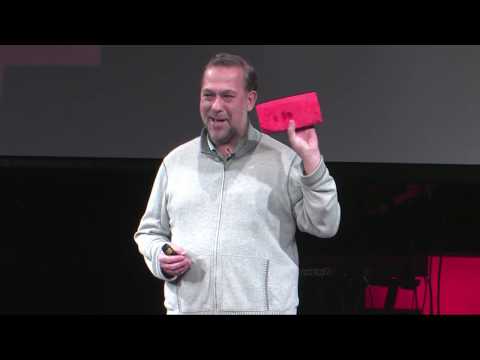
had 3d printed this brick doesn’t really
look like much is it’s orange right now
it will eventually be red but it has the
impressions of three fingers and these
are three fingers from the enslaved
person who made this brick for George
Mason and I think about 3d printing is
that anybody can 3d print if you if you
have your own 3d printer if you want to
print the past you can do it you can go
to your library you can go to your local
school and you can print aspects of the
past you can print a tooth from an
ancient elephant that used to walk
across North America it’s been extinct
for ten thousand years
you can print a slave shackle from
somebody who was brought over from
Africa to Virginia to labor in the
fields you can actually if you want to
interact with archaeology and another
country another part of the world if you
want a 3d print a figurine from 2000
years ago from North India from
literally the rooftop of the world you
can do that 3d printers come in a lot of
different shapes and sizes
the most common kind the kind that I use
basically takes strands of plastic and
melts it and lays it down layer by layer
by layer and it places those layers
using a computer file and those computer
files are online so anybody can access
them I’ve run the virtual creation
laboratory at Virginia Commonwealth
University we do a 3d scanning in a
number of different ways we’ve been
doing this for six years now we
primarily use lasers to capture objects
and we’ve recorded thousands of objects
from all over the country from different
parts of the world and we’re doing this
how to protect and preserve these
artifacts against time
and against nature and we’re doing it so
that people sitting here can have access
to these objects can tell their own
stories using them since I began this
project 3d scanning I’ve been working
with my students and it’s been a great
way for them to learn cutting edge
technology to get experience but also to
help other people tell stories because
that’s what we’re really all about we’ve
scanned all over the place we scan
throughout Richmond for those who are
from Richmond I’ve scanned the arch at
Tredegar I’ve even scanned a world war 2
veteran the real ones bigger he is now
97 years old he just had a birthday and
during World War 2 his plane was shot
down over Italy and he had to break out
of the back of the airplane and sit on
the tail of the plane and then he
parachuted from there he landed he broke
his back but he survived and if you go
to Virginia War Memorial you can see him
sitting on the back of his airplane you
can see the bottom of his feet or if you
go on Wednesdays he’s there so you can
see the real veteran and he has in his
pocket a little version of himself one
of things about 3d printing you’ll see
like with my break it’s bright orange
luckily I have very talented students
who work to make them look real so if
you’re looking at them from a few feet
away you can’t tell that it’s not a real
object it’s very helpful if you can look
at the real thing when you’re painting
it but sometimes we actually use the
computer files that we’ve created to
paint replicas the great thing about
outfits for having 3d printed objects is
we can share them anywhere people can
come up to archaeological sites and the
archaeologists can’t hand you the real
thing it’s dangerous you could drop it
or break it or even touching an object
like chemistry and your fingers can
damage that object the 3d printed
replica you don’t have to worry about
that you don’t have to worry about
somebody dropping or breaking it or
getting it sticky and you know you can
share everything with people with 3d
printing and it’s a great way to teach
so I’ve worked with a lot of teachers
who want to talk about the past who want
to talk about history who want to talk
about science and they can go beyond
just a static 2-dimensional image on a
page they can go beyond text by sharing
these 3d printed objects I use them for
my own teaching students learn a lot
more when they can see a 3-dimensional
object than looking at a page when
they’re trying to identify what an
object is it helps them when they go and
do archaeology a lot of museums are
turning to 3d printing if you go to a
museum and you see objects they’re
behind glass you can’t touch them
museums have a lot of signs that say do
not touch but museums are taking 3d
printing and putting objects on walls
and you can touch them and you can feel
them you can interact with them this is
the real thing is still there it’s still
behind glass but you can get a sense for
the object itself you can take objects
from all over the world and create an
exhibit you can create your own exhibit
if you want if you have access to a 3d
printer and it’s really important for
people who can’t touch if you go to a
museum if there’s no if there’s no
ability to touch and a museum what do
you have so we’ve been working with a
number of museums I want to reach out to
the visually impaired and so if you go
to a museum and there’s a glass case you
could see it maybe but a visually
impaired person is gonna have nothing
and so 3d printing gives them something
they can touch something they can feel
3d printing is really gonna
revolutionize the way we think about the
past the way we tell stories the way we
teach generations from from here on
about what has come before them and
that’s it thank you
you
Please follow and like us: